
Saltwater · Year-round in the Gulf and Florida; best spring through fall around floating structure
Banded Rudderfish
Seriola zonata
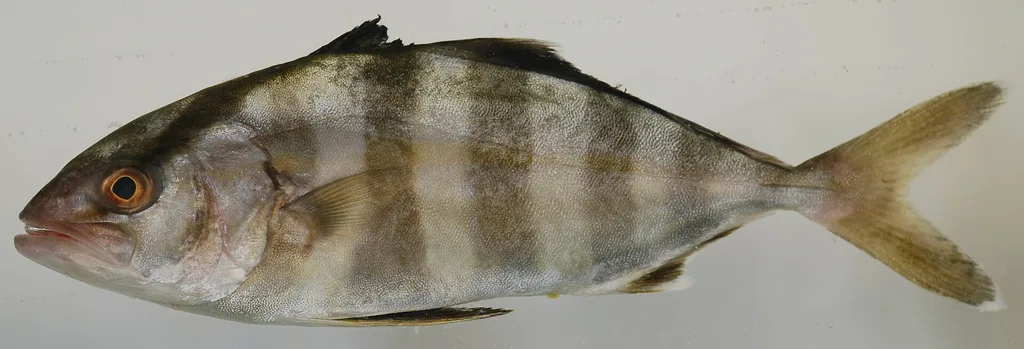
A small amberjack relative that gathers around buoys, weed lines and floating structure. Banded juveniles ride with sharks, rays and turtles — the classic 'pilot fish' habit — but this is not the true pilotfish, Naucrates ductor, a different species it is often confused with. Adults fade to plain olive-silver and lose the bold bars.
Seasons · Peak
Identifying features
- Six bold dark bars on juveniles and young fish, fading in adults
- Dark band through the eye, like other Seriola species
- Shorter second dorsal and anal fin lobes than almaco jack
- Fairly deep, compressed body with a steep forehead
- Adults are plain olive to silvery with at most a faint trace of the bars
Habits
- Juveniles ride with sharks, rays and turtles for protection and scraps
- Adults gather around buoys, platforms, weed lines and floating debris
- Feeds on small fish, shrimp, crabs and squid around structure
- Curious and quick to inspect baits dropped near structure
- Forms small schools, larger fish often in pairs or alone
Distribution
Where to find them
- Gulf buoys, platforms and weed lines off Louisiana and the Panhandle
- Floating structure and channel markers off Florida's Atlantic coast
- Nearshore wrecks and buoys off Texas and the Carolinas
Where they live
How to catch them
Small live baits and jigs around floating structure Boat
Rig: Medium-light spinning outfit, small live bait or jig fished around buoys, weed lines, platforms and any floating structure
Bait/lure: Live shrimp, pilchards, small jigs
Key tip: Cast right up to the structure and let the bait sink slowly — rudderfish hold tight and rarely chase far.
Dropping shrimp to fish shadowing sharks and rays Boat
Rig: Light to medium rod, shrimp or small bait on a light hook dropped to fish shadowing sharks, rays and turtles
Bait/lure: Shrimp, small baits
Key tip: Drop the bait beside the host animal, not behind it — the rudderfish ride at its head and shoulders.
Best baits & lures
Baseline setup
- Rod: Medium-light 7 ft spinning rod
- Line: 12-20 lb mono or braid with a fluorocarbon leader
- Terminal: Small jigs, 1/0-3/0 hooks, light split shot
Recommended gear for this species
Rod · Best value
9' 5-weight fly rod outfit
≈ US$180-260
Covers chironomid lakes and small rivers with one setup.
Flies · Budget
Chironomid assortment (30 patterns)
≈ US$25-40
Chironomids are 60% of a lake rainbow's diet in spring.
Picks come from our rule library — never paid placements. Prices are guides; affiliate links may earn us a commission.
Typical size
Common 12-20 in (30-51 cm), 1-3 lb (0.5-1.4 kg); large fish to about 30 in (76 cm) and 10 lb (4.5 kg)
On the table
Fair to good — firm flesh on fresh fish; many are released as a structure curiosity.
Similar species
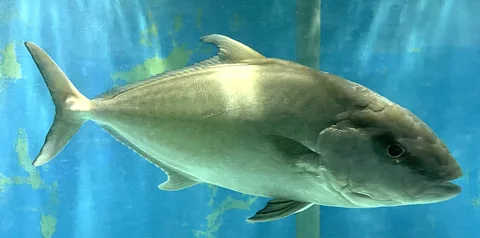 Almaco JackAlmaco jack is a larger deep-water fish with very tall second dorsal and anal lobes and no bold juvenile bars; banded rudderfish is smaller, structure-bound and strongly banded when young
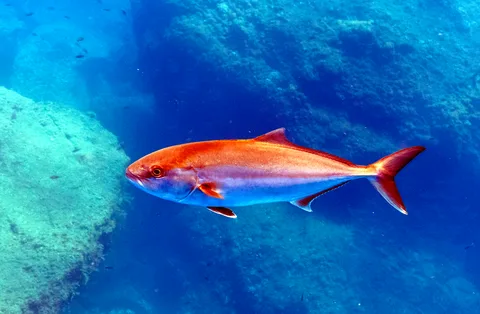 Greater AmberjackGreater amberjack grows far larger over deep reefs and lacks bold bars; banded rudderfish stays smaller around floating structure and is boldly banded as a juvenile
Regulations vary by area and can change in-season — always check the official rules for your area before you fish. Regulations guide →
Plan a trip for Banded Rudderfish
Build today's plan