
Saltwater · Year-round; best May to September during the summer spawning aggregations
Barred Sand Bass
Paralabrax nebulifer
One of Southern California's famous 'three bass', alongside kelp bass and spotted bay bass. Barred sand bass gather in big summer spawning aggregations over sandy flats, which makes them a mainstay of half-day party boats and a forgiving first saltwater target.
Seasons · Peak
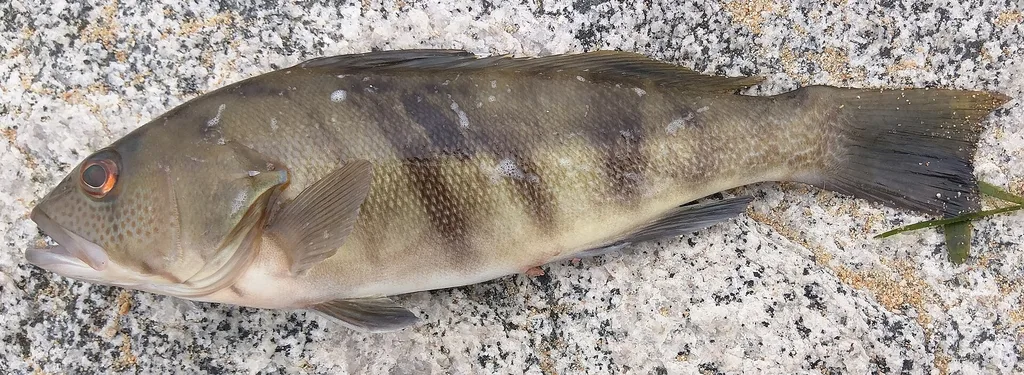
Identifying features
- Grey vertical bars along the silvery-olive sides — the namesake marking
- Deep, bass-like body with a fairly pointed snout
- Spiny first dorsal fin and a tall, soft second dorsal
- Mouth reaches back to about below the eye
- Larger fish often show a faint orange-brown wash on the belly
Habits
- Forms large spawning aggregations over sand flats in summer
- Feeds near the bottom on anchovies, squid, crabs and shrimp
- Most active at dawn, dusk and on a moving tide
- Ambushes prey from sand channels beside reef and kelp
- Juveniles use shallow bays and estuaries as nurseries
Distribution
Where to find them
- The sandy Huntington Flats off Orange County
- Artificial reefs and wrecks off Los Angeles and San Diego
- Sand channels in Mission Bay and San Diego Bay
Where they live
How to catch them
Swimbaits and leadhead jigs over structure edges Boat
Rig: 1/2-1 oz (14-28 g) leadhead with a 4-5 in swimbait, cast over sand/reef edges and slow-rolled just off the bottom
Bait/lure: Plastic swimbaits
Key tip: Let the jig sink to the bottom, then wind slowly — most bites come in the first few turns of the handle.
Live bait on bottom rigs Boat
Rig: Sliding sinker or dropper-loop rig anchored up-current of reef or wreck edges, hook near the bottom
Bait/lure: Live anchovies and squid strips
Key tip: Keep the bait close to the sand beside the structure; sand bass rarely chase high in the water column.
Best baits & lures
Baseline setup
- Rod: Medium 7 ft spinning or baitcasting rod
- Line: 12-20 lb braid or mono
- Terminal: Leadhead jigs 1/2-1 oz, 2/0 hooks, sliding sinkers
Recommended gear for this species
Rod · Best value
7'6" medium-heavy jigging rod
≈ US$110-170
Works 2-6 oz jigs over rock and reef and still has the backbone to lift a halibut off the bottom.
Line · Budget
50 lb braid with 40 lb leader (200 yd)
≈ US$25-40
Thin braid cuts the current so jigs stay vertical; the leader shrugs off rock and teeth.
Terminal · Budget
Leadhead jigs, swimbaits and two-hook bottom rigs
≈ US$25-40
A leadhead with a swimbait tail is the universal bottom-fish catcher, from rockfish to cod to flounder.
Picks are never paid placements. Prices are guides; price links are coming soon and none is an affiliate link yet.
Typical size
Common 1-3 lb (0.5-1.4 kg); large fish to about 6 lb (2.7 kg)
On the table
Good — firm white flesh; a popular table fish taken within legal limits.
Similar species
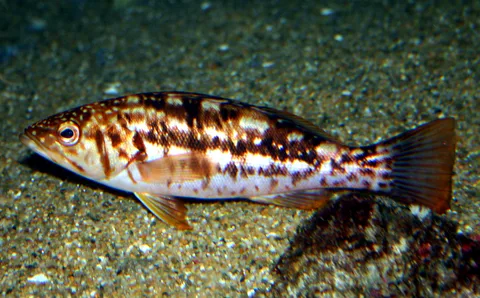 Kelp BassKelp bass is darker, mottled olive and lives tight to kelp with no grey bars; barred sand bass is paler with grey side bars and works the sand beside structure
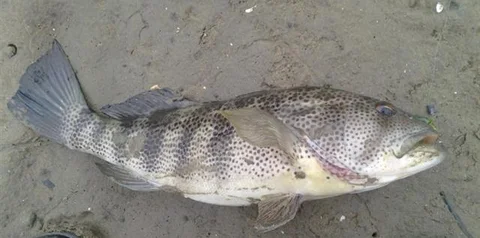 Spotted Bay BassSpotted bay bass is covered in orange-brown spots and stays inside bays; barred sand bass has bars instead of spots and grows larger over open-coast flats
Regulations vary by area and can change in-season — always check the official rules for your area before you fish. Regulations guide →
Plan a trip for Barred Sand Bass
Build today's plan⚠ Heads-up: Barred Sand Bass doesn't occur around Vancouver, BC (or is very rare there), so it's not a sensible local target. Your plan stays in Vancouver, BC and is built around the fish that actually live there.