
Saltwater · Summer peak in inner bays and estuaries; fish are present from late spring into autumn
Bartail Flathead
Platycephalus indicus
With the olive flounder, this is one of Japan's two 'summer flatfish' — but the flathead is no flatfish at all: it is a crocodile-headed ambush predator that buries itself in sand and mud and erupts at passing prey. Bay anglers work soft plastics slowly along the bottom for it all summer, and its firm white flesh is a prized summer sashimi.
Seasons · Peak
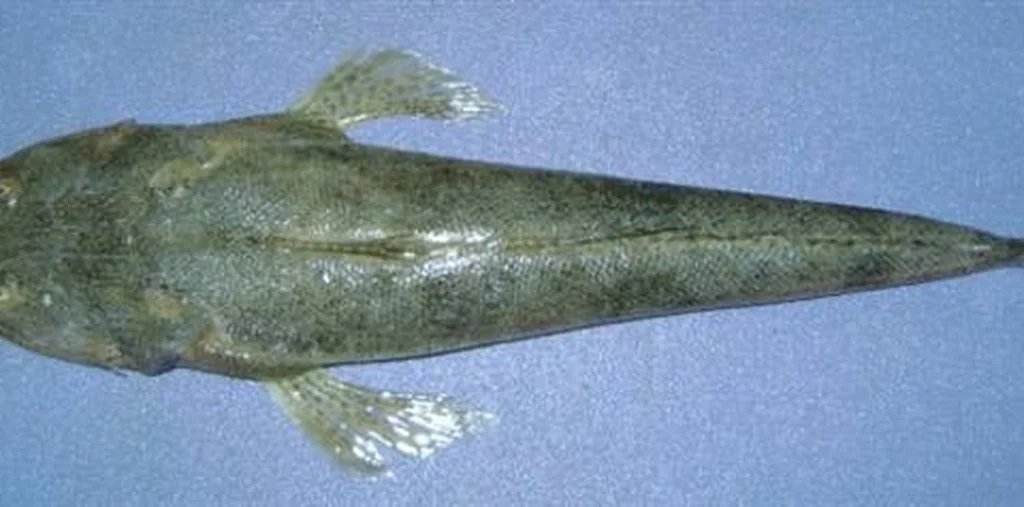
Identifying features
- Broad, strongly flattened crocodile-like head with eyes on top
- Very wide mouth reaching back under the eyes, with small sharp teeth
- Mottled brown and tan camouflage over the back and head
- Bony ridges and spines on the head — handle with care
- Tail fin with several dark horizontal bars, the mark behind the name 'bartail'
Habits
- Lies buried in sand or mud with only the eyes showing, waiting in ambush
- Bursts upward to grab small fish, shrimp and crabs passing overhead
- Most active in the warm months in shallow bays and estuaries
- Hunts mainly around dawn, dusk and tide changes
- Often lies on the edges of channels and drop-offs where prey is carried past
Distribution
Regional coverage expanding
Where to find them
- Tokyo Bay estuaries and river mouths, Chiba side
- Mikawa Bay tidal flats, Aichi
- Sandy bays of the Seto Inland Sea
Where they live
How to catch them
Soft plastics along the bottom from shore Shore
Rig: Light lure rod casting a jig head with a soft-plastic grub or shad tail from bay shores and river mouths, retrieved slowly just above the bottom
Bait/lure: Soft-plastic grub or shad tail in natural colours
Key tip: Let the lure sink to the bottom after each short lift — flathead strike as it falls or sits on the sand.
Bottom lure fishing from a bay boat Boat
Rig: Boat lure rod working a jig head and soft plastic, or a small metal jig, vertically and on short casts over sandy-mud bottom
Bait/lure: Soft-plastic shad tail or small metal jig
Key tip: Keep contact with the bottom and pause often; a buried flathead will not chase a lure that stays high.
Best baits & lures
Baseline setup
- Rod: Light lure rod 7-8 ft (2.1-2.4 m)
- Line: 10-16 lb braid with a 12-20 lb fluorocarbon leader
- Terminal: Jig heads 1/4-3/4 oz, soft plastics, small metal jigs
Recommended gear for this species
Rod · Best value
9' 5-weight fly rod outfit
≈ US$180-260
Covers chironomid lakes and small rivers with one setup.
Flies · Budget
Chironomid assortment (30 patterns)
≈ US$25-40
Chironomids are 60% of a lake rainbow's diet in spring.
Picks come from our rule library — never paid placements. Prices are guides; affiliate links may earn us a commission.
Typical size
Common 12-20 in (30-50 cm); large fish to about 39 in (100 cm)
On the table
Excellent — firm, translucent white flesh prized as summer sashimi; also good in soups and fried.
Similar species
Regulations vary by area and can change in-season — always check the official rules for your area before you fish. Regulations guide →
Plan a trip for Bartail Flathead
Build today's plan