
Freshwater · Spring spawning in May and June; catchable spring to autumn in lakes and rivers
Bigmouth Buffalo
Ictiobus cyprinellus
The bigmouth buffalo is a native North American sucker — not a carp — and one of the longest-lived freshwater fish: validated otolith ageing has shown individuals over 100 years old, so handle big fish with care. In Canada the Great Lakes population is listed as Special Concern under SARA. It is a filter feeder increasingly targeted by catch-and-release rod anglers.
Seasons · Peak
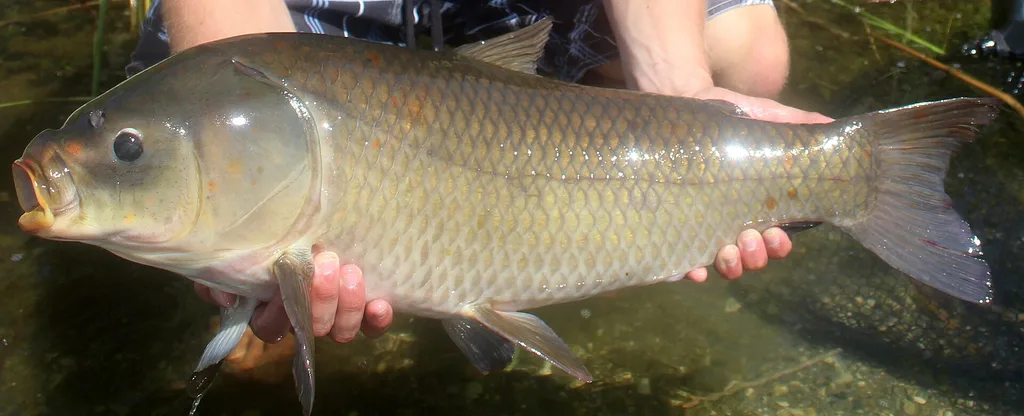
Identifying features
- Terminal, upturned mouth for filter feeding — unlike the downward mouth of other buffaloes
- Deep, laterally compressed body, olive to bronze-grey
- No barbels at the mouth corners — an introduced carp has them
- Long, sickle-shaped dorsal fin starting high at the front
- Small eyes set high on a blunt head
Habits
- Filter-feeds on plankton in open water, often in loose schools
- Can live over 100 years (validated by otolith ageing); old fish grow very slowly
- Gathers in shallow vegetated floodplains to spawn in spring
- A native sucker, not an introduced carp, despite the carp-like body
- Canada's Great Lakes population is SARA Special Concern — check rules there
Distribution
Where to find them
- Missouri and Mississippi backwaters and floodplain lakes in Iowa-Missouri
- Reservoir bays and slow river reaches on the Central Plains and Dakotas
- Great Lakes bays and connecting waters in Minnesota and Tennessee-Kentucky rivers
Where they live
How to catch them
Light bottom rigs with small baits Lake
Rig: Medium rod, light slip-sinker or hair-style rig with a size 4-6 hook and a small dough ball, corn or worm piece, fished in bays and backwaters
Bait/lure: Dough baits, sweet corn, worm pieces
Key tip: Use small baits and light leads — despite its size this filter feeder has a modest mouth; play big fish gently on light gear.
Catch-and-release targeting of cruising schools Lake
Rig: Sight-fishing or drifting small baits ahead of slow-cruising schools in shallow spring bays, with a large soft landing net
Bait/lure: Small dough baits, corn
Key tip: These fish may be decades old — support them fully in the water, keep them wet and release them quickly.
Best baits & lures
Baseline setup
- Rod: Medium 7-8 ft spinning rod
- Line: 8-14 lb mono or braid
- Terminal: Size 4-6 hooks, light slip sinkers, large soft-mesh landing net
Recommended gear for this species
Rod · Best value
9' 5-weight fly rod outfit
≈ US$180-260
Covers chironomid lakes and small rivers with one setup.
Flies · Budget
Chironomid assortment (30 patterns)
≈ US$25-40
Chironomids are 60% of a lake rainbow's diet in spring.
Picks come from our rule library — never paid placements. Prices are guides; affiliate links may earn us a commission.
Typical size
Common 15-25 in (38-64 cm), 5-15 lb (2.3-6.8 kg); large fish to about 40 in (102 cm) and over 40 lb (18 kg)
On the table
Edible and eaten regionally, though bony; given its century-scale lifespan, most rod anglers release big fish.
Similar species
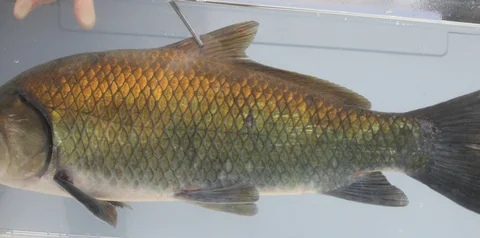 Smallmouth BuffaloThe smallmouth buffalo has a downward sucker mouth and a more humped back; the bigmouth buffalo has a terminal, upturned mouth built for filter feeding
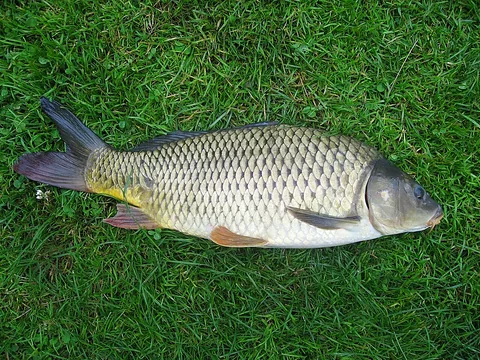 Common CarpThe common carp is an introduced fish with barbels at the mouth corners and a serrated dorsal spine; the bigmouth buffalo is a native sucker with no barbels at all
Regulations vary by area and can change in-season — always check the official rules for your area before you fish. Regulations guide →
Plan a trip for Bigmouth Buffalo
Build today's plan