
Saltwater · Autumn through early spring in deep water
Blackspot Seabream
Pagellus bogaraveo
The deep-water sparid of the Bay of Biscay and the Channel, a winter prize on deep marks where big fish station over banks and slopes. Big eyes and a black spot behind the gill separate the blackspot seabream from every shallower Pagellus. This is serious boat work with heavy leads — not a shore species.
Seasons · Peak
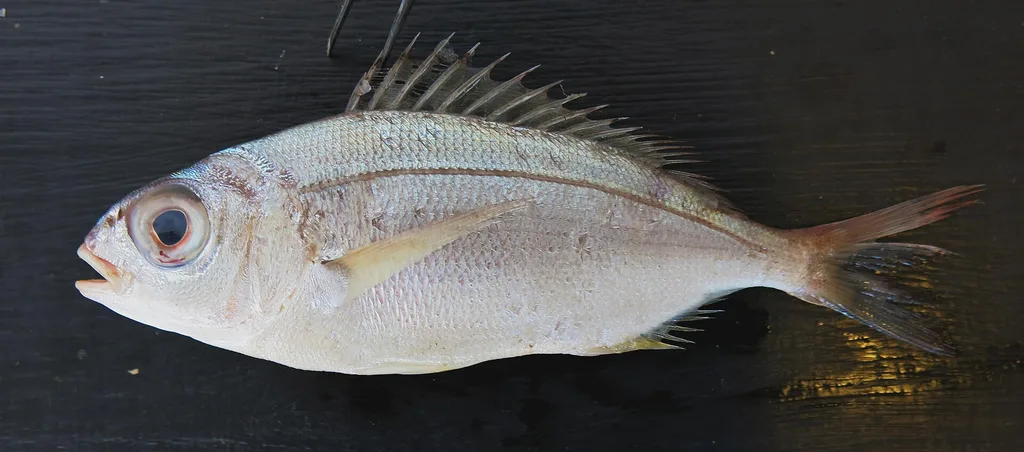
Identifying features
- Very large eye adapted to deep water — much bigger than in common pandora
- Bold black spot behind the gill cover at the origin of the lateral line
- Pinkish-silver body, deeper and more big-headed than other Pagellus
- Black edge inside the gill cover visible when the cover is lifted
- Forked tail, pink fins; young fish may show faint bars
Habits
- Lives deep as an adult; juveniles live shallower and migrate down with age
- A winter fishery — the big spawning-season fish gather on deep marks in the cold months
- Feeds on fish, squid, crustaceans and molluscs near the bottom
- Mostly caught by deep-drop boat fishing; rarely from shore
- Spawns in winter and early spring in deep water
Distribution
Where to find them
- Bay of Biscay deep banks off the French Atlantic coast
- Western Channel deep wrecks and slopes
- Spanish Mediterranean deep grounds, less common in the Adriatic
Where they live
How to catch them
Deep dropping on banks and slopes Boat
Rig: Two hooks on a flowing trace above a 6-12 oz lead, dropped vertically to 150-300 m over banks and drop-offs
Bait/lure: Whole sardine, squid strips or shrimp
Key tip: Keep contact with the bottom and lift slowly — the fish take the bait on the bottom; wind up by hand or electric reel from depth.
Anchored fishing on deep wrecks Boat
Rig: Anchored boat rig with a long flowing trace and size 2/0-3/0 hooks, presented beside deep wrecks and rock slopes in winter
Bait/lure: Fish strips and squid
Key tip: Position the boat exactly over the mark and let the boat's lift work the bait; do not hurry a heavy fish in deep water.
Best baits & lures
Baseline setup
- Rod: Strong boat rod 8-10 ft, 20-30 lb class
- Line: 30-40 lb braid with a rubbing leader
- Terminal: 6-12 oz leads for deep drops, size 2/0-4/0 hooks, long flowing traces
Recommended gear for this species
Rod · Best value
9' 5-weight fly rod outfit
≈ US$180-260
Covers chironomid lakes and small rivers with one setup.
Flies · Budget
Chironomid assortment (30 patterns)
≈ US$25-40
Chironomids are 60% of a lake rainbow's diet in spring.
Picks come from our rule library — never paid placements. Prices are guides; affiliate links may earn us a commission.
Typical size
Common 10-14 in (25-35 cm), about 1-2 lb (0.5-0.9 kg); large fish to 28 in (70 cm) and over 8 lb (3.6 kg)
On the table
Excellent — a premium table fish, dense white flesh highly prized in Spain; not cheap in markets for good reason.
Similar species
Regulations vary by area and can change in-season — always check the official rules for your area before you fish. Regulations guide →
Plan a trip for Blackspot Seabream
Build today's plan