
Freshwater · Year-round in warm reservoirs; breeding and shoreline bites peak in the warm months
Blue Tilapia
Oreochromis aureus
Mexico's main reservoir tilapia — an introduced African species that now dominates the country's presas and Central American lakes, fished year-round on small baits and light tackle along vegetated shorelines.
Seasons · Peak
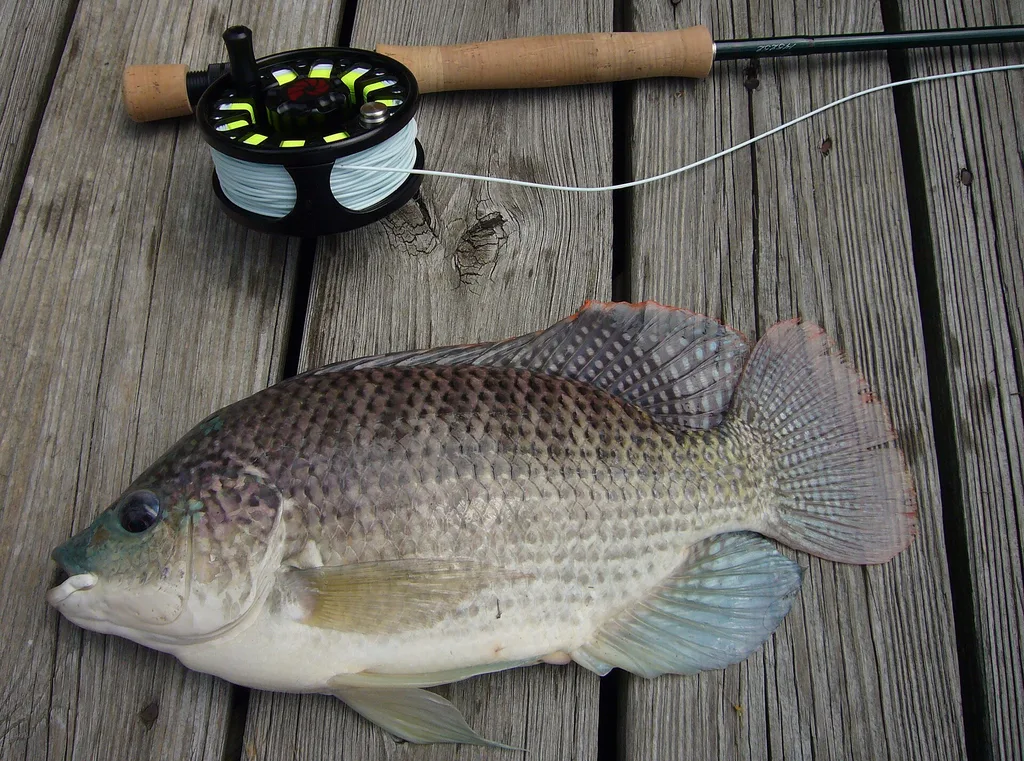
Identifying features
- Deep tilapia body with a bluish-grey cast, especially on the head and back of breeding males
- Caudal fin rounded with no bold stripes; vertical bars faint on the flank
- Breeding males turn dark blue-black with a white throat patch
- Dorsal fin long-based with spines in front, soft rays behind
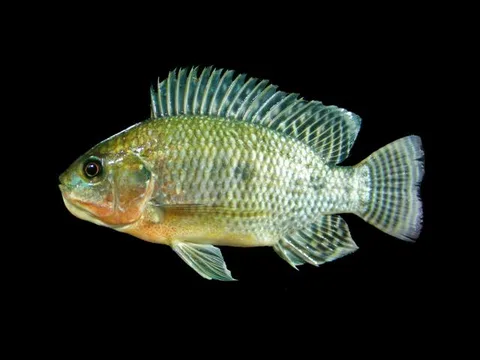
- Look-alike: Nile tilapia has bold dark vertical stripes on the caudal fin; blue tilapia's tail is plain or only faintly patterned
Habits
- A mouthbrooding cichlid that breeds year-round in warm reservoirs, peaking in the warm months
- Grazes algae and detritus and also takes small invertebrates
- Males dig and defend circular nests in shallow water in the breeding season
- Tolerates warm, low-oxygen reservoir water better than most native fish
Distribution
Where to find them
- Shallow bays of Mexican reservoirs (presas) with nest colonies
- Dam riprap and canal inlets
- Vegetated shorelines of Central American lakes
Where they live
How to catch them
Float fishing from shore Lake
Rig: Light spinning rod, small float, #8 hook with bread, corn or dough
Bait/lure: Bread, corn, dough balls
Key tip: Fish over nest colonies and vegetated edges — tilapia bite cautiously, so small hooks and light line.
Sight-fishing bedding fish Lake
Rig: Tiny jigs or nymph flies on 6 lb line
Bait/lure: Tiny jigs and nymph flies
Key tip: Approach nests quietly and drop the lure into the nest; males strike to drive it away.
Bottom bait at dam riprap Lake
Rig: Small sliding bottom rig, #6-8 hook
Bait/lure: Algae clumps, fruit pieces
Key tip: Present small baits on riprap and at canal mouths where tilapia graze algae.
Best baits & lures
Baseline setup
- Rod: 6-7 ft light spinning rod
- Line: 6-12 lb mono, small fluorocarbon leader
- Terminal: Small hooks #6-10, floats, split shot, tiny jigs
Recommended gear for this species
Rod · Budget
7' light spinning rod
≈ US$50-90
Light enough to cast 1/32 oz jigs, strong enough for a slab crappie or a bonus drum.
Reel · Budget
1000-2000 size spinning reel
≈ US$40-70
Balances a light rod and handles 4-6 lb line — all panfishing ever asks of a reel.
Terminal · Budget
Micro jigs, small hooks and slip floats (panfish kit)
≈ US$15-25
A bobber over a tiny jig tipped with a worm catches every sunfish, crappie and perch in the lake.
Picks are never paid placements. Prices are guides; price links are coming soon and none is an affiliate link yet.
Typical size
Common 20-30 cm (about 1 lb); large reservoir fish to about 45 cm / 4-5 lb
On the table
Excellent and widely eaten — the main reservoir food fish in Mexico; mild white flesh.
Similar species
Regulations vary by area and can change in-season — always check the official rules for your area before you fish. Regulations guide →
Plan a trip for Blue Tilapia
Build today's plan⚠ Heads-up: Blue Tilapia doesn't occur around Vancouver, BC (or is very rare there), so it's not a sensible local target. Your plan stays in Vancouver, BC and is built around the fish that actually live there.