
Freshwater · Year-round in South Florida; best in warm months, March to October
Bullseye Snakehead
Channa marulius
A large Asian snakehead established as an invasive species in South Florida canals since about 2000. Florida encourages harvest: never release a bullseye snakehead and never move a live fish to new water. It is a powerful surface predator that breathes air and guards its fry in summer.
Seasons · Peak
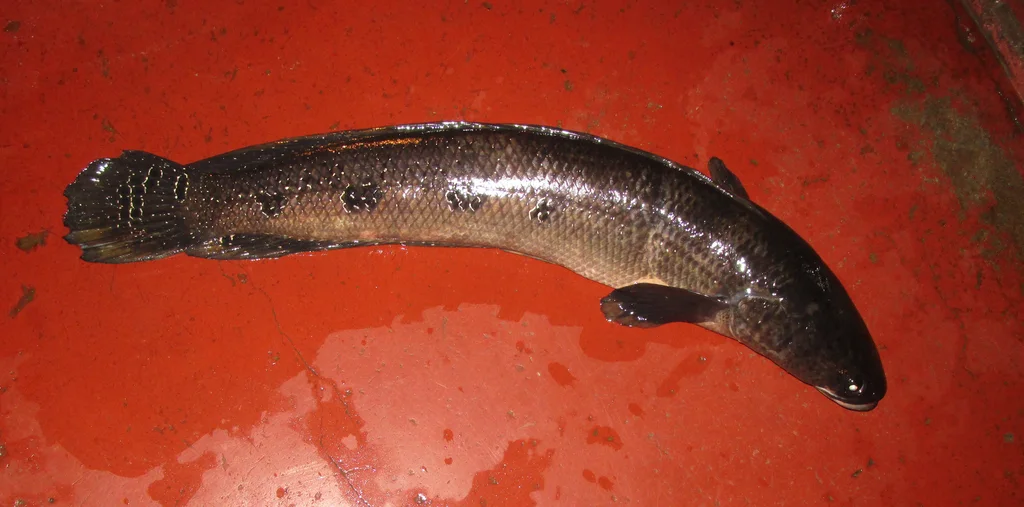
Identifying features
- Orange-ringed black eyespot (ocellus) near the base of the tail, on juveniles and most adults
- Long, cylindrical body with a flattened snake-like head and large mouth full of teeth
- Long dorsal fin running most of the back, and a rounded tail fin
- Golden-brown sides with large dark blotches along the flank
- No dark shoulder blotch with a halo — that marks some other snakeheads, not this one
Habits
- INVASIVE in South Florida canals: never release it and never move live fish — Florida encourages harvest
- Ambushes frogs, baitfish and small animals at the surface along canal banks and vegetation
- Breathes air and must surface regularly, so it thrives in warm, low-oxygen canal water
- Both parents guard a floating nest and a tight orange school of fry in summer
- Most active in warm water at dawn, dusk and after dark, especially in summer
Distribution
Where to find them
- Broward and Miami-Dade canal systems in South Florida
- Canal junctions, culvert mouths and shaded banks with overhanging cover
- Weedy margins of lakes connected to the South Florida canal network
Where they live
How to catch them
Frogs and buzzbaits over canal vegetation Shore
Rig: Heavy spinning or baitcasting rod with 30-50 lb braid, a weedless hollow-body frog or buzzbait worked over canal vegetation and along banks
Bait/lure: Hollow-body frogs, buzzbaits
Key tip: Pause the frog in open pockets — bullseyes often strike on the pause. Keep every fish you catch; never release it.
Live shiners and soft plastics along canal banks Shore
Rig: Medium-heavy rod, a live shiner under a small float or a soft plastic swimbait fished slowly along canal banks, culverts and junctions
Bait/lure: Live shiners, soft plastics
Key tip: Fish shaded cover at dawn and dusk in warm months, and dispatch and keep the fish — do not move it live to any other water.
Best baits & lures
Baseline setup
- Rod: Medium-heavy to heavy 7-8 ft rod
- Line: 30-50 lb braid
- Terminal: Weedless frogs, buzzbaits, 4/0-5/0 worm hooks
Recommended gear for this species
Rod · Best value
9' 5-weight fly rod outfit
≈ US$180-260
Covers chironomid lakes and small rivers with one setup.
Flies · Budget
Chironomid assortment (30 patterns)
≈ US$25-40
Chironomids are 60% of a lake rainbow's diet in spring.
Picks come from our rule library — never paid placements. Prices are guides; affiliate links may earn us a commission.
Typical size
Common 18-28 in (46-71 cm) and 3-8 lb (1.4-3.6 kg); large Florida fish to about 14 lb (6.4 kg)
On the table
Good, firm white flesh — and harvest is encouraged: never release this invasive fish.
Similar species
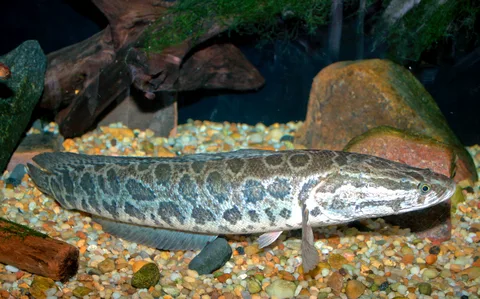 Northern SnakeheadNorthern snakehead has a longer anal fin base, plainer python-like patterning and no orange-ringed tail eyespot; bullseye snakehead has the orange ocellus near the tail base and bolder flank blotches
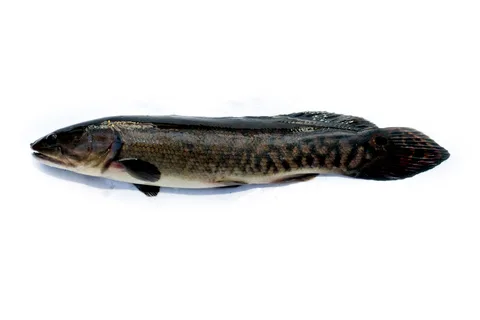 BowfinBowfin is a native fish with a long dorsal fin but a blunt rounded head, no tail eyespot ringed in orange (males have a plain dark tail spot), and it must be released where rules require — do not confuse it with the invasive snakehead
Regulations vary by area and can change in-season — always check the official rules for your area before you fish. Regulations guide →
Plan a trip for Bullseye Snakehead
Build today's plan