
Saltwater · Summer and autumn; a night fish
Conger Eel
Conger conger
The classic of British and French rock-mark night fishing — a scaleless giant that lives in wrecks and harbour holes, with big females staying on one mark for years. Its dorsal fin starting just behind the pectoral fins separates it from the freshwater eel. Congre in French.
Seasons · Peak
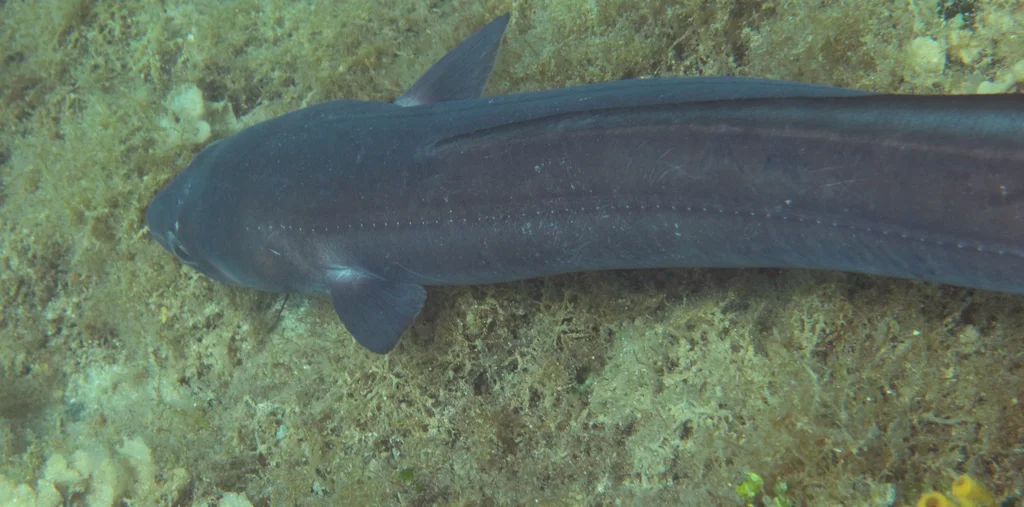
Identifying features
- Long, scaleless, snake-like body, grey-brown above and pale below
- Dorsal fin starts just behind the tips of the pectoral fins — far forward compared with a freshwater eel
- Upper jaw projects slightly; large, powerful jaws with strong teeth
- Pectoral fins large and rounded; no pelvic fins
- Skin smooth and slimy with no visible scales; eyes large on big wreck fish
Habits
- A night hunter of fish, crabs and octopus from holes in rock and wrecks
- Big females take up residence in one wreck or harbour hole for years
- Males stay smaller and more mobile than the huge females
- Bites with a slow, powerful nodding pull, then backs into its hole
- Spawns once in deep Atlantic water after a long migration, then dies
Distribution
Where to find them
- Harbour walls and breakwaters of south-west Britain and Ireland at night
- French Atlantic rock marks and wrecks
- Norwegian and Scottish rock holes and harbour structure
Where they live
How to catch them
Night rock and harbour fishing Rock fishing
Rig: Heavy rock rod with a running ledger rig, a whole mackerel or pouting cast into rock holes and harbour holes after dark
Bait/lure: Whole mackerel, pouting, squid
Key tip: Strike and pull immediately and hard — a resident conger backs into its hole and must be stopped in the first seconds.
Wreck fishing from boats Boat
Rig: Heavy boat rod with a strong flowing rig anchored over wrecks with squid or fish strips on the bottom
Bait/lure: Squid, fish strips, octopus
Key tip: Keep maximum pressure from the bite — give it line and it will wedge itself into the wreck.
Best baits & lures
Baseline setup
- Rod: Heavy beach/rock rod from shore; heavy boat rod over wrecks
- Line: 60-100 lb mono for rock work; heavy boat traces
- Terminal: Running ledger rigs, 6/0-8/0 strong hooks, wire or heavy mono traces
Recommended gear for this species
Rod · Best value
9' 5-weight fly rod outfit
≈ US$180-260
Covers chironomid lakes and small rivers with one setup.
Flies · Budget
Chironomid assortment (30 patterns)
≈ US$25-40
Chironomids are 60% of a lake rainbow's diet in spring.
Picks come from our rule library — never paid placements. Prices are guides; affiliate links may earn us a commission.
Typical size
Common 36-60 in (90-150 cm), about 10-30 lb (4.5-13.6 kg); large females to 110 in (280 cm) and 130 lb (59 kg)
On the table
Fair to good — strong-flavoured flesh used in soups and stews; only the thick front section is worth keeping, and big old fish are best released.
Similar species
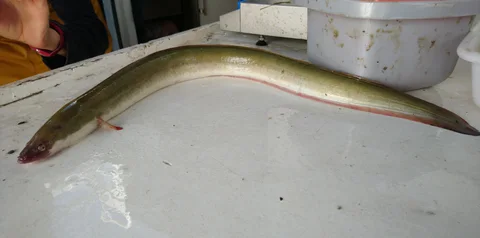 European EelEuropean eel is a much smaller freshwater and estuary species whose dorsal fin starts far behind the pectoral fins; conger is purely marine, far larger, and its dorsal fin starts just behind the pectoral-fin tips
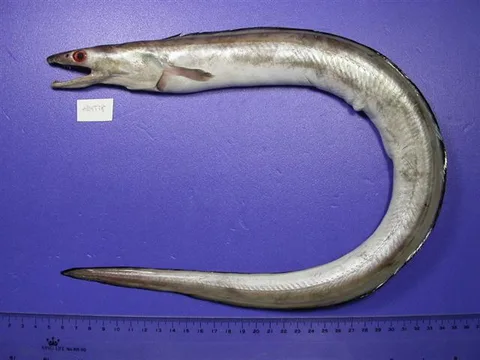 Daggertooth Pike CongerPike conger is a slender Indo-Pacific and eastern Mediterranean species with a pike-like head and large fangs; conger eel has a blunt, powerful head and is the Atlantic species
Regulations vary by area and can change in-season — always check the official rules for your area before you fish. Regulations guide →
Plan a trip for Conger Eel
Build today's plan