
Saltwater · Year-round on deep reefs; peak June to August around summer full-moon spawning aggregations — heavily protected in places, check current rules
Cubera Snapper
Lutjanus cyanopterus
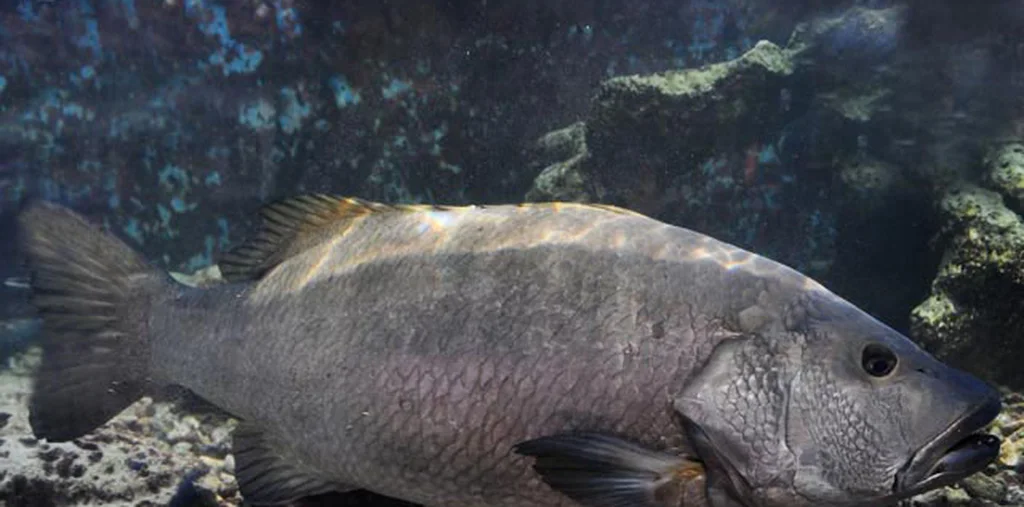
The largest snapper in the western Atlantic, a grey-brown giant that can pass 100 lb (45 kg) with huge canine teeth and thick lips. It is a separate species from the Pacific cubera (Lutjanus novemfasciatus) of the eastern Pacific — the two are close relatives, not the same fish. Adults gather on deep reefs and spawn in summer full-moon aggregations that are heavily protected in places, so check current rules before targeting them; very large fish also carry a ciguatera caution.
Seasons · Peak
Identifying features
- Uniform grey to reddish-brown body, darkening on large adults
- Huge canine teeth, visible even when the mouth is closed
- Very thick lips and a broad, heavy head
- Triangular patch of teeth on the roof of the mouth (vomer), unlike the anchor-shaped patch of gray snapper
- Massive size — by far the largest western Atlantic snapper, over 100 lb (45 kg) at maximum
Habits
- Solitary adults hold on deep reefs, wrecks and ledges by day
- Feeds at night on fish, crabs, shrimp and lobster
- Forms large summer spawning aggregations over deep reef around the full moon
- Juveniles live inshore in mangroves and seagrass before moving offshore
- Powerful and structure-bound — a hooked fish dives hard for the reef
Distribution
Where to find them
- Deep reefs and wrecks off the Florida Keys in summer
- Offshore ledges along Florida's Atlantic coast
- Deep Gulf structure off Louisiana, only occasionally
Where they live
How to catch them
Live lobster or large crabs on heavy bottom tackle Boat
Rig: Heavy conventional tackle, 80-100 lb leader and a large circle hook with a live lobster or crab, fished on the bottom over reefs during summer spawning aggregations where rules allow
Bait/lure: Live lobster and large crabs
Key tip: Fish heavy and stop the first run — a big cubera that reaches the reef almost always wins; check seasonal protection rules before any aggregation trip.
Heavy live-baiting at night over structure Boat
Rig: Large live baitfish on heavy spinning or conventional tackle with a stout leader, soaked at night over wrecks and deep ledges
Bait/lure: Blue runners and other big live baitfish
Key tip: Cubera feed boldly after dark — keep baits just off the bottom and the drag locked down tight.
Best baits & lures
Baseline setup
- Rod: Heavy 6-7 ft conventional or spinning rod
- Line: 50-80 lb braid with an 80-100 lb leader
- Terminal: Large 8/0-10/0 circle hooks, heavy egg or bank sinkers
Recommended gear for this species
Rod · Best value
9' 5-weight fly rod outfit
≈ US$180-260
Covers chironomid lakes and small rivers with one setup.
Flies · Budget
Chironomid assortment (30 patterns)
≈ US$25-40
Chironomids are 60% of a lake rainbow's diet in spring.
Picks come from our rule library — never paid placements. Prices are guides; affiliate links may earn us a commission.
Typical size
Common 15-40 lb (6.8-18 kg), 2-3 ft (60-90 cm); large fish 50-100+ lb (23-45+ kg) and over 4 ft (1.2 m)
On the table
Good in smaller fish; very large fish carry a ciguatera caution and are best released — and spawning aggregations are protected in places, so check rules.
Similar species
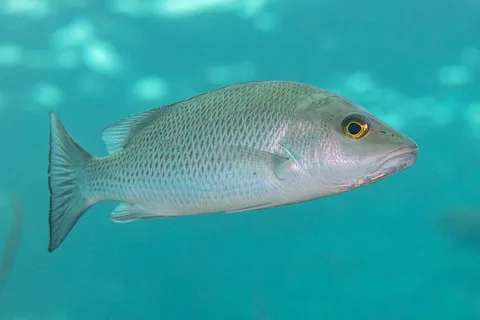 Gray SnapperGray snapper tops out near 20 lb (9 kg) with smaller teeth and an anchor-shaped tooth patch on the roof of the mouth; cubera grows past 100 lb (45 kg) with huge visible canines, thick lips and a triangular tooth patch
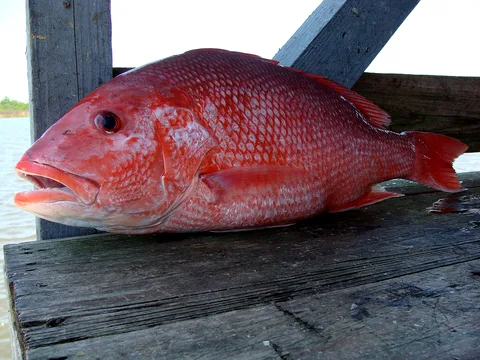 Red SnapperRed snapper is bright red with a pointed anal fin and smaller teeth; cubera is grey to reddish-brown, far heavier-bodied, with huge canine teeth
Regulations vary by area and can change in-season — always check the official rules for your area before you fish. Regulations guide →
Plan a trip for Cubera Snapper
Build today's plan