
Saltwater · Summer and early autumn
European Barracuda
Sphyraena sphyraena
The slender native barracuda of the Mediterranean — a fraction of the size of its tropical cousins — hanging motionless over sand and rock and exploding after silversides, best at dawn. Its French name is brochet de mer and in Spanish it is espet. A wary, sight-hunting predator for lure anglers on headlands and harbour mouths.
Seasons · Peak
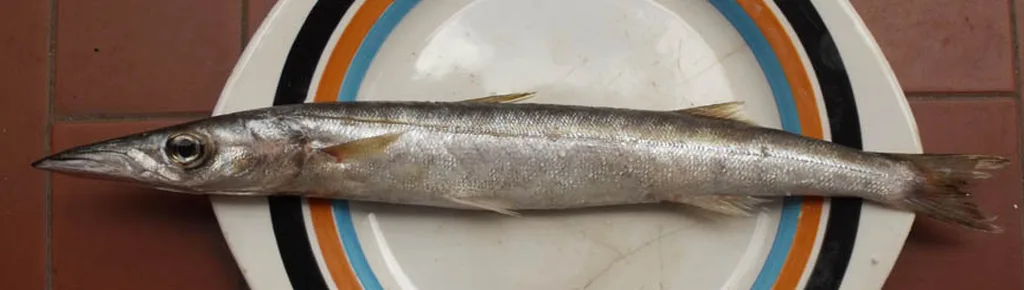
Identifying features
- Very slender, pike-like silvery body with comparatively large scales — about 65 along the lateral line, far fewer and larger than the yellowmouth's
- Long, projecting lower jaw with visible fang-like teeth of uneven size
- Two widely separated dorsal fins, the first spiny and set far forward
- Pelvic fins set below the first dorsal fin — a key separator from the yellowmouth
- Adults nearly plain olive-silver; juveniles show dark vertical bars
Habits
- Hunts silversides over sand and rock edges, striking from a motionless hover
- Most aggressive at dawn and dusk; rests in the lee of structure by day
- Solitary or in loose small groups — less social than the yellowmouth
- Moves inshore in summer and to deeper water in winter
- Much smaller than its tropical cousins; a fish of inches rather than feet
Distribution
Where to find them
- Headlands and harbour mouths at dawn
- Edges of Posidonia meadows over sand
- Rocky points from shore at first and last light
Where they live
How to catch them
Casting minnow plugs at dawn from points and harbour mouths Shore
Rig: Medium spinning rod with slim minnow plugs or shads, cast across sand-rock edges and worked with pauses and twitches
Bait/lure: Long, slim minnow plugs or soft-plastic shads
Key tip: Fish at first light and keep the lure moving — watch for splashes and fleeing silversides; that is where the barracuda waits.
Live-baiting and trolling over reef edges Boat
Rig: Light boat rod with a live silverside on a light hook under a small float, or minnow plugs trolled slowly along reef edges and harbour entrances
Bait/lure: Live silversides, small mullet or trolled minnow plugs
Key tip: Use a short wire or heavy fluorocarbon leader — the fangs cut mono on the strike.
Best baits & lures
Baseline setup
- Rod: Medium 8-9 ft spinning rod
- Line: 15-25 lb braid with a short wire or heavy fluorocarbon leader (teeth)
- Terminal: Minnow plugs, soft shads on jig heads, 1-2 oz metal jigs
Recommended gear for this species
Rod · Best value
9' medium-heavy surf spinning rod
≈ US$110-170
Casts plugs and bait past the breakers and handles stripers, drum and bluefish in the wash.
Reel · Best value
5000 size sealed spinning reel
≈ US$120-180
Salt spray and dunkings kill cheap reels — a sealed body and 30 lb braid capacity are the surf standard.
Terminal · Budget
Topwater plugs, soft-plastic jigs and fish-finder rigs
≈ US$25-40
Plugs for blitzes, jigs for the trough, bait on a fish-finder rig when they won't chase — the inshore trio.
Picks come from our rule library — never paid placements. Prices are guides; affiliate links may earn us a commission.
Typical size
Common 12-24 in (30-60 cm); large fish to about 39 in (100 cm)
On the table
Good fresh — firm, white flesh eaten grilled all around the Mediterranean; modest sizes are the table choice.
Similar species
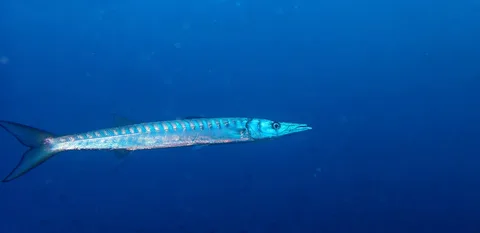 Yellowmouth BarracudaYellowmouth barracuda has a yellow tail and yellow mouth lining, faint vertical bars on its flanks, and smaller, far more numerous scales, and its pelvic fins start behind the tip of the pectoral fin; European barracuda is slimmer and plainer silver, with larger scales (about 65 along the lateral line) and pelvic fins below the first dorsal fin
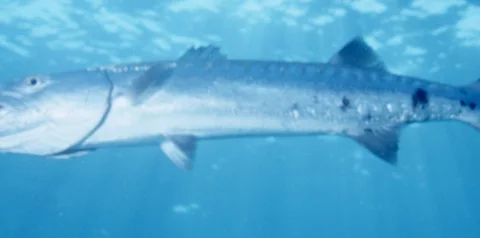 Great BarracudaGreat barracuda is a much bigger tropical species, blotchier, with a heavily undershot jaw of very uneven teeth; the European is a slender fish that rarely tops 3 ft (1 m) in the Mediterranean
Regulations vary by area and can change in-season — always check the official rules for your area before you fish. Regulations guide →
Plan a trip for European Barracuda
Build today's plan