
Saltwater · Year-round; Florida Keys flats best November to March, reefs and wrecks in summer
Great Barracuda
Sphyraena barracuda
The great barracuda is a long, fang-toothed ambush predator of reefs, wrecks and — in winter — the shallow Florida Keys flats. It is a spectacular sight-casting and trolling target, but large reef-caught fish are a classic ciguatera carrier in Florida and Hawaiʻi, so big ones are best released.
Seasons · Peak
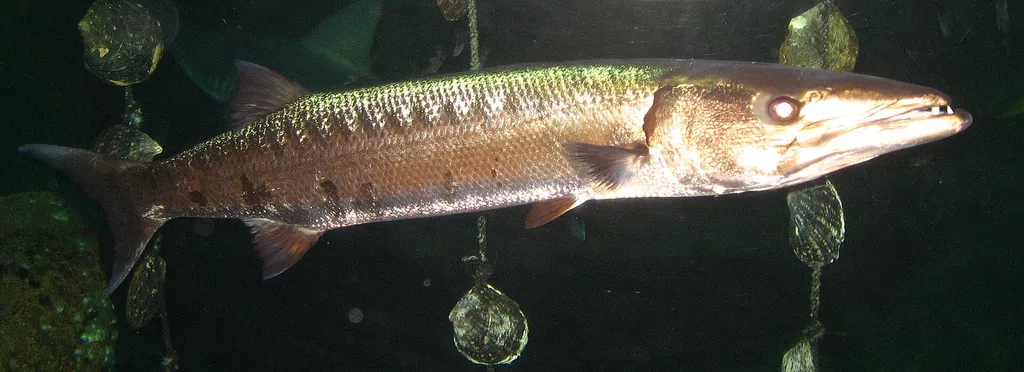
Identifying features
- Undershot lower jaw jutting past the upper, full of uneven fang-like teeth
- Long pike-like silver body with scattered dark blotches toward the tail
- Two widely separated dorsal fins and a forked tail
- Large, prominent eyes and a wary, hovering posture over structure
- Adults reach well over 3 ft (0.9 m); juveniles are slimmer and school inshore
Habits
- Ambushes prey with explosive bursts from reefs, wrecks and flat edges
- Large adults are mostly solitary; juveniles school inshore
- Curious and attracted to flash and struggling fish — keep shiny jewellery out of the water nearby
- Handle with extreme care — the teeth can inflict deep cuts even after landing
- Large reef fish can carry ciguatera toxin — the bigger and older the fish, the greater the risk
Distribution
Where to find them
- Florida Keys flats in the cool winter months
- Reefs and wrecks off southeast Florida and the Gulf
- Hawaiian reef edges and harbour channels
Where they live
How to catch them
Trolling tube lures and spoons Boat
Rig: Medium conventional or spinning gear, tube lures and spoons trolled over reefs, wrecks and ledges on a short wire leader
Bait/lure: Tube lures, spoons, rigged baitfish
Key tip: Keep speed up and cover water — barracuda strike fast-moving flash over structure.
Live bait and fast plugs on the flats Shore
Rig: Medium spinning rod, live baitfish or a fast plug cast ahead of cruising fish on Keys flats in winter, with a short wire leader
Bait/lure: Live pilchards or pinfish, fast plugs
Key tip: Lead the fish by several feet and retrieve fast — a slow lure is followed, not eaten.
Best baits & lures
Baseline setup
- Rod: Medium 7 ft spinning or conventional rod
- Line: 20-40 lb braid or mono
- Terminal: Short wire leaders, tube lures, spoons and strong hooks
Recommended gear for this species
Rod · Best value
9' 5-weight fly rod outfit
≈ US$180-260
Covers chironomid lakes and small rivers with one setup.
Flies · Budget
Chironomid assortment (30 patterns)
≈ US$25-40
Chironomids are 60% of a lake rainbow's diet in spring.
Picks come from our rule library — never paid placements. Prices are guides; affiliate links may earn us a commission.
Typical size
Common 5-15 lb (2.3-6.8 kg); large fish to about 50 lb (22.7 kg)
On the table
Risky — large barracuda are a classic ciguatera carrier in Florida and Hawaiʻi; favour releasing big fish and keep only small ones, if any.
Similar species
Regulations vary by area and can change in-season — always check the official rules for your area before you fish. Regulations guide →
Plan a trip for Great Barracuda
Build today's plan