
Saltwater · Late spring through autumn; feeds up at night
European Hake
Merluccius merluccius
A night-rising predator of deep Atlantic and Mediterranean water — the merluza of Spanish kitchens. By day it holds deep near the bottom; after dark it rises to hunt whiting and sardines, and boat anglers target it on night tides over shelf mud with fish baits.
Seasons · Peak
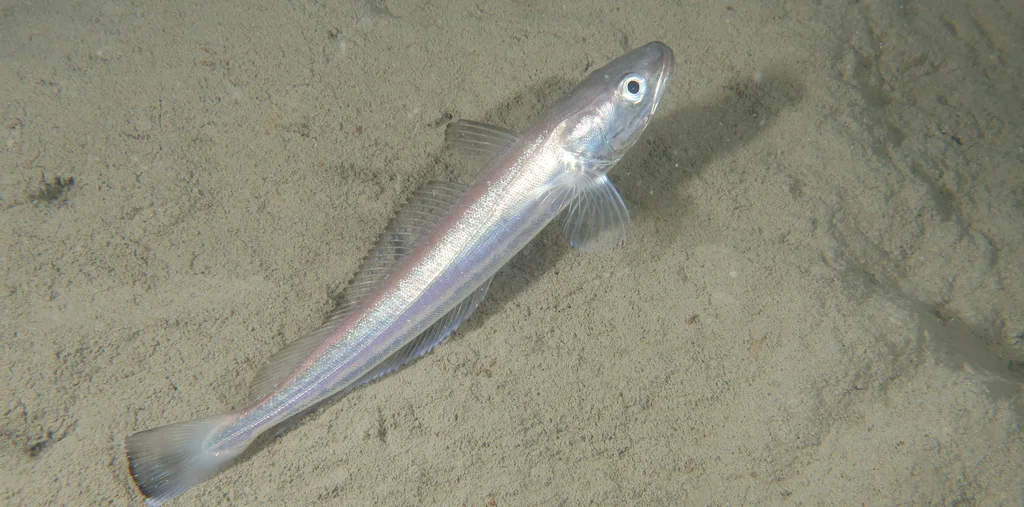
Identifying features
- Long silvery-grey body, darker on the back, with a black mouth lining
- Large head with a wide mouth full of sharp, hinged teeth
- Two dorsal fins — the first short and triangular, the second long
- Lateral line straight with a dark streak; scales large and easily shed
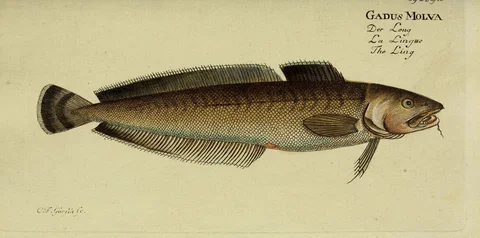
- Lower jaw projects slightly; no chin barbel, unlike ling and tusk
Habits
- Rises off the bottom at night to hunt — the classic night feeder of the shelf
- By day it rests near the bottom in deep water, moving up after dark
- Feeds on whiting, pout, sardines, anchovies and squid
- Young fish stay in shallower nursery water over mud
- Bites best on night tides and in the first hours of darkness
Distribution
Where to find them
- Deep Celtic Sea grounds off Cornwall and Ireland
- Channel slopes on night tides
- Mediterranean slopes off Spain
Where they live
How to catch them
Night flowing trace over shelf mud Boat
Rig: Long flowing trace with a 4/0-6/0 hook and whole sardines or mackerel strips, anchored at night over muddy slopes
Bait/lure: Whole sardine or mackerel strips
Key tip: The first hours of darkness are the key — hake leave the bottom to feed as soon as the light goes.
Paternoster on the night tide Boat
Rig: Two-hook paternoster with squid and fish over deep Channel grounds on the night tide
Bait/lure: Squid strips and sardine chunks
Key tip: Alternate baits midwater and on the bottom — hake feed where the prey is, not always on the deck.
Best baits & lures
Baseline setup
- Rod: Medium-heavy 7-8 ft boat rod
- Line: 20-30 lb braid
- Terminal: Flowing traces and paternosters, size 4/0-6/0 hooks
Recommended gear for this species
Rod · Best value
9' 5-weight fly rod outfit
≈ US$180-260
Covers chironomid lakes and small rivers with one setup.
Flies · Budget
Chironomid assortment (30 patterns)
≈ US$25-40
Chironomids are 60% of a lake rainbow's diet in spring.
Picks come from our rule library — never paid placements. Prices are guides; affiliate links may earn us a commission.
Typical size
Common 16-24 in (40-60 cm), about 2-5 lb (1-2.5 kg); large fish to 55 in (140 cm) and 33 lb (15 kg)
On the table
Excellent — delicate, large white flakes; the merluza of Spanish kitchens and a premium table fish.
Similar species
Regulations vary by area and can change in-season — always check the official rules for your area before you fish. Regulations guide →
Plan a trip for European Hake
Build today's plan