
Saltwater · Late spring through autumn; summer peak
European Seabass
Dicentrarchus labrax
Europe's number one saltwater lure fish — a silvery, hard-hitting predator of surf beaches, estuaries and rocky shores from the Mediterranean to the North Sea, and still expanding northwards. It is tightly managed across Europe, so always check the current local minimum-size and bag rules before keeping one. Called Wolfsbarsch in German, bar or loup in French, lubina in Spanish and zeebaars in Dutch.
Seasons · Peak
Identifying features
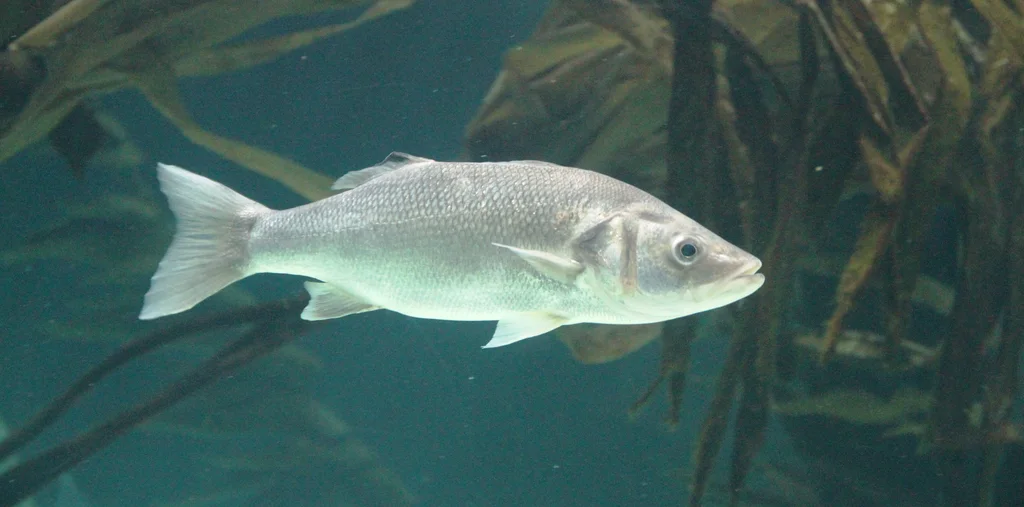
- Streamlined silvery body with a blue-grey to olive back and white belly
- Two separate dorsal fins, the first spiny, and a moderately forked tail
- Large scales, a pointed head and a slightly upturned lower jaw
- Dark blotch on the upper edge of the gill cover on many adults
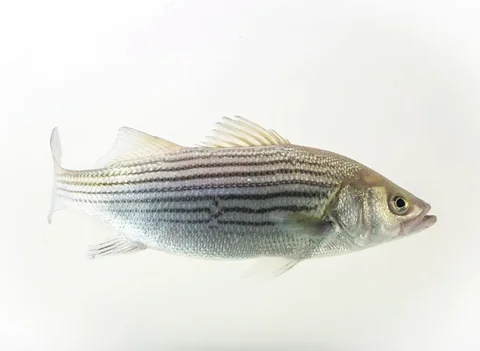
- Young fish may show faint spotting but never the bold stripes of striped bass
Habits
- Hunts sandeels, sprats, prawns and crabs in surf, current seams and over reefs
- Moves into estuaries and harbours in summer and offshore in cold winters
- Feeds hardest at dawn, dusk and on flooding tides, often in very shallow water
- Juveniles school tightly; large adults become solitary and territorial
- Spawns in late winter and spring, earlier in the south than in the north
Distribution
Where to find them
- Atlantic surf beaches and estuary mouths of France, Spain and south-west Britain
- Mediterranean harbour walls, lagoon outlets and rocky points
- Dutch and German North Sea piers, groynes and tidal channels
Where they live
How to catch them
Surf and estuary lure fishing Shore
Rig: 9-10 ft lure rod casting soft-plastic shads, minnow plugs and surface lures along surf tables, current seams and estuary edges
Bait/lure: Soft plastics, surface lures and minnow plugs
Key tip: Fish the first push of the flood tide at dawn or dusk and keep moving along the surf line until you find feeding fish.
Vertical jigging over reefs and wrecks Boat
Rig: Short boat lure rod with a soft-plastic shad on a jig head fished vertically over reef and wreck marks on a drifting boat
Bait/lure: Soft-plastic shads and metal jigs
Key tip: Drop to the bottom, wind up a few turns and repeat — most takes come as the lure lifts off the structure.
Best baits & lures
Baseline setup
- Rod: 9-10 ft lure rod from shore; shorter 7-8 ft rod on boats
- Line: 15-25 lb braid with a fluorocarbon leader
- Terminal: Soft plastics, surface lures, jig heads and small hooks for bait fishing
Recommended gear for this species
Rod · Best value
9' medium-heavy surf spinning rod
≈ US$110-170
Casts plugs and bait past the breakers and handles stripers, drum and bluefish in the wash.
Reel · Best value
5000 size sealed spinning reel
≈ US$120-180
Salt spray and dunkings kill cheap reels — a sealed body and 30 lb braid capacity are the surf standard.
Terminal · Budget
Topwater plugs, soft-plastic jigs and fish-finder rigs
≈ US$25-40
Plugs for blitzes, jigs for the trough, bait on a fish-finder rig when they won't chase — the inshore trio.
Picks come from our rule library — never paid placements. Prices are guides; affiliate links may earn us a commission.
Typical size
Common 16-28 in (40-70 cm), about 2-9 lb (0.9-4 kg); large fish to 40 in (100 cm) and 25 lb (11 kg)
On the table
Excellent — firm, white, delicately flavoured flesh; one of Europe's most prized food fish, subject to current size and bag rules.
Similar species
Regulations vary by area and can change in-season — always check the official rules for your area before you fish. Regulations guide →
Plan a trip for European Seabass
Build today's plan