
Freshwater · Year-round at managed lakes and ponds; best in spring and autumn
Japanese Crucian Carp (Gengoro-buna)
Carassius cuvieri
Two sides must be stated: the herabuna fishery — Japan's biggest freshwater fishing style, two-rod float fishing — runs almost entirely on cultured, stocked fish at managed ponds and lakes. The WILD Lake Biwa population, by contrast, is Red List IB (endangered); wild fish must never be targeted or kept.
Seasons · Peak
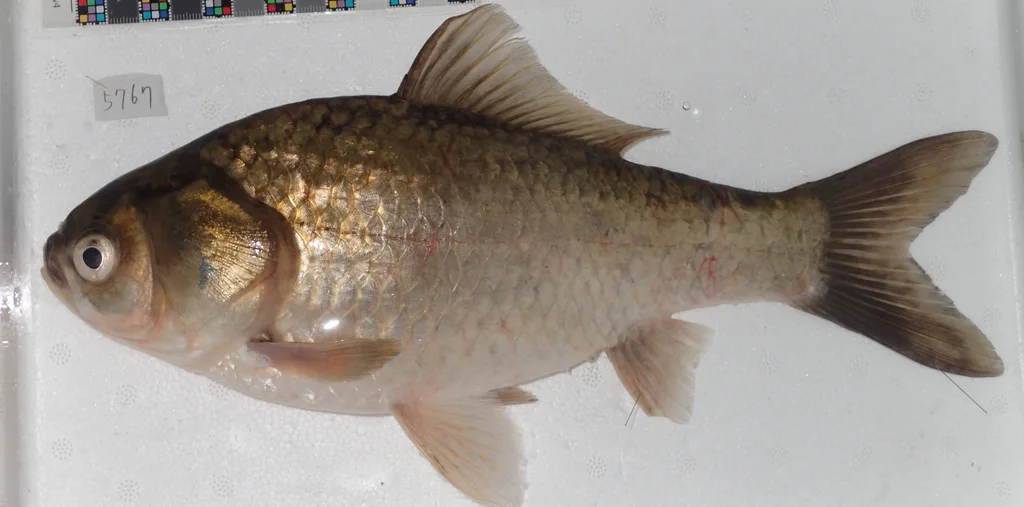
Identifying features
- Very deep, strongly compressed body — deeper than ginbuna
- Small scales for a funa, densely set
- Small mouth and a high, arched back
- Silvery-olive sides, paler belly
- Long dorsal fin typical of the funa group, with a deep body silhouette
Habits
- The target of herabuna fishing, Japan's biggest freshwater style: two-rod or single-rod float fishing with dough baits
- Managed fisheries run almost entirely on cultured, stocked fish, caught and released
- Wild fish in Lake Biwa feed on plankton and benthic invertebrates in shallow weedy water
- Spawns in late spring to early summer on submerged vegetation
- Feeds in mid-water more than other funa, suiting float-and-dough tactics
Distribution
Regional coverage expanding
Where to find them
- Managed herabuna fishing ponds in Saitama and the Kanto plain
- Lake Kasumigaura, Ibaraki — stocked herabuna fishing
- Managed herabuna lakes in the Kansai region around Lake Biwa — stocked facilities only, not wild fish
Where they live
How to catch them
Herabuna float fishing at managed ponds Lake
Rig: Long telescopic hera rod without a reel, sensitive float and two fine hooks with dough baits fished in mid-water at managed facilities
Bait/lure: Gluten dough and hera paste baits
Key tip: Learn to read the float: the delicate lift bites of herabuna are the whole sport; fine-tune bait size and depth.
Herabuna fishing at managed lake banks River
Rig: Hera float rig from platforms at managed lakes, with regular groundbaiting to keep fish feeding in the swim
Bait/lure: Soft paste baits in set feeding
Key tip: Feed little and often rather than a lot at once; the fish follow the bait cloud.
Best baits & lures
Baseline setup
- Rod: Hera rod 9-15 ft (2.7-4.5 m), telescopic, no reel
- Line: Fine nylon main line with lighter leaders, matched to float rig
- Terminal: Two-hook hera rig with a sensitive float, small hooks and fine leaders
Recommended gear for this species
Rod · Best value
9' 5-weight fly rod outfit
≈ US$180-260
Covers chironomid lakes and small rivers with one setup.
Flies · Budget
Chironomid assortment (30 patterns)
≈ US$25-40
Chironomids are 60% of a lake rainbow's diet in spring.
Picks come from our rule library — never paid placements. Prices are guides; affiliate links may earn us a commission.
Typical size
Common 8-14 in (20-35 cm) at managed waters; large fish over 16 in (40 cm)
On the table
Historically eaten around Lake Biwa (e.g. in local dishes), but the modern herabuna fishery is overwhelmingly catch-and-release at managed ponds, and wild fish must not be kept.
Similar species
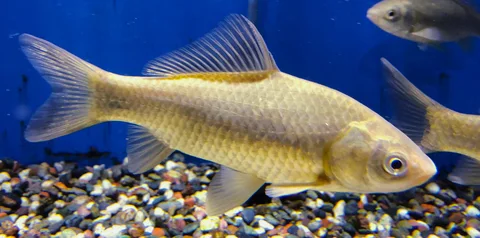 GinbunaGinbuna is shallower-bodied with larger scales; it is the everyday wild funa of most waters. Gengoro-buna is the deep-bodied, small-scaled herabuna species
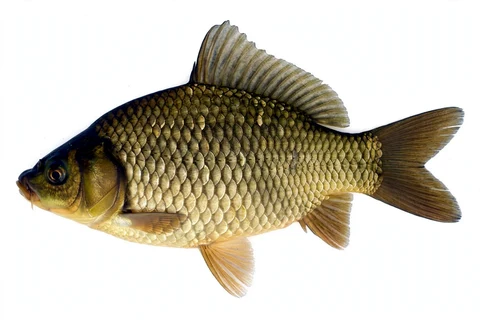 Chinese Crucian CarpThe guide's crucian carp (C. auratus) is the Chinese species; gengoro-buna is a distinct species (C. cuvieri), larger and deeper-bodied, native to the Lake Biwa system
Regulations vary by area and can change in-season — always check the official rules for your area before you fish. Regulations guide →
Plan a trip for Japanese Crucian Carp (Gengoro-buna)
Build today's plan