
Saltwater · Year-round in Southern California; easiest around kelp from late spring through fall
Halfmoon
Medialuna californiensis
A blue-grey, school-forming kelp fish named for its crescent, half-moon tail. It cruises in loose schools above the kelp, grazing algae and picking off small invertebrates, and is a friendly, willing biter for boat and rock anglers in Southern California — often in the same water as opaleye.
Seasons · Peak
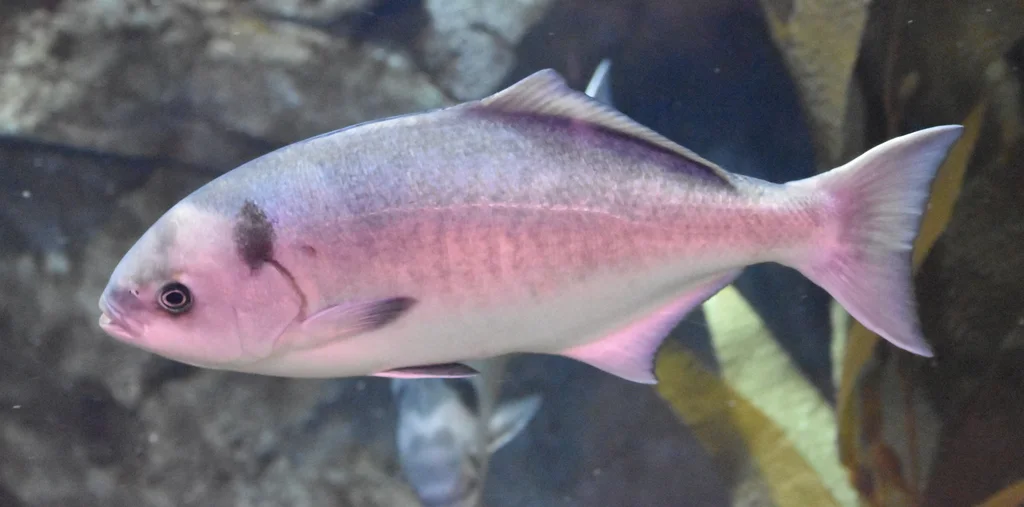
Identifying features
- Crescent-shaped, half-moon tail with a concave trailing edge — the name itself
- Uniform steel blue-grey colour, lighter below
- Deep, oval body covered in small scales
- Small, slightly upturned mouth with fine teeth
- Dark eyes — never the glowing blue-green of an opaleye
Habits
- Forms loose mid-water schools over kelp and reef
- Grazes algae but also takes shrimp, mussel and other animal baits readily
- Feeds by day, rising and falling with the kelp canopy
- Often mixes with opaleye and black perch over the same reefs
- A scrappy, honest fighter on light tackle for its size
Distribution
Where to find them
- Kelp beds around Catalina and the Channel Islands
- Rocky reefs and breakwaters from Santa Barbara to San Diego
- Central California kelp edges in summer
Where they live
How to catch them
Small baits around kelp and reef edges Boat
Rig: Light spinning rod, small hook and split shot with shrimp, mussel or clam, fished at mid-depth around kelp and reef edges from boat or rocks
Bait/lure: Shrimp pieces, mussel, clam
Key tip: Fish the shaded side of the kelp and keep the bait moving slowly — halfmoon pick at baits and rarely slam them.
Chumming schools up with peas and shrimp Boat
Rig: Light tackle with a small float or free-lined bait; chum sparingly with peas and shrimp bits to draw the school up, often alongside opaleye
Bait/lure: Peas, shrimp bits, scraped algae
Key tip: Match the chum with the hook bait and fish at the same depth the chum is sinking through.
Best baits & lures
Baseline setup
- Rod: Light to medium 7-8 ft spinning rod
- Line: 6-12 lb mono
- Terminal: Size 6-8 hooks, split shot, small floats
Recommended gear for this species
Rod · Best value
9' 5-weight fly rod outfit
≈ US$180-260
Covers chironomid lakes and small rivers with one setup.
Flies · Budget
Chironomid assortment (30 patterns)
≈ US$25-40
Chironomids are 60% of a lake rainbow's diet in spring.
Picks come from our rule library — never paid placements. Prices are guides; affiliate links may earn us a commission.
Typical size
Common 10-14 in (25-36 cm); large fish to about 19 in (48 cm)
On the table
Good — mild, white, flaky flesh that makes a fine pan fish despite its partly vegetarian diet.
Similar species
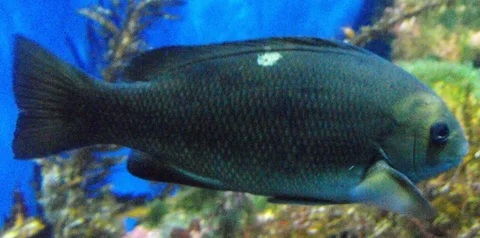 OpaleyeOpaleye is dark olive with glowing blue-green opal eyes and pale side spots and a nearly straight tail; halfmoon is blue-grey with dark eyes and the unmistakable crescent tail
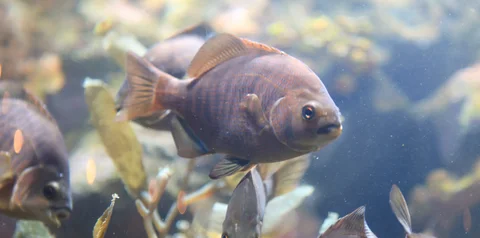 Black PerchBlack perch is a dark, thick-lipped surfperch of surf and sand pockets with a taller dorsal fin; halfmoon is a blue-grey mid-water kelp schooler with a crescent tail
Regulations vary by area and can change in-season — always check the official rules for your area before you fish. Regulations guide →
Plan a trip for Halfmoon
Build today's plan