
Saltwater · Year-round; most active in warm months
Inshore Lizardfish
Synodus foetens
A lizard-headed ambush predator that buries itself in bay sand with only its eyes and snout free, then lunges at anything passing overhead. Its upturned mouth is packed with needle teeth — including on the tongue — so unhook it with pliers. It hits baits and jigs far more aggressively than its size suggests, and almost all are released: the flesh is soft and poor.
Seasons · Peak
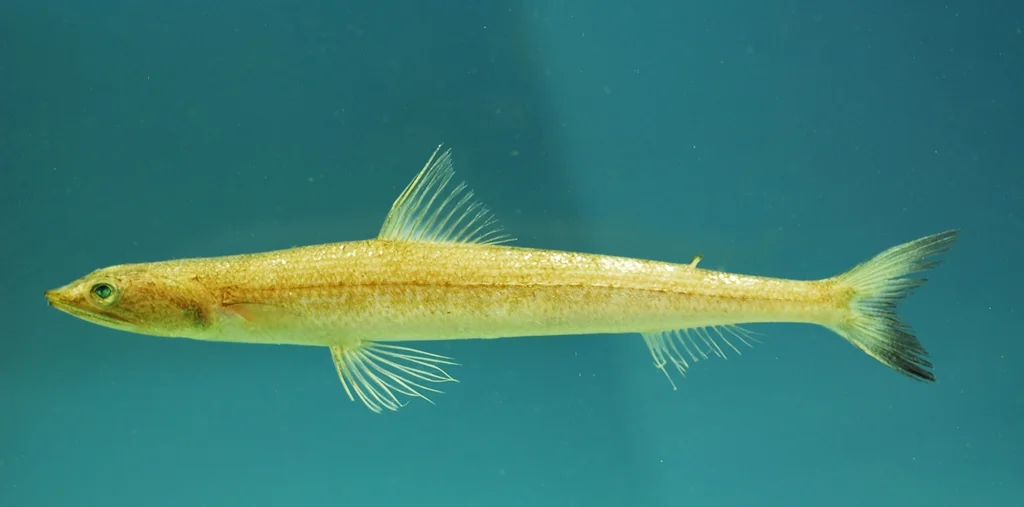
Identifying features
- Long, cylindrical lizard-like body with a pointed, upturned snout
- Huge mouth full of needle-sharp teeth, including teeth on the tongue
- Mottled brown back with dark saddle blotches over a pale belly
- Small fleshy adipose fin on the back just before the tail
- Eyes set high on the head for watching from the sand
Habits
- Buries in sand or lies flat on bottom, perfectly camouflaged, in ambush
- Lunges upward to snatch shrimp and small fish passing overhead
- Surprisingly aggressive — strikes jigs and lures nearly its own size
- Common bycatch on small baits and jigs over sand and grass flats
- Handle with care when unhooking: the teeth are needle-sharp even in small fish
Distribution
Where to find them
- Florida bay sand and grass flats
- Pier and dock shadows along the Gulf and Carolina coasts
- Bay canals and channel edges over sand
Where they live
How to catch them
Small baits and jigs over sand and grass Shore
Rig: Light spinning rod, small jig or baited hook with shrimp worked over sand and grass flats — lizardfish take it as ambush bycatch while fishing for trout or flounder
Bait/lure: Shrimp pieces, small jigs
Key tip: Keep the bait moving slowly near bottom; a lizardfish buried in the sand will rush anything that passes close overhead.
Tiny lures along the bottom in bays and canals Shore
Rig: Ultralight to light rod, tiny soft plastic or spoon retrieved along the bottom in bays and canals with short hops
Bait/lure: Tiny soft plastics, small spoons
Key tip: Expect strikes from fish you never saw — pause after each hop and let the lure settle where a buried lizardfish can line it up.
Best baits & lures
Baseline setup
- Rod: Light 6-7 ft spinning rod
- Line: 6-12 lb mono or braid
- Terminal: Small jig heads, tiny soft plastics, size 2-1/0 hooks, pliers for unhooking
Recommended gear for this species
Rod · Best value
9' 5-weight fly rod outfit
≈ US$180-260
Covers chironomid lakes and small rivers with one setup.
Flies · Budget
Chironomid assortment (30 patterns)
≈ US$25-40
Chironomids are 60% of a lake rainbow's diet in spring.
Picks come from our rule library — never paid placements. Prices are guides; affiliate links may earn us a commission.
Typical size
Common 8-12 in (20-30 cm); large fish to about 16 in (41 cm)
On the table
Poor — soft, mushy flesh; almost always released.
Similar species
Regulations vary by area and can change in-season — always check the official rules for your area before you fish. Regulations guide →
Plan a trip for Inshore Lizardfish
Build today's plan