
Saltwater · Year-round migrant; winter fatty 'kan-buri' season Dec-Feb on the Sea of Japan side
Japanese Amberjack
Seriola quinqueradiata
Japan's iconic amberjack, famous as winter 'kan-buri' when fish fatten in the cold Sea of Japan. Its name changes with growth — wakashi, then inada, then warasa, and finally buri over about 80 cm; farmed juveniles are widely sold as hamachi. It is a distinct species, explicitly not the California yellowtail of the eastern Pacific.
Seasons · Peak
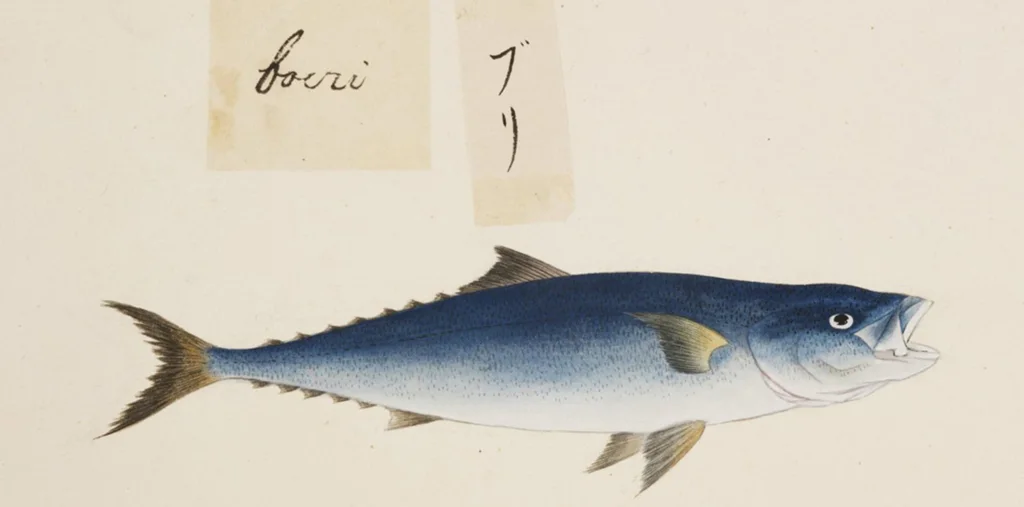
Identifying features
- Streamlined amberjack body, dark blue-green above and silvery below
- Yellow lateral band fading with age, yellow tail and fins
- No scutes or finlets; first dorsal fin low and spiny
- Rounded rear corner of the upper jaw (contrast hiramasa notes in similar)
- Deeply forked tail on a narrow caudal peduncle with small keel
Habits
- Strong seasonal migrant following sardine and anchovy schools
- Enters cold Sea of Japan water in winter, feeding heavily and fattening
- Hunts in schools when young, larger fish more solitary or in small groups
- Powerful, deep-diving fighter that heads for reef when hooked
- Spawns in warmer southern waters in spring
Distribution
Regional coverage expanding
Where to find them
- Toyama Bay and Noto Peninsula, Ishikawa and Toyama — the kan-buri coast
- Goto Islands offshore reefs, Nagasaki
- Cape Ashizuri and Kochi offshore grounds, Kochi
Where they live
How to catch them
Boat jigging over offshore reef Boat
Rig: Jigging rod with 150-250 g metal jigs over reef pinnacles and bait marks from a charter boat
Bait/lure: Metal jigs
Key tip: Work the jig with sharp lifts through the bait layer and be ready for a hit on the fall.
Rock and shore casting for warasa and buri Rock fishing
Rig: Long shore-game rod, large pencil or minnow lures cast from rocky headlands at dawn over current
Bait/lure: Topwater pencil and sinking minnow lures
Key tip: Fish first light when bait is pushed against the rocks; keep pressure on to stop the first run to reef.
Best baits & lures
Baseline setup
- Rod: Heavy jigging rod or 10-11 ft shore-game rod
- Line: 40-65 lb braid with 60-80 lb fluorocarbon leader
- Terminal: 150-250 g jigs, large pencil lures, strong assist hooks
Recommended gear for this species
Rod · Best value
9' 5-weight fly rod outfit
≈ US$180-260
Covers chironomid lakes and small rivers with one setup.
Flies · Budget
Chironomid assortment (30 patterns)
≈ US$25-40
Chironomids are 60% of a lake rainbow's diet in spring.
Picks come from our rule library — never paid placements. Prices are guides; affiliate links may earn us a commission.
Typical size
Common 24-39 in (60-100 cm), about 7-22 lb (3-10 kg); large fish to 59 in (150 cm) and over 88 lb (40 kg)
On the table
Excellent and highly prized — winter kan-buri is a luxury sashimi fish; farmed hamachi is a sushi staple.
Similar species
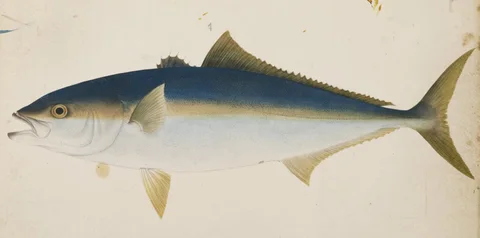 HiramasaHiramasa has a clearer yellow band, a more compressed body, a rounded rear upper-jaw corner and a pectoral fin shorter than the pelvic; buri is deeper-bodied with a squarer jaw corner look
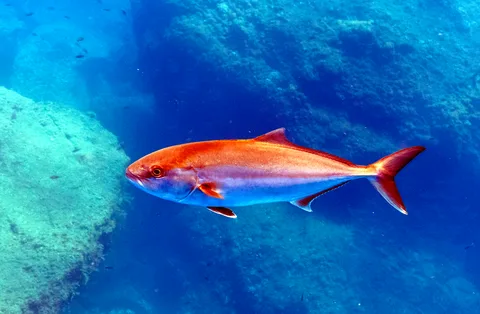 Greater AmberjackGreater amberjack is an Atlantic/wider-ranging species with a darker amber band through the eye; Japanese amberjack is the NW Pacific species with the wakashi-inada-warasa-buri name ladder
Regulations vary by area and can change in-season — always check the official rules for your area before you fish. Regulations guide →
Plan a trip for Japanese Amberjack
Build today's plan