
Saltwater · Spring peak (March to May) as schools approach the shore; smaller autumn runs in some bays
Japanese Halfbeak
Hyporhamphus sajori
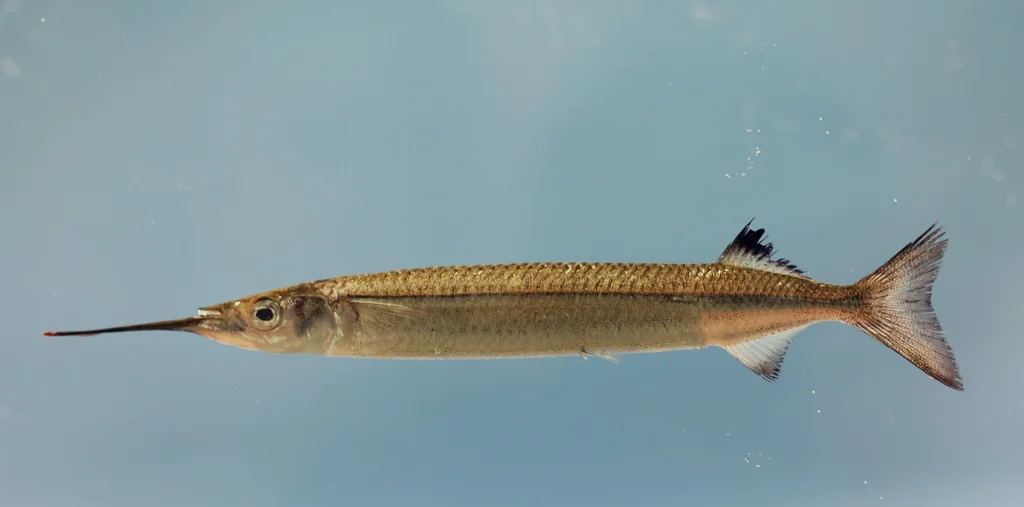
A slender surface-schooling halfbeak and a classic herald of spring on Japanese piers. Only the lower jaw is drawn out into a long beak, which makes it unmistakable. Its bones are famously green — a real and harmless trait that surprises first-time cooks. Schools are wary of shadows and boat noise, so spring pier fishing for it is a quiet, ultra-light float game.
Seasons · Peak
Identifying features
- Long lower jaw extended into a thin beak; upper jaw short and triangular
- Slim, silvery, almost transparent-looking body
- Green bones and greenish flesh tones — normal and harmless
- Dorsal and anal fins set far back, near the forked tail
- Dark tip on the lower-jaw beak in many adults
Habits
- Swims in schools right at the surface of calm bays
- Feeds on plankton and tiny surface crustaceans
- Moves close to piers and shores in spring to spawn
- Very wary — shadows, footsteps and splashes scatter the school
- Often leaps and skitters across the surface when startled
Distribution
Regional coverage expanding
Where to find them
- Wakasu Seaside Park fishing area, Tokyo Bay
- Osaka South Port (Nanko) fishing park piers
- Seto Inland Sea harbour piers in Okayama and Hiroshima
Where they live
How to catch them
Ultra-light float fishing from spring piers Shore
Rig: Very light float rig with a long fine leader and a tiny hook (about size 20 or smaller), fished just under the surface from a pier
Bait/lure: A pinhead-sized piece of shrimp or worm
Key tip: Stay low, keep your shadow off the water and use the finest line you have — sayori spook at anything heavy.
Fine sabiki-style rig for surface schools Shore
Rig: A very small-hook sabiki-style rig or a string of tiny baited hooks worked slowly through the surface layer along pier edges
Bait/lure: Tiny shrimp pieces on each hook, or bare fine feathers
Key tip: Cast beyond the school and draw the rig slowly through it; a fast retrieve puts the whole school down.
Best baits & lures
Baseline setup
- Rod: Ultra-light 6-9 ft float or ajing-style rod
- Line: 2-4 lb mono or fine ester line
- Terminal: Small floats, split shot and hooks around size 20
Recommended gear for this species
Rod · Best value
9' 5-weight fly rod outfit
≈ US$180-260
Covers chironomid lakes and small rivers with one setup.
Flies · Budget
Chironomid assortment (30 patterns)
≈ US$25-40
Chironomids are 60% of a lake rainbow's diet in spring.
Picks come from our rule library — never paid placements. Prices are guides; affiliate links may earn us a commission.
Typical size
Common 8-12 in (20-30 cm); large fish to about 16 in (40 cm)
On the table
Excellent — a prized spring fish in Japan, eaten as sashimi, grilled or dried; the green bones are harmless.
Similar species
Regulations vary by area and can change in-season — always check the official rules for your area before you fish. Regulations guide →
Plan a trip for Japanese Halfbeak
Build today's plan