
Saltwater · Schooling runs vary by year; autumn pier runs are typical
Japanese Sardine
Sardinops melanostictus
The backbone of Japan's pier sabiki fishing and one of the world's great forage fish. Japanese sardine stocks swing dramatically over decades — boom years of huge schools alternate with lean years — so a packed pier in autumn is never guaranteed. It is a distinct Northwest Pacific species, not the Pacific sardine of North America, though the two are close relatives.
Seasons · Peak
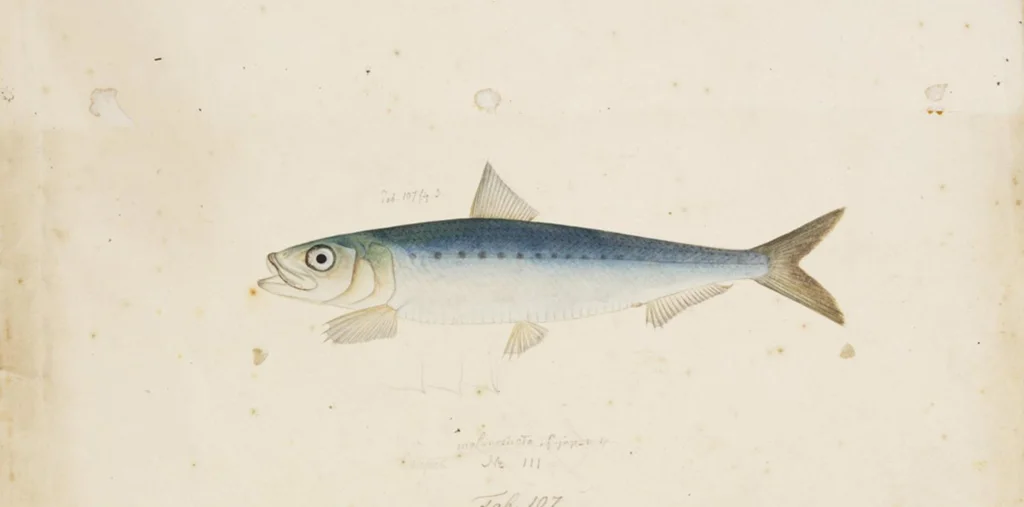
Identifying features
- Streamlined silvery body with a blue-green back
- A row of dark spots along the middle of the flank — the key mark
- Small mouth and soft, easily shed scales
- Deeply forked tail and a single soft dorsal fin
- Belly rounded in profile, not as deep-bodied as the sardinella
Habits
- Travels in huge dense schools that move with the currents
- Feeds on plankton filtered from surface water
- Abundance swings in long boom-and-bust cycles over decades
- Falls prey to almost everything — mackerel, seabirds, dolphins and tuna
- Runs close to piers and harbour walls when pushing bait in autumn
Distribution
Regional coverage expanding
Where to find them
- Honmoku Fishing Facility piers, Yokohama
- Tokyo Bay pier fishing parks
- Osaka Bay fishing parks and harbour piers
Where they live
How to catch them
Pier sabiki with a chum cage Shore
Rig: Light rod with a sabiki rig of 6-8 small skin hooks under a small cage of ami krill chum, dropped beside a pier and worked with short lifts
Bait/lure: Ami krill chum in the cage; sabiki hooks are fished bare
Key tip: Keep the rig at the depth of the school — watch where other anglers' fish are coming from.
Sabiki on a light float or cast-and-lift Shore
Rig: Sabiki rig cast gently from a harbour wall and lifted steadily through the school, or fished under a small float at school depth
Bait/lure: Bare sabiki hooks, with a little krill on the lowest hook if bites are slow
Key tip: Short, smooth lifts beat violent jigging; sardine scales shed easily, so handle kept fish gently.
Best baits & lures
Baseline setup
- Rod: Light spinning rod 7-9 ft (2.1-2.7 m)
- Line: 6-10 lb mono or light braid
- Terminal: Sabiki rigs size 4-8 hooks, small chum cages, light sinkers
Recommended gear for this species
Rod · Best value
9' medium-heavy surf spinning rod
≈ US$110-170
Casts plugs and bait past the breakers and handles stripers, drum and bluefish in the wash.
Reel · Best value
5000 size sealed spinning reel
≈ US$120-180
Salt spray and dunkings kill cheap reels — a sealed body and 30 lb braid capacity are the surf standard.
Terminal · Budget
Topwater plugs, soft-plastic jigs and fish-finder rigs
≈ US$25-40
Plugs for blitzes, jigs for the trough, bait on a fish-finder rig when they won't chase — the inshore trio.
Picks come from our rule library — never paid placements. Prices are guides; affiliate links may earn us a commission.
Typical size
Common 6-8 in (15-20 cm); large fish to about 10 in (25 cm)
On the table
Very good — rich and oily; grilled, simmered, or as sashimi only when very fresh.
Similar species
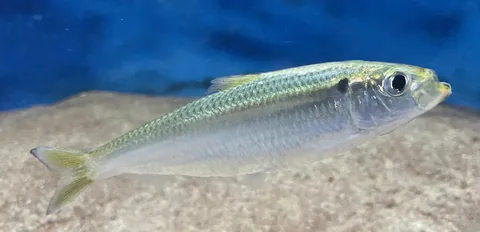 Japanese SardinellaThe sardinella is deeper-bodied with one dark shoulder spot behind the gill cover and no row of flank spots; the sardine is slimmer with a clear row of dark spots along the side
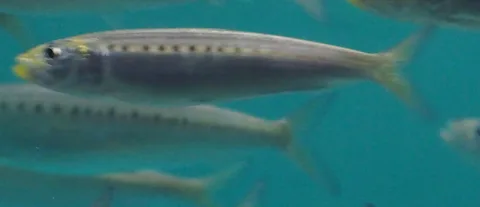 Pacific SardineThe Pacific sardine is the Northeast Pacific relative — a separate stock/species of the American coast; the Japanese sardine is the Northwest Pacific fish, likewise carrying a row of flank spots
Regulations vary by area and can change in-season — always check the official rules for your area before you fish. Regulations guide →
Plan a trip for Japanese Sardine
Build today's plan