
Saltwater · Late spring through autumn; night schools under pier lights in summer
Japanese Jack Mackerel
Trachurus japonicus
The Japanese jack mackerel — 巴浪鱼 in Fujian and Taiwan — is the sabiki staple of northwest Pacific piers: a small, silvery schooling jack that crowds under the lights at night. In Japan the maaji is the number-one pier sabiki target nationwide, schooling at harbours and breakwaters from spring to autumn.
Seasons · Peak
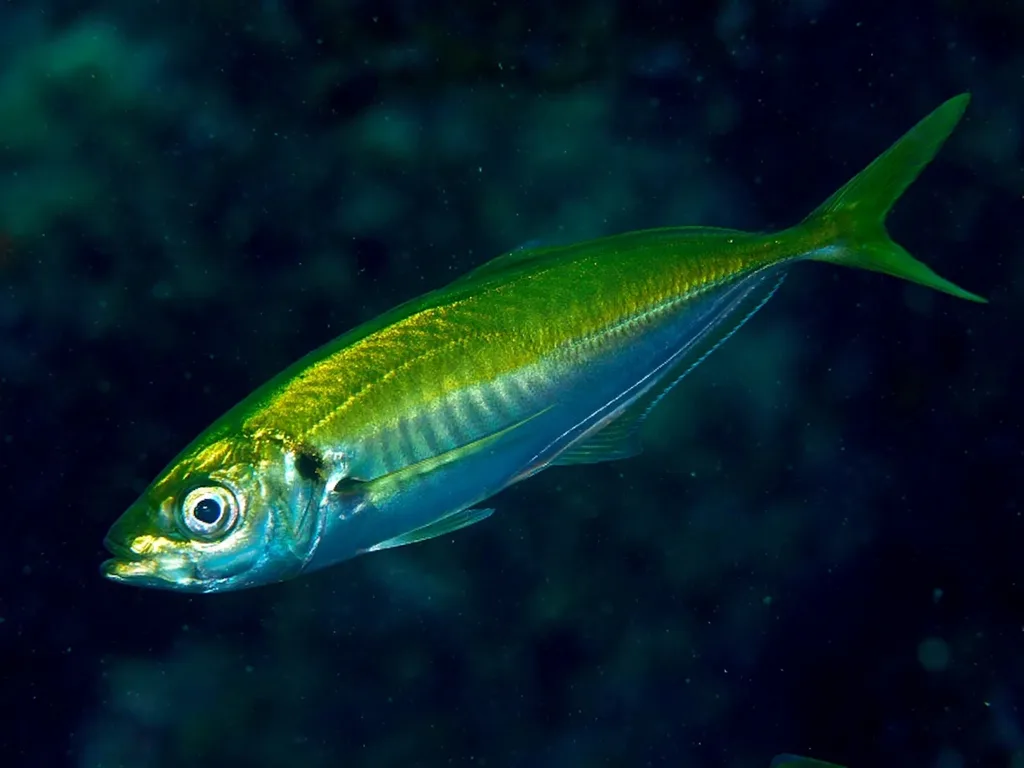
Identifying features
- Slender, silvery jack body with a dark green-blue back
- A row of hard scutes along the full lateral line, rough to the touch at the tail
- Deeply forked tail and two separate dorsal fins
- Large eye with a fleshy adipose eyelid partly covering it
- A dark spot on the upper edge of the gill cover
Habits
- Northwest Pacific coastal species, common off Fujian and Taiwan
- Travels in dense schools, feeding on plankton and small crustaceans
- Moves inshore and under pier lights at night in summer
- Juveniles shelter under jellyfish and floating debris
- Bigger fish hold deeper off reef edges by day and rise at dusk
Distribution
Regional coverage expanding
Where to find them
- Lit piers and breakwaters in Fujian and Taiwan at night
- Harbour mouths where schools pass on the tide
- Nearshore reef edges from small boats
Where they live
How to catch them
Sabiki rig jigging Shore
Rig: Light rod, multi-hook sabiki rig with a small weight or cage, jigged gently beside pier legs and under lights
Bait/lure: Sabiki rigs, tiny shrimp
Key tip: Jig in short lifts and let the rig flutter down — a hooked fish shaking the rig draws the whole school in.
Night light fishing with tiny shrimp Shore
Rig: Small float or light bottom rig under pier lights, tiny pieces of shrimp on small hooks
Bait/lure: Tiny shrimp pieces
Key tip: Fish where the light circle meets shadow; the school holds at the edge and picks off baits drifting through.
Boat sabiki fishing Boat
Rig: Sabiki rig under a basket or with a small sinker, fished from a boat over reef edges
Bait/lure: Sabiki rigs with krill in the basket or chum cage
Key tip: Keep the rig at the depth of the school on the sounder and jig gently — the chum basket does the attracting.
Best baits & lures
Baseline setup
- Rod: Light 7-9 ft spinning rod
- Line: 4-8 lb mono or braid
- Terminal: Sabiki rigs, small hooks, light weights
Recommended gear for this species
Rod · Best value
9' medium-heavy surf spinning rod
≈ US$110-170
Casts plugs and bait past the breakers and handles stripers, drum and bluefish in the wash.
Reel · Best value
5000 size sealed spinning reel
≈ US$120-180
Salt spray and dunkings kill cheap reels — a sealed body and 30 lb braid capacity are the surf standard.
Terminal · Budget
Topwater plugs, soft-plastic jigs and fish-finder rigs
≈ US$25-40
Plugs for blitzes, jigs for the trough, bait on a fish-finder rig when they won't chase — the inshore trio.
Picks come from our rule library — never paid placements. Prices are guides; affiliate links may earn us a commission.
Typical size
Common 6-10 in; large fish to about 14 in
On the table
Very good — a staple food fish in Fujian and Taiwan, excellent grilled, dried or as sashimi when very fresh.
Similar species
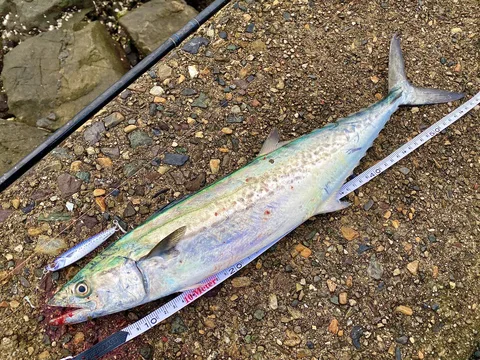 Japanese Spanish MackerelJapanese Spanish mackerel is a much larger, elongated predator with a pointed snout and no lateral-line scutes; Japanese jack mackerel is a small schooling fish with a full row of rough scutes along the side
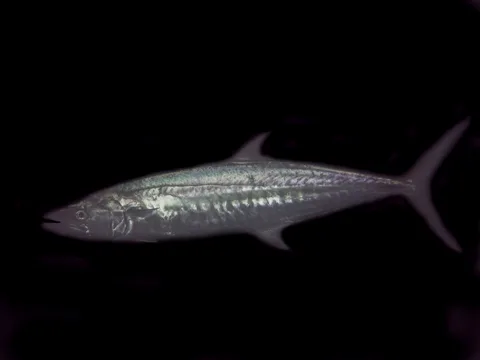 Narrow-barred Spanish MackerelNarrow-barred Spanish mackerel is a large offshore predator with narrow dark bars in young fish and no scutes; the jack mackerel is a small pier fish defined by its scute row and forked tail
Regulations vary by area and can change in-season — always check the official rules for your area before you fish. Regulations guide →
Plan a trip for Japanese Jack Mackerel
Build today's plan