
Saltwater · Year-round; best April to September, with spawning groups offshore in summer
Lane Snapper
Lutjanus synagris
The small 'candy' snapper of Gulf grass flats, named for its neat yellow stripes and a dark thumbprint spot below the soft dorsal. What it lacks in size it makes up for in numbers — schools gather over grass, sand and patch reefs and bite small baits freely, making it a beginner-friendly Gulf favourite.
Seasons · Peak
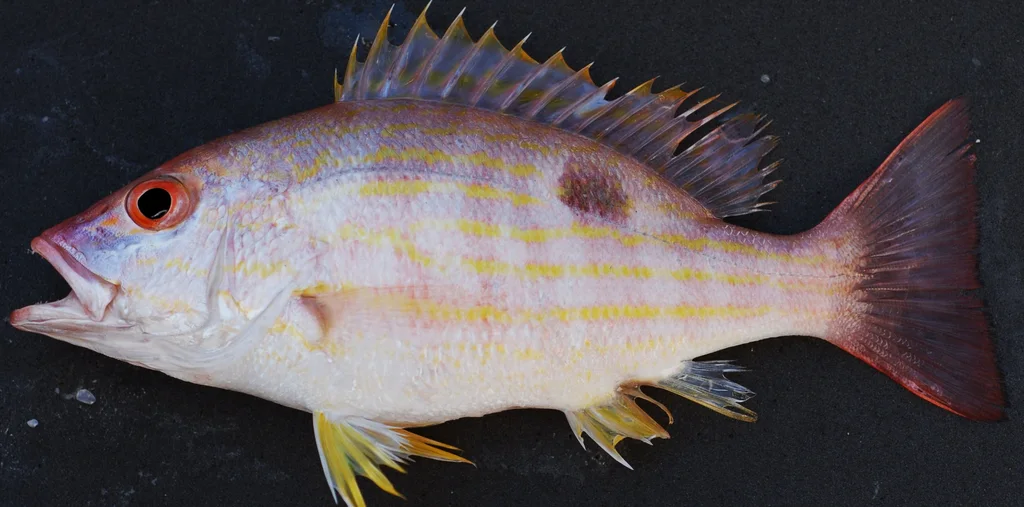
Identifying features
- Eight to ten neat horizontal yellow stripes along a silvery pink-red body
- A large dark thumbprint spot below the soft dorsal fin on the upper flank
- Pointed snout and a slightly forked, pinkish tail
- Yellow fins and a faint dark band running through the eye
- Small size — most fish are little more than a foot long
Habits
- Forms loose schools over grass beds, sand and patch-reef edges
- Feeds mostly at night on shrimp, small crabs, squid and tiny fish
- Juveniles shelter in seagrass, mangroves and bay shallows before moving offshore
- Adults move to deeper reef edges to spawn in spring and summer
- Bites small baits readily but is easily spooked by heavy tackle in clear water
Distribution
Where to find them
- Grass flats and patch reefs off Florida's Gulf coast and the Keys
- Nearshore ledges and reefs in the Florida Panhandle
- Gulf reefs and rubble off Louisiana and Texas in 60-130 ft (18-40 m)
Where they live
How to catch them
Shrimp-tipped jigs and cut bait over grass and patch reefs Boat
Rig: Light spinning tackle with a 1/4-1/2 oz jig tipped with shrimp, or a small knocker rig, worked slowly over grass-bed edges and patch reefs
Bait/lure: Shrimp pieces, cut sardine and squid
Key tip: Keep baits small and near the bottom — lane snapper have small mouths and pick at oversized baits without hooking up.
Two-hook bottom rigs on nearshore ledges Boat
Rig: Two-hook dropper rig with size 1-2/0 hooks and just enough weight to hold on nearshore ledges and rubble
Bait/lure: Shrimp and squid pieces
Key tip: Fish a light leader — in clear Gulf water a school will shy away from heavy line and big hooks.
Best baits & lures
Baseline setup
- Rod: Light to medium 6.5-7 ft spinning rod
- Line: 10-15 lb braid or mono with a 15-20 lb fluorocarbon leader
- Terminal: Size 1-2/0 hooks, 1/4-1/2 oz jigs, small knocker and dropper rigs
Recommended gear for this species
Rod · Best value
9' 5-weight fly rod outfit
≈ US$180-260
Covers chironomid lakes and small rivers with one setup.
Flies · Budget
Chironomid assortment (30 patterns)
≈ US$25-40
Chironomids are 60% of a lake rainbow's diet in spring.
Picks come from our rule library — never paid placements. Prices are guides; affiliate links may earn us a commission.
Typical size
Common 10-14 in (25-36 cm), under 1 lb (0.5 kg); large fish to about 18 in (46 cm) and 3 lb (1.4 kg)
On the table
Good — sweet, white, flaky flesh; a fine small panfish, best eaten fresh and subject to minimum-size rules.
Similar species
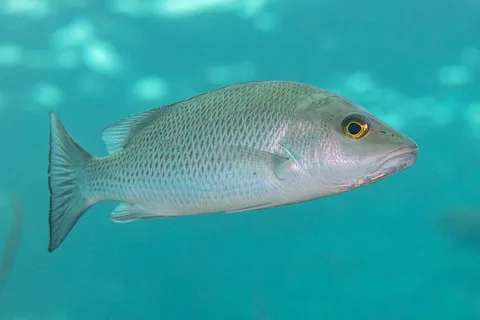 Gray SnapperGray snapper is plain grey to olive with no yellow stripes and no thumbprint spot; lane snapper is pinkish with 8-10 yellow stripes and a bold dark spot below the soft dorsal
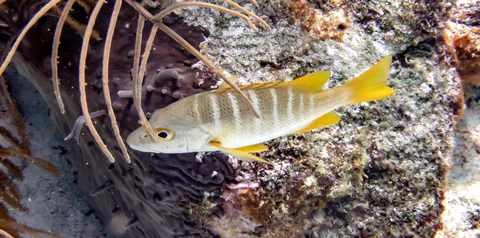 Schoolmaster SnapperSchoolmaster has pale vertical bars and yellow fins but no lengthwise yellow stripes or thumbprint spot; lane snapper is striped lengthwise with the dark spot high on the flank
Regulations vary by area and can change in-season — always check the official rules for your area before you fish. Regulations guide →
Plan a trip for Lane Snapper
Build today's plan