
Saltwater · Year-round in South Florida and the Keys; best May to September
Schoolmaster Snapper
Lutjanus apodus
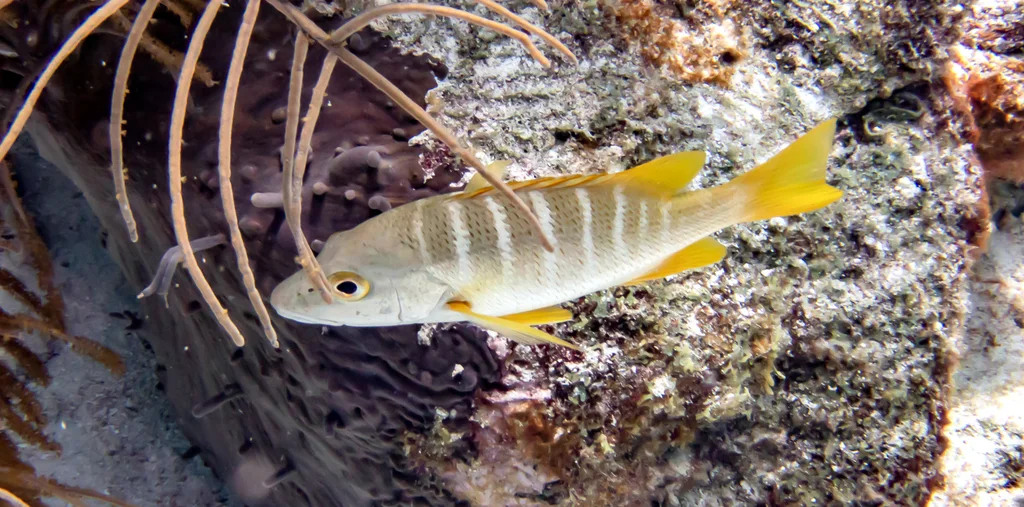
A handsome inshore snapper of the Keys and South Florida, marked by pale vertical bars and, on juveniles, bright blue lines under the eye. It holds tight to coral heads, mangroves and docks and is wary in clear water. Eat small fish with confidence where local advice allows, but treat large tropical fish with caution: in some areas bigger schoolmasters can carry ciguatera, and many locals release the big ones.
Seasons · Peak
Identifying features
- Eight pale vertical bars over an olive-grey to bronze body
- Bright blue lines under the eye and across the snout, strongest on juveniles
- Yellow fins, with a forked yellow tail
- Pointed snout with visible canine teeth and no dark spot on the flank
- Thick, large scales and a slightly steep forehead
Habits
- Holds close to coral heads, ledges and mangrove roots by day
- Forms small daytime schools — the habit behind its name — over reef structure
- Feeds at dusk and night on shrimp, crabs and small fish
- Juveniles shelter in seagrass, mangroves and dock shade
- Wary and quick to dive for cover when hooked or spooked in clear water
Distribution
Where to find them
- Patch reefs and coral heads throughout the Florida Keys
- Mangrove shorelines, docks and bridges in South Florida
- Nearshore reefs along Florida's Atlantic coast
Where they live
How to catch them
Shrimp and small baitfish around mangroves and docks Shore
Rig: Light spinning tackle with a small jig or freelined shrimp on a 1/0-2/0 hook, cast tight to mangrove roots, dock pilings and coral heads
Bait/lure: Live shrimp, small pilchards and sardines
Key tip: Present the bait right against the cover and be ready instantly — a hooked schoolmaster dives straight back into the roots or coral.
Light bottom rigs on patch reefs Boat
Rig: Light knocker or dropper rig with a 20 lb leader fished on patch reefs and rocky ledges, with a light chum slick to draw fish out
Bait/lure: Cut ballyhoo, squid and shrimp
Key tip: Use the lightest leader the structure allows — in clear Keys water, schoolmasters inspect baits closely and refuse heavy tackle.
Best baits & lures
Baseline setup
- Rod: Light to medium 7 ft spinning rod
- Line: 10-20 lb braid or mono with a 20 lb fluorocarbon leader
- Terminal: 1/0-2/0 hooks, small jigs, light knocker rigs and split shot
Recommended gear for this species
Rod · Best value
9' 5-weight fly rod outfit
≈ US$180-260
Covers chironomid lakes and small rivers with one setup.
Flies · Budget
Chironomid assortment (30 patterns)
≈ US$25-40
Chironomids are 60% of a lake rainbow's diet in spring.
Picks come from our rule library — never paid placements. Prices are guides; affiliate links may earn us a commission.
Typical size
Common 12-18 in (30-46 cm), 1-3 lb (0.5-1.4 kg); large fish to about 24 in (61 cm) and 8 lb (3.6 kg)
On the table
Good in small fish, but use caution: larger fish in the tropics can carry ciguatera in some areas, and many locals release big ones — follow local advice.
Similar species
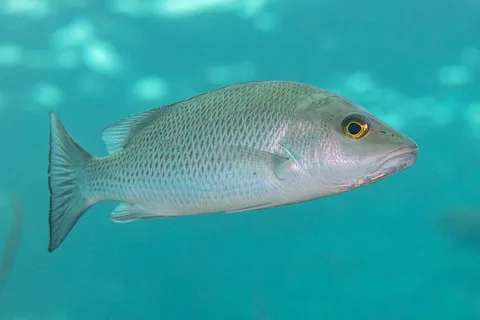 Gray SnapperGray snapper is plain grey without pale bars or blue lines under the eye; schoolmaster shows pale vertical bars, yellow fins and blue facial lines on juveniles
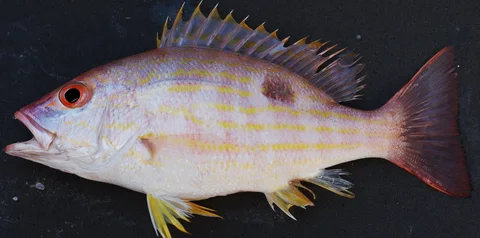 Lane SnapperLane snapper has lengthwise yellow stripes and a dark thumbprint spot below the soft dorsal; schoolmaster has pale vertical bars and no spot
Regulations vary by area and can change in-season — always check the official rules for your area before you fish. Regulations guide →
Plan a trip for Schoolmaster Snapper
Build today's plan