
Saltwater · Late spring through autumn
Leerfish
Lichia amia
A fast surface hunter of Mediterranean beaches and estuary mouths — a torpedo-shaped amberjack relative that chases mullet right into the surf and hits poppers with real aggression. One of the Mediterranean's most exciting shore fish.
Seasons · Peak
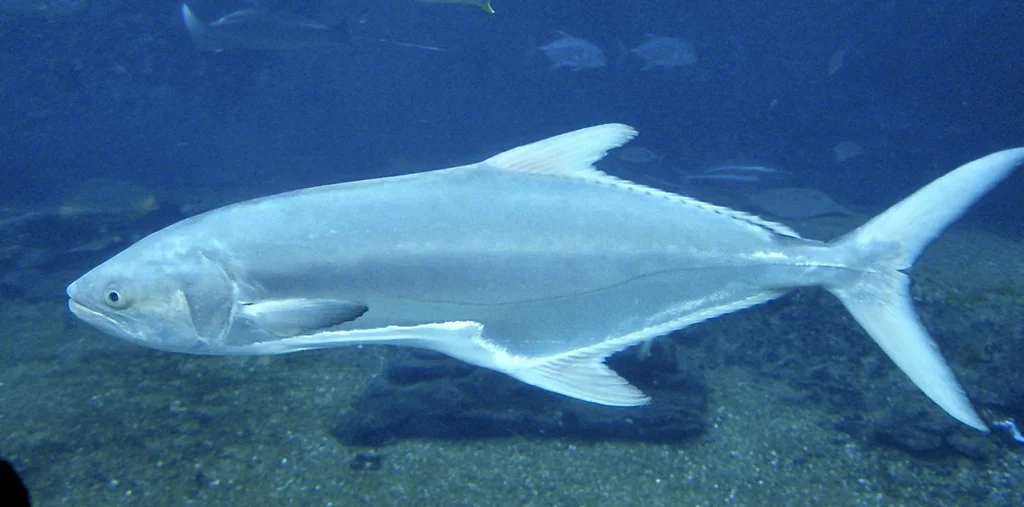
Identifying features
- Streamlined, torpedo-shaped silver body with a blue-grey to olive back
- Distinctive concave dip in the head profile just above the eyes, then a blunt snout
- Strongly wavy lateral line running the length of the body
- Deeply forked tail with dark-tipped lobes; long-based anal and second dorsal fins mirror each other
- Often confused with juvenile palometa (Trachinotus ovatus) — but palometa juveniles are much deeper-bodied with dark vertical bars and very long, trailing dorsal and anal fin lobes, while young leerfish are already slim and torpedo-shaped
Habits
- A surface hunter — it chases mullet and baitfish right into the surf and harbour mouths
- Hunts alone or in small packs, herding bait against beaches and jetties
- Most active in warm water from late spring to autumn, at dawn and dusk
- Explosive surface strikes — it hits poppers and stickbaits with open-water aggression
- Juveniles shelter in estuaries and are yellowish with faint bars
Distribution
Where to find them
- Estuary mouths and beaches of Andalusia and the Valencian coast in Spain
- Harbour entrances and surf beaches of Italy's Tyrrhenian coast
- Lagoon outlets of Languedoc in France
Where they live
How to catch them
Surface lures on beaches and estuary mouths Shore
Rig: Medium-heavy spinning rod with poppers and stickbaits cast over sandbars and current seams at estuary mouths and beaches
Bait/lure: Poppers and stickbaits
Key tip: Retrieve fast and never stop — a leerfish follows right to your feet and turns away on pauses.
Live-bait drifting at harbour mouths Boat
Rig: Medium boat spinning rod with a free-running live-bait rig, live mullet on a 5/0 hook drifted along harbour entrances and current seams
Bait/lure: Live mullet or small fish
Key tip: Stay with the baitfish — where mullet bunch on a current seam, leerfish patrol just outside them.
Best baits & lures
Baseline setup
- Rod: 9-11 ft medium-heavy spinning rod for shore lures; medium boat spinning rod
- Line: 20-30 lb braid with a 40 lb leader around structure
- Terminal: Poppers, stickbaits, casting jigs, live-bait rigs with 4/0-6/0 hooks
Recommended gear for this species
Rod · Best value
9' 5-weight fly rod outfit
≈ US$180-260
Covers chironomid lakes and small rivers with one setup.
Flies · Budget
Chironomid assortment (30 patterns)
≈ US$25-40
Chironomids are 60% of a lake rainbow's diet in spring.
Picks come from our rule library — never paid placements. Prices are guides; affiliate links may earn us a commission.
Typical size
Common 4-18 lb (2-8 kg); large fish to 6 ft (180 cm) and 45 lb (20 kg)+
On the table
Good — firm flesh rated highly around the Mediterranean, though smaller fish are better eating than the giants.
Similar species
Regulations vary by area and can change in-season — always check the official rules for your area before you fish. Regulations guide →
Plan a trip for Leerfish
Build today's plan