
Saltwater · Warm months in the Gulf of California; most active around dawn and dusk
Lucas Barracuda
Sphyraena lucasana
The Sea of Cortez's own barracuda, centred on southern Baja California and the Gulf of California. Smaller and more local than the great barracuda, it ambushes baitfish around rocky points and is a favourite light-tackle quarry in the Cortez.
Seasons · Peak
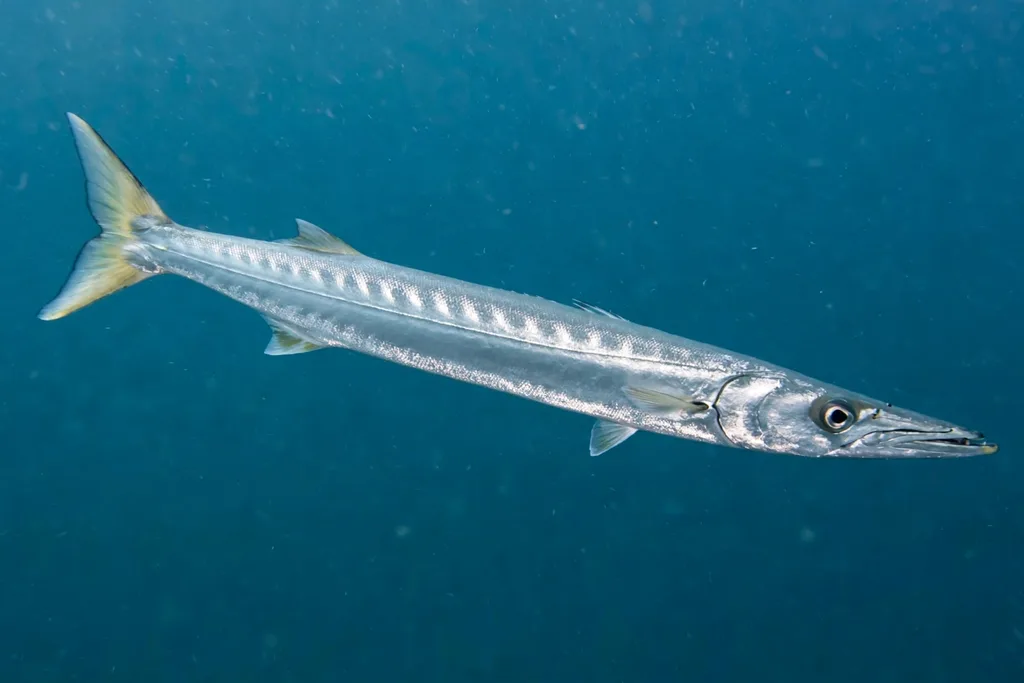
Identifying features
- Slender silvery barracuda body with a long, pointed snout and protruding lower jaw
- Size capped at about 76 cm — far smaller than a great barracuda
- Fins and tail yellowish in many Cortez fish; no bold dark flank blotches
- Pelvic fins set well forward compared with Pacific barracuda relatives
- Range itself is a clue — a barracuda in the Gulf of California is almost always this species
Habits
- Ambush predator of sardines and other small baitfish around structure
- Most active in low light, at dawn, dusk and on overcast days
- Holds near rocky points, reef edges and bay mouths, often in small groups
- Essentially confined to southern Baja California and the Gulf of California
Distribution
Where to find them
- Rocky points and headlands in the Gulf of California
- Bay mouths and bait concentrations around La Paz and Loreto
- Reef edges and drop-offs close to shore
Where they live
How to catch them
Casting lures at rocky points Rock fishing
Rig: Medium spinning outfit, jerkbait or spoon on a short bite leader
Bait/lure: Silver spoons, jerkbaits, swimbaits
Key tip: Cast along rocky points at dawn and work the lure fast with pauses; strikes come on the pause as the lure flutters.
Live-bait and lure fishing from pangas Boat
Rig: Medium spinning/conventional outfit, live sardine free-lined or trolled slowly
Bait/lure: Live sardine
Key tip: Slow-troll or drift live sardines along bay mouths and reef edges where bait balls form; keep a short wire or heavy leader ready.
Best baits & lures
Baseline setup
- Rod: Medium 7' spinning rod
- Line: 20-30 lb braid
- Terminal: Short wire or 40-50 lb mono bite leader, spoons and jerkbaits
Recommended gear for this species
Rod · Best value
9' medium-heavy surf spinning rod
≈ US$110-170
Casts plugs and bait past the breakers and handles stripers, drum and bluefish in the wash.
Reel · Best value
5000 size sealed spinning reel
≈ US$120-180
Salt spray and dunkings kill cheap reels — a sealed body and 30 lb braid capacity are the surf standard.
Terminal · Budget
Topwater plugs, soft-plastic jigs and fish-finder rigs
≈ US$25-40
Plugs for blitzes, jigs for the trough, bait on a fish-finder rig when they won't chase — the inshore trio.
Picks are never paid placements. Prices are guides; price links are coming soon and none is an affiliate link yet.
Typical size
Maximum about 76 cm; most fish are considerably smaller
On the table
Eaten locally in Mexico; like other barracudas it should be kept fresh and iced, and local advice on reef predators applies.
Similar species
Regulations vary by area and can change in-season — always check the official rules for your area before you fish. Regulations guide →
Plan a trip for Lucas Barracuda
Build today's plan⚠ Heads-up: Lucas Barracuda doesn't occur around Vancouver, BC (or is very rare there), so it's not a sensible local target. Your plan stays in Vancouver, BC and is built around the fish that actually live there.