
Freshwater · Year-round in Costa Rican Caribbean rivers; best conditions in the December-April dry season when rivers run clear
Machaca
Brycon guatemalensis
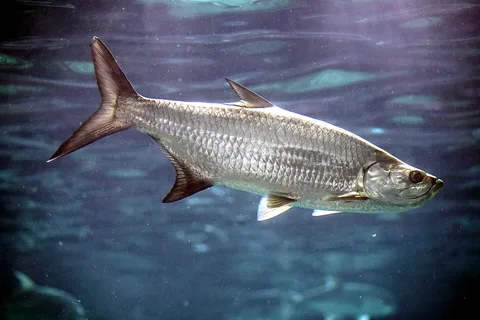
The machaca is a mostly herbivorous freshwater characin of Caribbean-slope rivers that fights like a miniature tarpon — rising to falling fruit, exploding on the take and jumping repeatedly. It is Costa Rica's premier fly and light-tackle river target.
Seasons · Peak
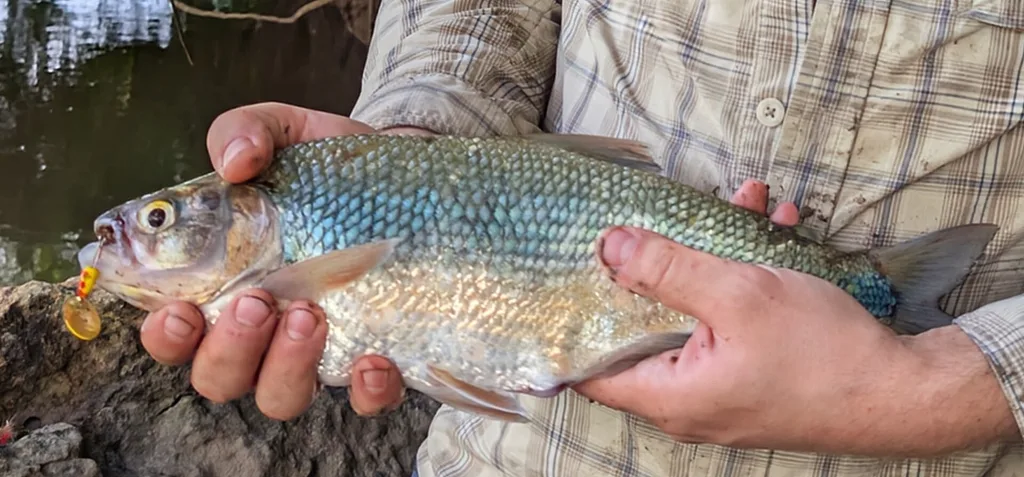
Identifying features
- Deep, laterally compressed silver body shaped like a small tarpon or big tetra
- Deeply forked tail and a small adipose fin behind the dorsal fin
- Small, terminal mouth with molar-like teeth for crushing seeds and fruit
- Faint horizontal striping or rows of spots along the flanks in adults
- Rows of small scales; juveniles show a dark spot at the tail base
Habits
- Mostly herbivorous — feeds on leaves, flowers, fruit and seeds falling into the river, plus insects
- Gathers under overhanging fruiting trees and rises to anything that splashes down
- Explodes on the take and jumps repeatedly like a miniature tarpon
- Strong river current fighter that uses flow and snags to escape
Distribution
Where to find them
- Lake Arenal, Costa Rica: overhanging shoreline trees and inflows
- Caño Negro wetlands and Río Frío mouths (Caribbean lowlands)
- San Juan River and Caribbean-slope rivers under fruiting groves
- Guatemala Petén rivers and Belize Caribbean-side rivers (common)
Where they live
How to catch them
Fly fishing the splat presentation River
Rig: 6-7 wt fly rod, floating line, short stout leader
Bait/lure: Foam terrestrials and small streamers landed with a splat
Key tip: Splat the fly down hard under overhanging fruit trees — machaca react to the splash as falling fruit. Corroborated by multiple Costa Rican fly guides.
Light spinning River
Rig: Ultralight spinning rod, 8 lb line, tiny spinners/spoons retrieved fast along bank cover
Bait/lure: Tiny spinners and spoons
Key tip: Machaca hunt falling insects and seeds — fast, shallow presentations under the canopy draw strikes; corroborated by river guides.
Fruit bait under trees River
Rig: Small hook, free-lined or under a small float, dropped directly under fruiting branches
Bait/lure: Fresh fruit pieces on a small hook
Key tip: The traditional local method: drop mango or banana pieces beneath the very tree the fish are already feeding under.
Best baits & lures
Baseline setup
- Rod: Light spinning rod 6-6.5 ft, or 6-7 wt fly rod
- Line: 8-14 lb mono or light braid; fly 6-7 wt with floating line
- Terminal: Tiny spinners/spoons, small hooks for fruit bait, foam terrestrials
Recommended gear for this species
Rod · Budget
7' light spinning rod
≈ US$50-90
Light enough to cast 1/32 oz jigs, strong enough for a slab crappie or a bonus drum.
Reel · Budget
1000-2000 size spinning reel
≈ US$40-70
Balances a light rod and handles 4-6 lb line — all panfishing ever asks of a reel.
Terminal · Budget
Micro jigs, small hooks and slip floats (panfish kit)
≈ US$15-25
A bobber over a tiny jig tipped with a worm catches every sunfish, crappie and perch in the lake.
Picks are never paid placements. Prices are guides; price links are coming soon and none is an affiliate link yet.
Typical size
Most 0.5-2.5 kg (2-6 lb); large river fish 3-4 kg, rarely to about 59 cm TL
On the table
Eaten locally in Costa Rica ('si no es machaca, es guapote' country saying), but the sport fishery is catch-and-release — bony and far more valuable alive as a fly target.
Similar species
Regulations vary by area and can change in-season — always check the official rules for your area before you fish. Regulations guide →
Plan a trip for Machaca
Build today's plan⚠ Heads-up: Machaca doesn't occur around Vancouver, BC (or is very rare there), so it's not a sensible local target. Your plan stays in Vancouver, BC and is built around the fish that actually live there.