
Freshwater · Stream forms March to September under local cooperative rules; sea-run sakura masu January to June in big rivers and along coasts
Masu Salmon
Oncorhynchus masou
One species, two regimes: in Japan the masu salmon is a mainstream game fish — the stream forms yamame and amago are classic mountain targets, and the sea-run sakura masu is a prized winter-spring lure fish. In China, by contrast, the same species is a nationally protected class-II species and may not be fished there. Local cooperative rules on closed seasons and size limits always apply.
Seasons · Peak
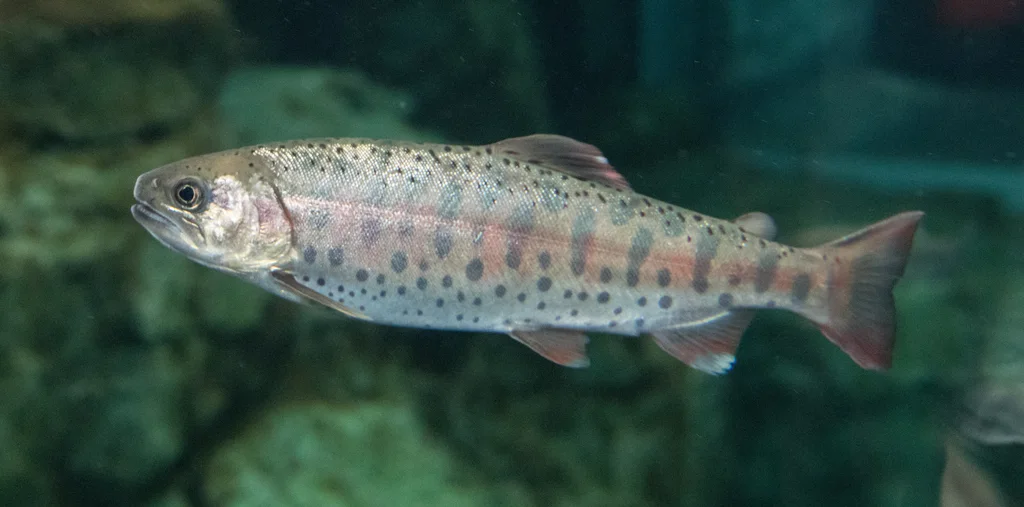
Identifying features
- Black spots scattered on the upper body and dorsal fin area
- Oval parr marks along the side in stream-resident fish, fading in sea-run adults
- No white spots — the key separation from Japanese char (iwana)
- Sea-run adults are bright silver with a faint pink flush at spawning time
- Amago form carries small red-orange spots in addition to black spots
Habits
- Stream-resident forms (yamame west and north, amago in western Honshu) stay in rivers for life
- Other fish smolt and go to sea, returning as large silvery sakura masu in winter-spring
- Feeds on aquatic insects as juveniles; sea-run fish eat small fish and crustaceans
- Spawns in autumn in headwater gravel; most adults die after spawning in many populations
- Fisheries are managed by local cooperatives with closed seasons and size limits — check local rules
Distribution
Regional coverage expanding
Where to find them
- Mountain streams across Tohoku and the Japanese Alps — classic yamame water
- Miomote River, Niigata — famed for large sakura masu
- Shiribetsu River, Hokkaido — sea-run fish and yamame
Where they live
How to catch them
Lure fishing for sakura masu (sea-run form) River
Rig: 8-9 ft lure rod with small spoons or minnow plugs cast at river mouths, in big rivers and along nearby coasts
Bait/lure: Small spoons and minnow plugs
Key tip: Work deep and slow along pool edges and current seams; sakura masu often take in cold, clear water.
Stream fishing for yamame and amago River
Rig: Keiryu rod or light spinning tackle with fine line and natural baits drifted through pools and runs in mountain streams
Bait/lure: Stonefly nymphs, mayfly nymphs or earthworms
Key tip: Work upstream and present the bait at pool heads and under boulders, where stream-resident fish hold.
Best baits & lures
Baseline setup
- Rod: Keiryu or light spinning rod for streams; 8-9 ft lure rod for sea-run fish
- Line: 6-10 lb nylon or PE for streams; heavier for sea-run lure fishing
- Terminal: Small spoons, minnow plugs, small hooks and split shot for bait fishing
Recommended gear for this species
Trolling rod · Best value
10'6" mooching/trolling rod (medium-heavy)
≈ US$120-180
Long soft action absorbs flasher load and keeps barbless hooks pinned.
Reel · Budget
Line-counter or mooching reel, 300 size
≈ US$70-110
Repeatable depth is half of salmon trolling; a counter makes it repeatable.
Terminal · Budget
11" flasher + anchovy teaser heads (2-pack)
≈ US$25-35
The chinook standard on this coast. Greens and chartreuse first.
Picks come from our rule library — never paid placements. Prices are guides; affiliate links may earn us a commission.
Typical size
Stream forms common 8-12 in (20-30 cm); sea-run form common 16-24 in (40-60 cm), with larger fish
On the table
Excellent — rich pink flesh; sea-run sakura masu is a prized winter-spring delicacy, grilled, as sashimi, or in traditional pressed sushi in Toyama.
Similar species
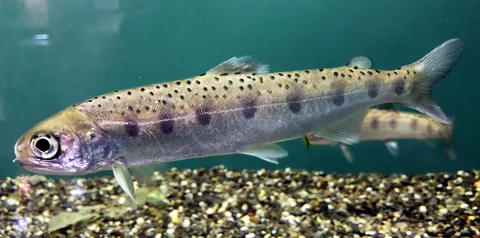 Biwa TroutBiwa trout is the landlocked subspecies of Lake Biwa only, Red List NT and fishable only under Shiga prefecture permit rules in season; masu salmon proper is widespread across Japan
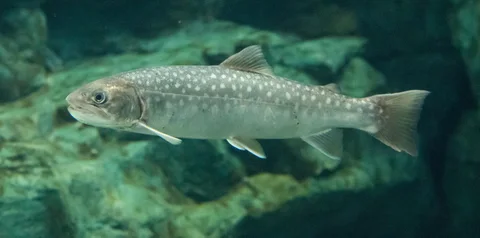 Japanese Char (Whitespotted Char)Japanese char (iwana) has white spots on a dark body and no parr marks; masu salmon has black spots and oval parr marks
Regulations vary by area and can change in-season — always check the official rules for your area before you fish. Regulations guide →
Plan a trip for Masu Salmon
Build today's plan