
Freshwater · Streams mainly March to September, with local seasons varying by river; lake fish in Hokkaido can be taken year-round, including through winter ice
Japanese Char (Whitespotted Char)
Salvelinus leucomaenis
The iwana is one of the two pillars of Japanese stream fishing, alongside yamame (masu salmon). Several subspecies and local forms occur, including the Nikko iwana of the Kanto mountains and the gogi of western Honshu. Its white spots on a dark body are the key to telling it from masu salmon, which carries black spots and parr marks.
Seasons · Peak
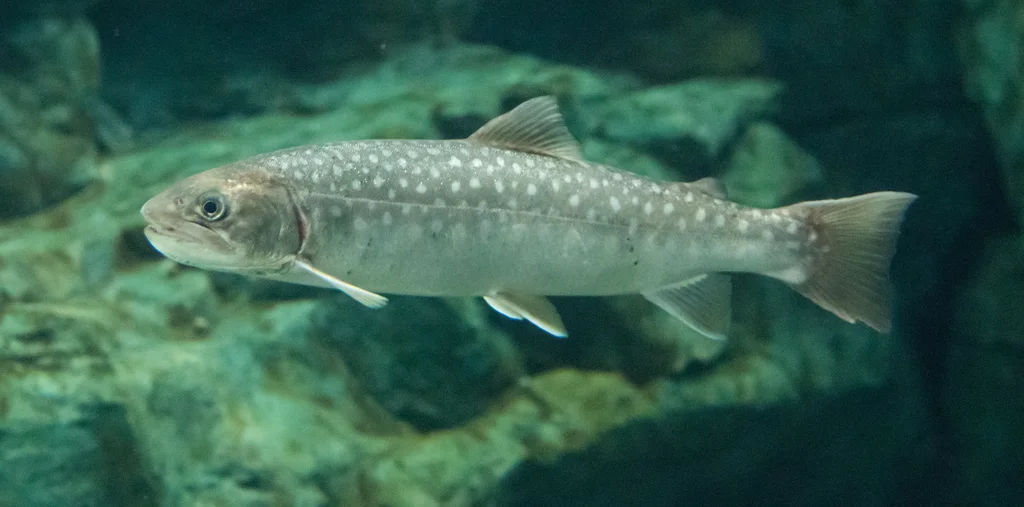
Identifying features
- White or pale spots scattered over a dark olive to brown back and sides
- No black spots and no dark parr marks, unlike masu salmon
- Small scales and a relatively large mouth reaching past the eye
- White leading edges on the lower fins, typical of chars
- Local forms vary: gogi has spots also on the head, Nikko iwana has fine pale spotting
Habits
- Holds in cold, well-oxygenated headwaters, often the highest fish in a stream
- Territorial, sheltering under boulders and in deep plunge pools
- Feeds on aquatic insects, terrestrial insects, crustaceans and small fish
- Spawns in autumn in gravel in the uppermost reaches
- Lake forms in Hokkaido move to deeper cold water in summer
Distribution
Regional coverage expanding
Where to find them
- Mountain streams around Nikko, Tochigi Prefecture
- Headwater streams of the Japanese Alps in Nagano and Gifu
- Mountain streams and cold lakes in Hokkaido
Where they live
How to catch them
Mountain-stream bait fishing (keiryu) River
Rig: Long light keiryu rod, fine line and a small hook with a split shot, drifting bait naturally through pools and runs
Bait/lure: Stonefly nymphs, mayfly nymphs or earthworms
Key tip: Work upstream quietly and drift the bait tight to boulders and undercut banks where char hold.
Lake lure and fly fishing in Hokkaido Lake
Rig: Light spinning or fly tackle casting small spoons, spinners or streamers along cold lake shores and inlet mouths
Bait/lure: Small metal spoons and streamers
Key tip: Fish early and late in the day and around stream mouths, where lake char hunt small fish.
Best baits & lures
Baseline setup
- Rod: Keiryu rod 15-18 ft (4.5-5.4 m) for streams; light spinning or fly rod for lakes
- Line: 4-6 lb nylon or fluorocarbon
- Terminal: Small hooks (size 10-14), split shot, small spoons and spinners
Recommended gear for this species
Rod · Best value
9' 5-weight fly rod outfit
≈ US$180-260
Covers chironomid lakes and small rivers with one setup.
Flies · Budget
Chironomid assortment (30 patterns)
≈ US$25-40
Chironomids are 60% of a lake rainbow's diet in spring.
Picks come from our rule library — never paid placements. Prices are guides; affiliate links may earn us a commission.
Typical size
Common 8-12 in (20-30 cm); large stream fish to 16 in (40 cm), lake fish larger
On the table
Excellent — delicate white flesh; traditionally grilled with salt (shioyaki) or eaten as sashimi from very fresh fish where local practice allows.
Similar species
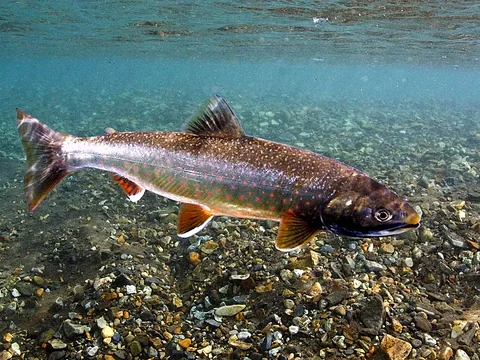 Dolly VardenDolly Varden (oshoro-koma) has smaller, more numerous orange-red spots and is a more northern fish; Japanese char has larger, paler white spots
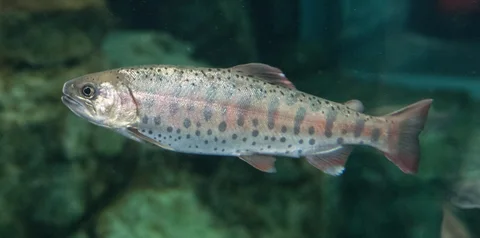 Masu SalmonMasu salmon (yamame) has black spots and oval parr marks and no white spots; Japanese char is identified by white spots on a dark body
Regulations vary by area and can change in-season — always check the official rules for your area before you fish. Regulations guide →
Plan a trip for Japanese Char (Whitespotted Char)
Build today's plan