
Saltwater · Late spring through fall; numbers surge north in warm and El Niño years
Pacific Bonito
Sarda chiliensis
A small, blisteringly fast tuna relative that raids Southern California bait schools in late summer. Its striped back can suggest a skipjack, but the plain white belly and prominent conical teeth mark it as a true bonito. The eastern Pacific form is the subspecies behind its Chinese name, and its range pulses far north in El Niño years.
Seasons · Peak
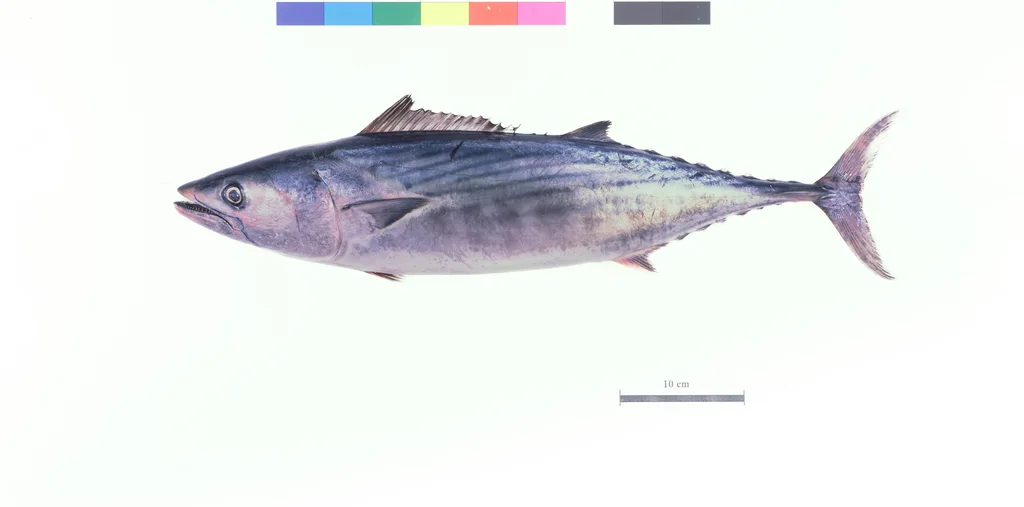
Identifying features
- Dark horizontal stripes across the back only — the belly is plain white
- Prominent, sharp conical teeth visible in the large mouth
- Long torpedo body with rows of small finlets behind the dorsal and anal fins
- No scales except a small patch (corselet) behind the head and pectoral fins
- Steel-blue back fading to a silvery belly
Habits
- Hunts in fast surface schools that slash through sardines and anchovies
- Pushes north with warm water, reaching far up the coast in El Niño years
- Feeds mainly on small schooling fish and squid
- Spawns in summer, with eggs scattered in open water
- A hard, drag-testing fight on light tackle despite modest size
Distribution
Where to find them
- Kelp lines and offshore banks off San Diego and Los Angeles
- Channel Islands bait grounds in late summer
- Central California surface schools in warm years
Where they live
How to catch them
Trolling feathers and casting to surface schools Boat
Rig: Medium spinning or conventional outfit; troll small feathers until a school is found, then cast spoons or jigs into the breaking fish
Bait/lure: Trolling feathers, chrome spoons and metal jigs
Key tip: Cast ahead of a moving school and wind fast — bonito key on speed and ignore a slow lure.
Fly and light tackle around kelp and banks Shore
Rig: 8-10 wt fly outfit or light spinning rod with small baitfish flies and jigs, worked around kelp lines and offshore banks in warm years
Bait/lure: Baitfish-pattern flies, small jigs, live anchovies as chum
Key tip: Keep a few live baits trickling over the side to hold the school near the boat.
Best baits & lures
Baseline setup
- Rod: Medium 7-8 ft spinning or conventional rod
- Line: 12-20 lb mono or braid
- Terminal: Small feathers, 1-3 oz spoons and jigs, wire-free light leaders
Recommended gear for this species
Rod · Best value
9' 5-weight fly rod outfit
≈ US$180-260
Covers chironomid lakes and small rivers with one setup.
Flies · Budget
Chironomid assortment (30 patterns)
≈ US$25-40
Chironomids are 60% of a lake rainbow's diet in spring.
Picks come from our rule library — never paid placements. Prices are guides; affiliate links may earn us a commission.
Typical size
Common 24-32 in (61-81 cm); large fish to about 40 in (102 cm)
On the table
Good if bled and iced at once — dark, rich meat best seared, grilled or smoked; locals often mislabel it skipjack.
Similar species
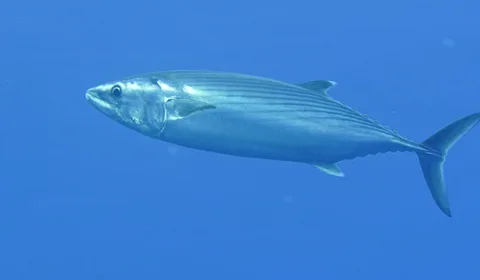 Atlantic BonitoAtlantic bonito lives only in the Atlantic and Mediterranean and never meets this species; the Pacific fish is the eastern Pacific Sarda chiliensis with the same striped-back, toothed bonito build
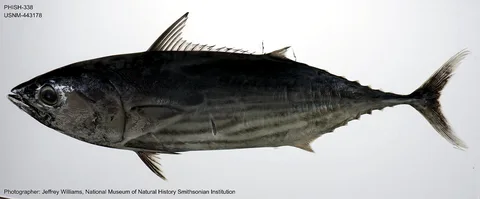 Skipjack TunaSkipjack tuna carries its dark stripes on the BELLY and has an unstriped back and tiny teeth; Pacific bonito is the mirror image — striped back, plain belly, obvious teeth
Regulations vary by area and can change in-season — always check the official rules for your area before you fish. Regulations guide →
Plan a trip for Pacific Bonito
Build today's plan