
Saltwater · Year-round; big fish most active at night and around summer spawning aggregations.
Pacific Cubera Snapper
Lutjanus novemfasciatus
The largest snapper in the eastern Pacific — a bullish, fang-toothed reef predator also called the Pacific dog snapper. Adults are solitary night hunters over rock and reef; the biggest fish come from Panama and Costa Rica.
Seasons · Peak
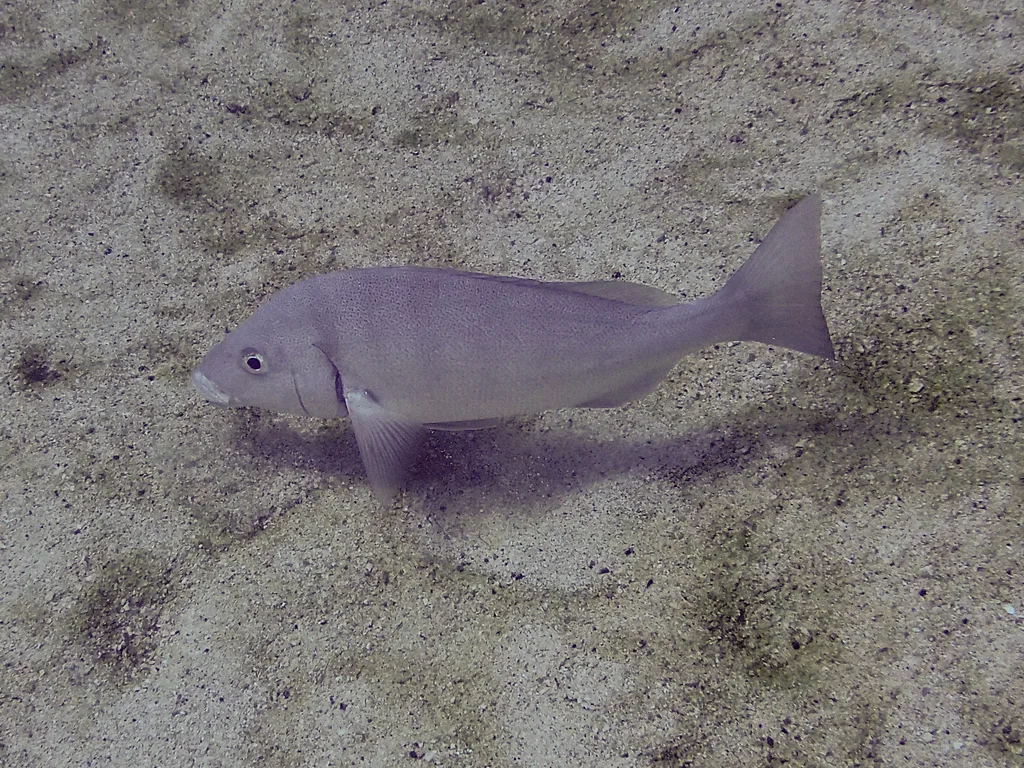
Identifying features
- Largest snapper in the region, thick-bodied and powerful
- Prominent fang-like canine teeth visible with the mouth closed
- Grey to reddish-brown, juveniles with dark bars
- Thick lips and a steep head profile
- No black flank spot; scales large and rough
Habits
- Solitary adults hunt at night around reefs and caves
- Juveniles in estuaries and even into fresh water
- Feeds on fish, shrimp and crabs
- Forms spawning aggregations in summer at reef promontories
Distribution
Where to find them
- Rocky pinnacles off Panama's Coiba and Piñas Bay
- Reefs off Costa Rica's Papagayo and Osa
- High spots in the southern Sea of Cortez
- Rocky points off the Oaxaca coast
Where they live
How to catch them
Live-baiting pinnacles at night Boat
Rig: Heavy bottom rig with a live bonito or grunt over high relief
Bait/lure: Live bonito
Key tip: Anchor or drift over pinnacles after dark and keep the bait tight to structure.
Popping and stickbaits over reefs Boat
Rig: Heavy popping outfit cast over shallow reef tops at dawn
Bait/lure: Large popper
Key tip: Work aggressive pops over reef edges where cuberas ambush bait at first light.
Deep jigging Boat
Rig: Heavy vertical jig worked tight to rock piles and ledges
Bait/lure: Heavy metal jig 150-300 g
Key tip: Drop to the bottom and crank fast for the first metres to trigger a strike.
Best baits & lures
Baseline setup
- Rod: 7-7.5 ft heavy boat/spinning rod
- Line: 50-80 lb braid
- Terminal: 80-130 lb leader, 8/0-10/0 circle hooks
Recommended gear for this species
Rod · Best value
7'6" medium-heavy jigging rod
≈ US$110-170
Works 2-6 oz jigs over rock and reef and still has the backbone to lift a halibut off the bottom.
Line · Budget
50 lb braid with 40 lb leader (200 yd)
≈ US$25-40
Thin braid cuts the current so jigs stay vertical; the leader shrugs off rock and teeth.
Terminal · Budget
Leadhead jigs, swimbaits and two-hook bottom rigs
≈ US$25-40
A leadhead with a swimbait tail is the universal bottom-fish catcher, from rockfish to cod to flounder.
Picks are never paid placements. Prices are guides; price links are coming soon and none is an affiliate link yet.
Typical size
Common 50-80 cm; large specimens to 170 cm and 35.7 kg (IGFA record 36.8 kg).
On the table
Good to excellent in smaller fish; very large fish are prime breeders and are often released.
Similar species
Regulations vary by area and can change in-season — always check the official rules for your area before you fish. Regulations guide →
Plan a trip for Pacific Cubera Snapper
Build today's plan⚠ Heads-up: Pacific Cubera Snapper doesn't occur around Vancouver, BC (or is very rare there), so it's not a sensible local target. Your plan stays in Vancouver, BC and is built around the fish that actually live there.