
Saltwater · Year-round; best in cooler months and around bait schools in winter-spring off Mexico.
Pacific Sierra
Scomberomorus sierra
The most abundant gamefish on the Pacific coast of Mexico and Central America — a schooling Spanish mackerel that slashes bait in the surf and around nearshore reefs, and makes first-class ceviche.
Seasons · Peak
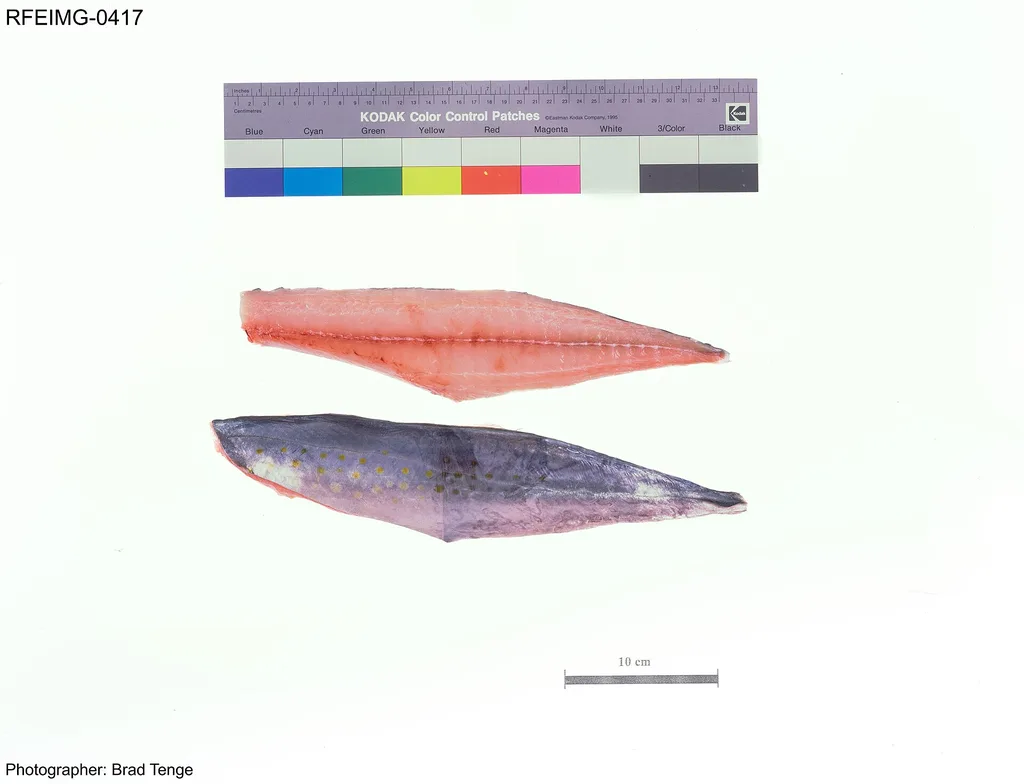
Identifying features
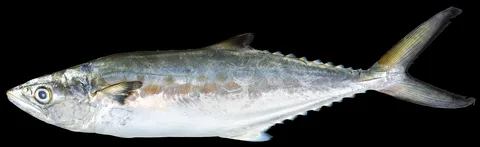
- Many small orange-gold spots along the flanks
- Silvery body with a blue-green back
- Lateral line curves down gradually toward the tail
- Small scales over the whole body
- No black blotch on the first dorsal fin (unlike Atlantic Spanish mackerel)
Habits
- Travels in schools close to the coast, often in the surf
- Feeds mainly on anchovies and sardines
- Spawns close to the coast over much of its range
- Fast, aggressive strikes on small shiny lures
Distribution
Where to find them
- Surf and beach troughs along the Baja and mainland coasts
- Around bait schools off Mazatlán and Manzanillo
- Estuary mouths and bay entrances
- Nearshore reefs off Costa Rica and Guatemala
Where they live
How to catch them
Casting spoons from shore Shore
Rig: Light spinning rod, small chrome spoon or kastmaster-style jig
Bait/lure: Small metal spoon
Key tip: Cast into surf troughs and bait schools and retrieve fast with sharp twitches.
Trolling feathers and spoons Boat
Rig: Slow troll (3-5 knots) with small feather jigs and spoons near the surface
Bait/lure: Feather jig
Key tip: Work along current lines and reef edges where schools push bait up.
Live-bait drifting Boat
Rig: Free-lined live sardine on a light wire or heavy mono leader
Bait/lure: Live sardine
Key tip: Drift over nearshore reef and let the bait swim in the school's path.
Best baits & lures
Baseline setup
- Rod: 7-8 ft light-medium spinning rod
- Line: 15-25 lb braid or mono
- Terminal: 30-40 lb mono or light wire leader, small treble-hook lures
Recommended gear for this species
Rod · Best value
9' medium-heavy surf spinning rod
≈ US$110-170
Casts plugs and bait past the breakers and handles stripers, drum and bluefish in the wash.
Reel · Best value
5000 size sealed spinning reel
≈ US$120-180
Salt spray and dunkings kill cheap reels — a sealed body and 30 lb braid capacity are the surf standard.
Terminal · Budget
Topwater plugs, soft-plastic jigs and fish-finder rigs
≈ US$25-40
Plugs for blitzes, jigs for the trough, bait on a fish-finder rig when they won't chase — the inshore trio.
Picks are never paid placements. Prices are guides; price links are coming soon and none is an affiliate link yet.
Typical size
Common 40-60 cm; large specimens to 112 cm and 8.2 kg.
On the table
Excellent fresh, especially as ceviche; soft flesh that should be eaten the same day.
Similar species
Regulations vary by area and can change in-season — always check the official rules for your area before you fish. Regulations guide →
Plan a trip for Pacific Sierra
Build today's plan⚠ Heads-up: Pacific Sierra doesn't occur around Vancouver, BC (or is very rare there), so it's not a sensible local target. Your plan stays in Vancouver, BC and is built around the fish that actually live there.