
Saltwater · Year-round in the Sea of Cortez and Mexican Pacific; most often seen in warm months.
Pacific Spadefish
Chaetodipterus zonatus
The Pacific twin of the Atlantic spadefish — a deep, disc-shaped fish of Mexican Pacific bays and reefs. It is a classic nibbler and notoriously difficult to catch on hook and line.
Seasons · Peak
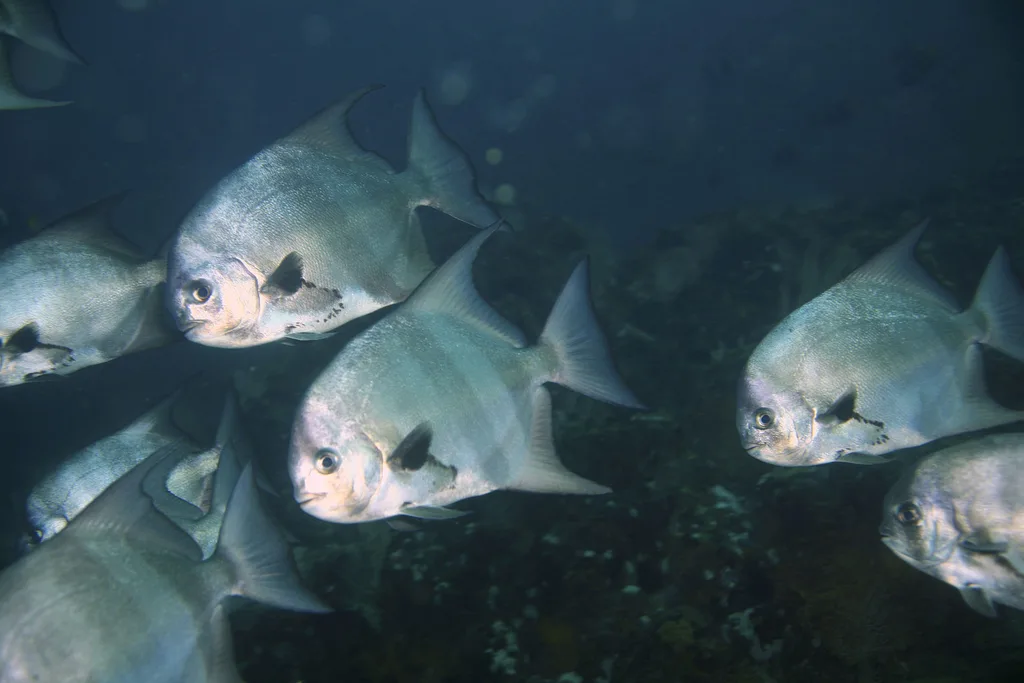
Identifying features
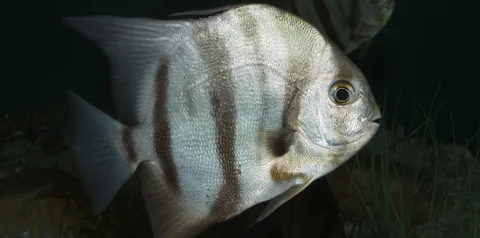
- Deep, disc-like compressed body with 5-6 dark vertical bars that fade in large adults; blunt head and small mouth
- Fins are silvery-grey
- Body is a deep, strongly compressed disc, much deeper than a grunt or porgy
- Thick lips and a small to medium mouth suited to picking invertebrates
- Up to 65-66 cm; commonly 28-39 cm in Mexican catches.
Habits
- Inhabits bays and inlets over sand or rubble, to depths of about 105 m
- Feeds on algae and benthic and planktonic invertebrates including sponges, worms and tunicates
- A classic nibbler — mouths and drops baits, making hook-and-line catches uncommon; mostly taken as bycatch or by subsistence fishers in Mexico
Distribution
Where to find them
- Sea of Cortez bays around Bahia Kino and Magdalena Bay
- Mazatlan and Zihuatanejo bay reefs and structure on the Mexican mainland
- Pacific Panama bays and rocky points
Where they live
How to catch them
Shore and pier bottom fishing Shore
Rig: Two-hook dropper rig with a pyramid sinker, #2-1/0 hooks
Bait/lure: Shrimp pieces or clam
Key tip: Cast to sandy holes beside rock, dock or mangrove structure and watch for light, nibbling bites.
Reef bottom fishing Boat
Rig: Fish-finder / knocker rig: egg sinker above a swivel, 30-60 cm fluorocarbon leader, #1-1/0 circle hook
Bait/lure: Small pieces of shrimp or squid
Key tip: Anchor up-current of a patch reef, keep the bait tight to the bottom and reel steadily on the bite instead of striking hard.
Best baits & lures
Baseline setup
- Rod: Light to medium spinning rod 2.1-2.4 m
- Line: 10-20 lb braid or mono main line
- Terminal: 20-30 lb fluorocarbon leader, #2-1/0 circle hooks, egg or pyramid sinkers to hold bottom
Recommended gear for this species
Rod · Best value
7'6" medium-heavy jigging rod
≈ US$110-170
Works 2-6 oz jigs over rock and reef and still has the backbone to lift a halibut off the bottom.
Line · Budget
50 lb braid with 40 lb leader (200 yd)
≈ US$25-40
Thin braid cuts the current so jigs stay vertical; the leader shrugs off rock and teeth.
Terminal · Budget
Leadhead jigs, swimbaits and two-hook bottom rigs
≈ US$25-40
A leadhead with a swimbait tail is the universal bottom-fish catcher, from rockfish to cod to flounder.
Picks are never paid placements. Prices are guides; price links are coming soon and none is an affiliate link yet.
Typical size
Up to 65-66 cm; commonly 28-39 cm in Mexican catches.
On the table
Fair to good eating; in Mexico it is mainly retained by subsistence fishers rather than targeted commercially.
Similar species
Regulations vary by area and can change in-season — always check the official rules for your area before you fish. Regulations guide →
Plan a trip for Pacific Spadefish
Build today's plan⚠ Heads-up: Pacific Spadefish doesn't occur around Vancouver, BC (or is very rare there), so it's not a sensible local target. Your plan stays in Vancouver, BC and is built around the fish that actually live there.