
Saltwater · Year-round in South Florida and the Keys; best April to October
Porkfish
Anisotremus virginicus
One of Florida's most recognisable reef fish, silver with yellow stripes and fins and two bold black bars — one through the eye and one mid-body. Juveniles are aquarium favourites that earn their keep picking parasites off larger fish at cleaning stations. Adults school over reefs and around seawalls and docks, and take small shrimp baits readily.
Seasons · Peak
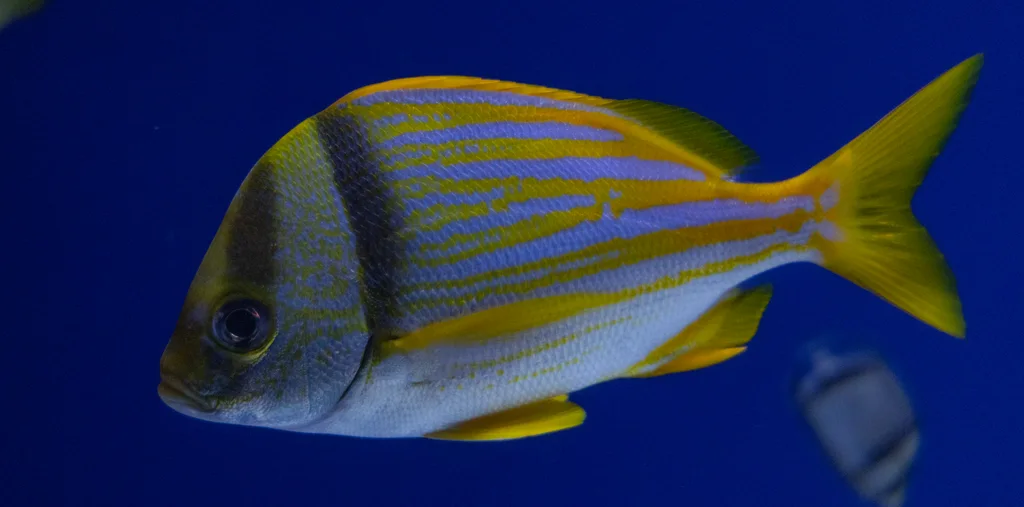
Identifying features
- Two bold black bars — a wide bar through the eye and a second bar mid-body
- Bright yellow fins and a yellow wash over the head and front of the body
- Silvery body with thin yellow lengthwise stripes
- Steep, blunt head profile with a small mouth
- Juveniles show the same two black bars and work as cleaner fish on reefs
Habits
- Schools hover over reefs and along seawalls and docks by day
- Feeds at night on shrimp, crabs, worms and small molluscs
- Juveniles pick parasites off larger fish at cleaning stations
- Adults rest in reef shade during the day and disperse after dark
- Also grunts when handled, like its grunt-family relatives
Distribution
Where to find them
- Patch reefs and coral heads throughout the Florida Keys
- Seawalls, docks and bridges around Miami and South Florida
- Nearshore reefs along Florida's Atlantic coast
Where they live
How to catch them
Small shrimp baits around reefs, seawalls and docks Shore
Rig: Light spinning tackle with a small knocker rig or jig and a size 1-1/0 hook, fished tight to seawalls, dock pilings and reef edges
Bait/lure: Shrimp pieces
Key tip: Fish right against the structure where schools hover — porkfish rarely wander far from cover to chase a bait.
Light bottom rigs on patch reefs Boat
Rig: Light two-hook dropper rig or small jig on patch reefs, with just enough weight to hold in the current
Bait/lure: Shrimp, squid and small cut bait pieces
Key tip: Keep baits small and fresh; a school will pick apart a large bait without anyone hooking up.
Best baits & lures
Baseline setup
- Rod: Light 6.5-7 ft spinning rod
- Line: 10-15 lb mono or braid with a 15-20 lb leader
- Terminal: Size 1-1/0 hooks, small jigs, light dropper and knocker rigs
Recommended gear for this species
Rod · Best value
9' 5-weight fly rod outfit
≈ US$180-260
Covers chironomid lakes and small rivers with one setup.
Flies · Budget
Chironomid assortment (30 patterns)
≈ US$25-40
Chironomids are 60% of a lake rainbow's diet in spring.
Picks come from our rule library — never paid placements. Prices are guides; affiliate links may earn us a commission.
Typical size
Common 8-12 in (20-30 cm), under 1 lb (0.5 kg); large fish to about 14 in (36 cm) and 1.5 lb (0.7 kg)
On the table
Fair to good — mild white flesh, but small; many are released, and juveniles are valued alive for aquariums.
Similar species
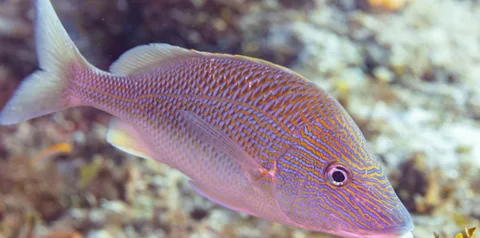 White GruntWhite grunt has blue lines on the head, an orange-red mouth and no black bars; porkfish carries two bold black bars and bright yellow fins
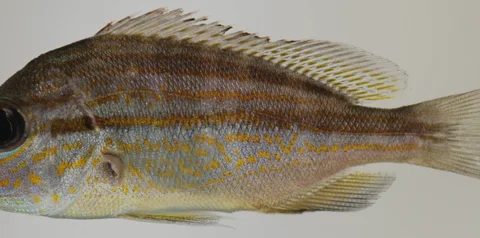 PigfishPigfish is a drab grey-brown grunt with faint bars and a pointed snout; porkfish is silver and yellow with two crisp black bars and a steep, blunt head
Regulations vary by area and can change in-season — always check the official rules for your area before you fish. Regulations guide →
Plan a trip for Porkfish
Build today's plan