
Saltwater · Year-round; best March to October over reefs and hard bottom
White Grunt
Haemulon plumierii
Florida's most common grunt — and a note on the name: 'grunt' is a family umbrella name in Florida and the Caribbean for the many Haemulon species, and this page covers the white grunt; blue-striped, tomate and French grunts are relatives without their own pages. Grunts earn the name by grinding their throat teeth, a sound amplified by the swim bladder. Schools hover over reefs by day and spread out to feed at night.
Seasons · Peak
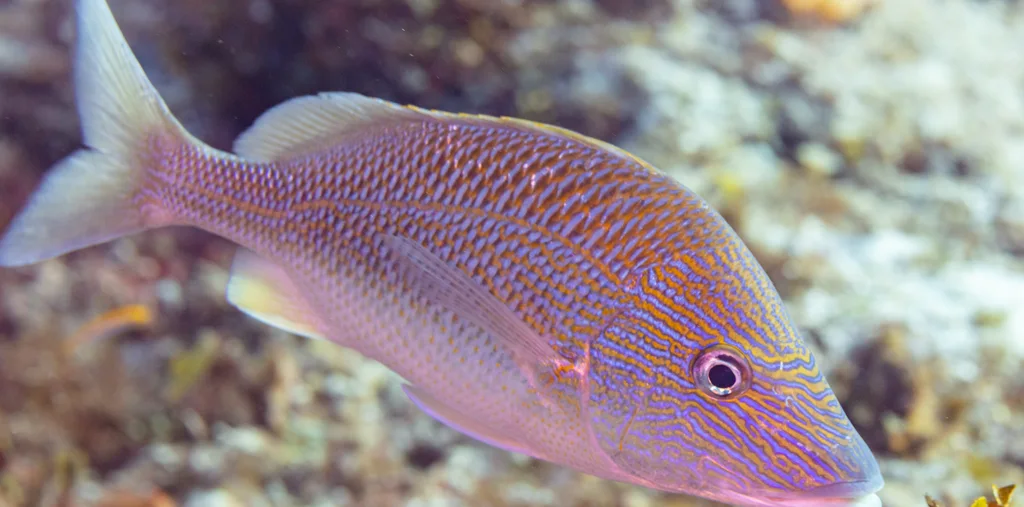
Identifying features
- Bluish-grey to silvery body with a slightly checkerboard pattern of scales
- Blue and yellow lines and stripes on the head and snout
- Bright orange-red inside of the mouth
- Enlarged, brassy-edged scales above the lateral line
- Makes an audible grunting croak when caught, produced with the swim bladder
Habits
- Forms dense daytime schools hovering just above reef and hard bottom
- Spreads out at night to feed on shrimp, crabs, worms and small molluscs
- Juveniles shelter in seagrass beds close to reef
- Grunts audibly when handled — throat teeth grinding, amplified by the swim bladder
- A staple reef fish and common catch on bottom rigs all around Florida
Distribution
Where to find them
- Patch reefs and hard bottom throughout the Florida Keys
- Nearshore reefs and ledges off Florida's Atlantic coast and Panhandle
- Reefs, bridges and piers off Georgia and the Carolinas
Where they live
How to catch them
Shrimp or squid on small two-hook rigs over reef Boat
Rig: Light to medium spinning tackle with a two-hook dropper rig, size 1-2/0 hooks and a 1-2 oz sinker over reef and hard bottom
Bait/lure: Shrimp pieces and squid strips
Key tip: Drop straight onto the school hovering over the reef — bites come fast, and small hooks match their modest mouths.
Pier and bridge bottom fishing Shore
Rig: Simple bottom rig or jig fished around pier and bridge pilings and seawalls, especially on a moving tide
Bait/lure: Shrimp and cut bait pieces
Key tip: Fish the shaded side of the pilings where schools hold during the day, and keep the bait just off the bottom to avoid snags.
Best baits & lures
Baseline setup
- Rod: Light to medium 6.5-7 ft spinning rod
- Line: 12-20 lb mono or braid with a 20 lb leader
- Terminal: Size 1-2/0 hooks, two-hook dropper rigs, 1-2 oz sinkers
Recommended gear for this species
Rod · Best value
9' 5-weight fly rod outfit
≈ US$180-260
Covers chironomid lakes and small rivers with one setup.
Flies · Budget
Chironomid assortment (30 patterns)
≈ US$25-40
Chironomids are 60% of a lake rainbow's diet in spring.
Picks come from our rule library — never paid placements. Prices are guides; affiliate links may earn us a commission.
Typical size
Common 8-14 in (20-36 cm), about 1 lb (0.5 kg); large fish to about 18 in (46 cm) and 2 lb (0.9 kg)
On the table
Good — mild, white, flaky flesh; a common panfish, best fresh, though small and bony.
Similar species
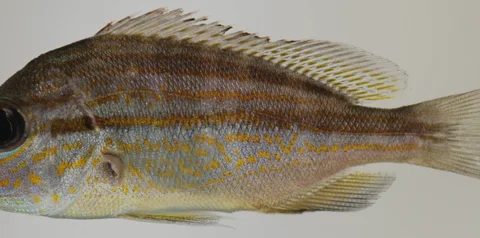 PigfishPigfish has a more pointed, pig-like snout, faint bars and no blue head lines; white grunt has blue lines on the head, an orange-red mouth lining and a bluish checkerboard pattern
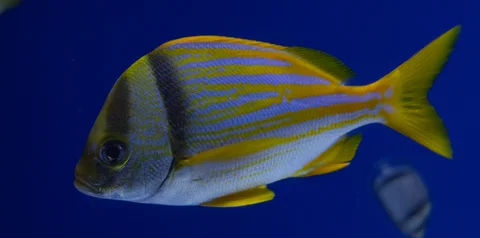 PorkfishPorkfish carries two bold black bars and bright yellow fins; white grunt has no black bars, with blue head lines and an orange-red mouth
Regulations vary by area and can change in-season — always check the official rules for your area before you fish. Regulations guide →
Plan a trip for White Grunt
Build today's plan