
Freshwater · Warm months best; March to November, spawning in spring and summer
Rio Grande Cichlid
Herichthys cyanoguttatus
The only cichlid native to the United States, a hardy, colourful panfish of the Rio Grande drainage in Texas. Breeding fish turn a bold half black-and-white, both parents guard their fry, and pearly blue-green speckles cover the body — an aquarium-famous fish that is also a willing biter on light tackle in rivers, spring runs and urban ponds from San Antonio to New Orleans, where it is introduced.
Seasons · Peak
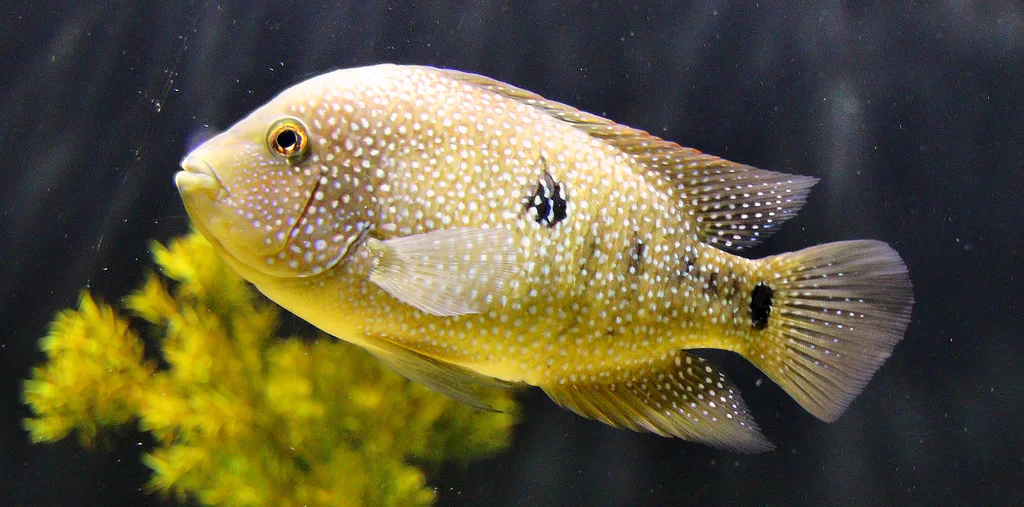
Identifying features
- Pearly blue-green speckles across a grey-green to olive body
- Dark blotch in the middle of the side and another at the tail base
- Breeding fish turn half black (rear) and half white (front)
- Deep, perch-like body with a blunt, steep forehead in big males
- One unbroken lateral line look replaced by two-part cichlid lateral line — upper and lower segments
Habits
- The only cichlid native to the US, from the Rio Grande drainage
- Territorial around rocks; both parents fan eggs and guard fry schools
- Omnivorous — eats plants, algae, insects, snails and small fish
- Cold-sensitive: winter die-offs occur at the northern edge of its range
- Spawns on flat rocks in spring and summer, in repeated broods
Distribution
Where to find them
- Rocky runs of the Guadalupe, San Marcos and Comal spring rivers in Texas
- San Antonio River Walk and urban ponds in San Antonio
- New Orleans lagoons and canals in Louisiana, where introduced
Where they live
How to catch them
Small baits and flies around rocks River
Rig: Light spinning or fly tackle with small baits, tiny jigs or flies fished tight to rocks in rivers and spring runs
Bait/lure: Worm pieces, small nymphs and terrestrials
Key tip: Drop the bait right beside boulders — these cichlids hold small territories and strike anything that intrudes.
Urban pond fishing with bread and insects Lake
Rig: Ultralight rod, small float and size 8-12 hook with bread, dough or insects in urban ponds in San Antonio and New Orleans waters
Bait/lure: Bread and dough bits, grasshoppers
Key tip: Sight-fish the shallows in warm months; breeding pairs guarding a rock will charge a bait dropped nearby.
Best baits & lures
Baseline setup
- Rod: Light 5-7 ft spinning rod or 3-5 wt fly rod
- Line: 4-8 lb mono
- Terminal: Size 8-12 hooks, tiny jigs, small floats
Recommended gear for this species
Rod · Budget
7' light spinning rod
≈ US$50-90
Light enough to cast 1/32 oz jigs, strong enough for a slab crappie or a bonus drum.
Reel · Budget
1000-2000 size spinning reel
≈ US$40-70
Balances a light rod and handles 4-6 lb line — all panfishing ever asks of a reel.
Terminal · Budget
Micro jigs, small hooks and slip floats (panfish kit)
≈ US$15-25
A bobber over a tiny jig tipped with a worm catches every sunfish, crappie and perch in the lake.
Picks are never paid placements. Prices are guides; price links are coming soon and none is an affiliate link yet.
Typical size
Common 6-10 in (15-25 cm); large fish to about 12 in (30 cm)
On the table
Fair to good — firm white panfish flesh and eaten locally, though many anglers release this colourful native.
Similar species
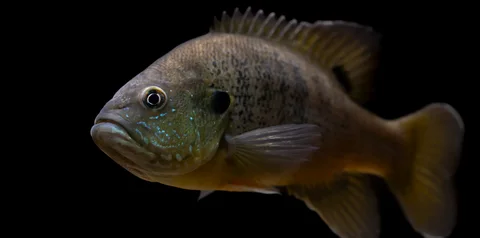 Green SunfishGreen sunfish has a large bass-like mouth, an unbroken lateral line and a dark ear flap with a pale edge; the Rio Grande cichlid has pearly speckles, a two-part lateral line and small cichlid mouth
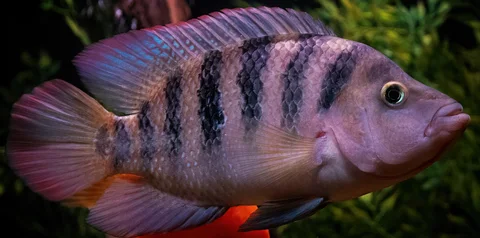 Mayan CichlidMayan cichlid is a Florida and Mexico fish with bold dark bars and a large black tail-base spot ringed in blue; the Rio Grande cichlid is speckled pearl-blue with a mid-side blotch and is the Texas native
Regulations vary by area and can change in-season — always check the official rules for your area before you fish. Regulations guide →
Plan a trip for Rio Grande Cichlid
Build today's plan⚠ Heads-up: Rio Grande Cichlid doesn't occur around Vancouver, BC (or is very rare there), so it's not a sensible local target. Your plan stays in Vancouver, BC and is built around the fish that actually live there.