
Saltwater · Year-round; easiest at low tide in spring and summer
Rock Prickleback
Xiphister mucosus
An eel-like prickleback of Pacific rocky shores that feeds mainly on algae and hides under rocks and in crevices at low tide. It is a tidepool encounter fish rather than a target species, taken now and then when a tiny bait is poked into its home crack.
Seasons · Peak
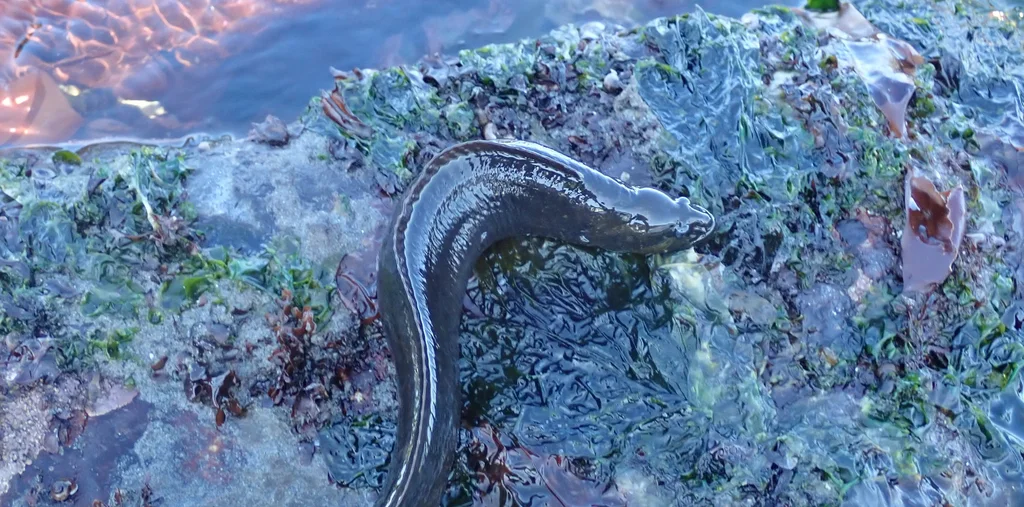
Identifying features
- Long, eel-like, laterally compressed body with a low spiny dorsal fin running most of its length
- Olive-green to brown mottled colouring that blends with rockweed
- Small blunt head with fleshy lips and a small mouth
- Very small pectoral fins and no obvious pelvic fins
- Smooth, slimy skin and a rounded tail fin
Habits
- Grazes algae and seaweed from intertidal rocks — unusual among shore fish
- Hides under rocks and in crevices at low tide and can survive out of water in damp cover
- Stays close to a home crevice and darts back into it when disturbed
- Most active moving and feeding when the tide covers its rocks
- A common tidepool resident from California to Puget Sound
Distribution
Where to find them
- California rocky points and tidepool reefs at low tide
- Oregon coast boulder fields and rockweed beds
- Puget Sound rocky shores and jetty rocks
Where they live
How to catch them
Poke-poling tidepool rocks at low tide Rock fishing
Rig: Short poke pole or stout short rod with a short leader and size 6-8 hook worked into cracks and under ledges at low tide
Bait/lure: Tiny shrimp or mussel pieces
Key tip: Work each crack slowly and expect the bite in the fish's home crevice — most fish are encountered, not searched for over open ground.
Small hooks in rocky crevices Rock fishing
Rig: Light shore rod, small sinker and size 6-8 hook with shrimp, dropped tight into crevices among boulders as the tide returns
Bait/lure: Shrimp pieces
Key tip: Keep the bait right against the rock; a prickleback rarely leaves cover to chase food.
Best baits & lures
Baseline setup
- Rod: Short poke pole or light 6-7 ft shore rod
- Line: 8-12 lb mono
- Terminal: Size 6-8 hooks, small split shot, short leaders
Recommended gear for this species
Rod · Best value
9' 5-weight fly rod outfit
≈ US$180-260
Covers chironomid lakes and small rivers with one setup.
Flies · Budget
Chironomid assortment (30 patterns)
≈ US$25-40
Chironomids are 60% of a lake rainbow's diet in spring.
Picks come from our rule library — never paid placements. Prices are guides; affiliate links may earn us a commission.
Typical size
Common 8-14 in (20-36 cm); large fish to about 23 in (58 cm)
On the table
Poor to fair — rarely kept and usually released; flesh is soft and the fish is more a curiosity than food.
Similar species
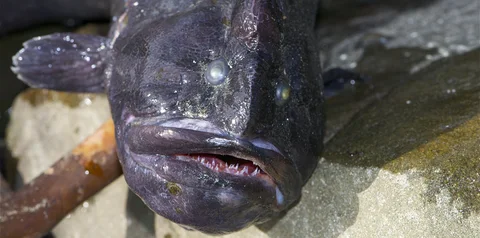 Monkeyface EelMonkeyface eel is much larger and thicker with a lumpy, monkey-like head and large pectoral fins; rock prickleback is slimmer, algae-eating and marked by mottled rockweed camouflage
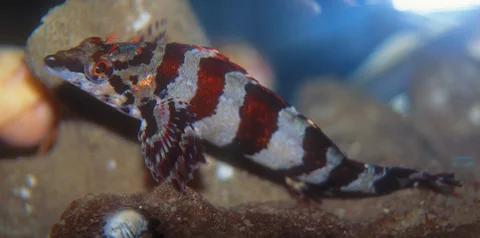 Painted GreenlingPainted greenling is a deeper-bodied perch-like fish with bold dark bars and a pointed snout; rock prickleback is eel-like with a long low dorsal fin and no bold bars
Regulations vary by area and can change in-season — always check the official rules for your area before you fish. Regulations guide →
Plan a trip for Rock Prickleback
Build today's plan