
Saltwater · Year-round in the tropics; peak May-October off Baja as water warms.
Roosterfish
Nematistius pectoralis
The eastern Pacific's iconic inshore gamefish, reserved for sport fishing in Mexico and almost always released. Roosters hunt mullet and sardines in the surf and around rocky points, raising their comb-like dorsal fin when excited.
Seasons · Peak
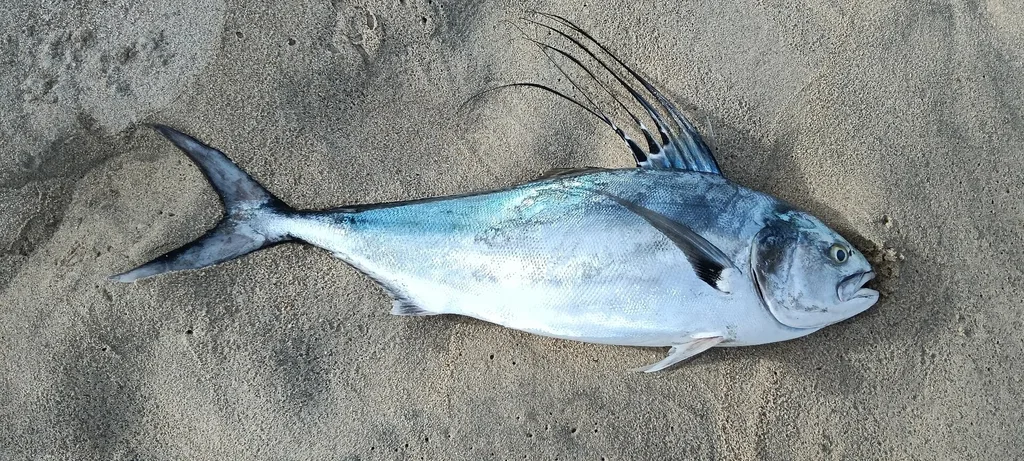
Identifying features
- Seven very long, comb-like dorsal spines that raise when excited
- Two bold black diagonal stripes sweep down the silvery flanks
- Deeply forked tail and a steep, blunt head profile
- Silvery body with a dark back
- Juveniles show stronger barring in very shallow water
Habits
- Hunts in small packs along the surf line, herding mullet and sardines
- Often chases bait right onto the beach in inches of water
- Most active early morning and on moving tides
- Plays with live bait, mouthing it before a committed run
Distribution
Where to find them
- Surf edges beside rocky points where bait stacks up
- Beach troughs and holes along Baja's East Cape
- River mouths and estuary edges after bait schools move in
- Just outside the breakers, slow-trolled from a panga
Where they live
How to catch them
Slow-trolling live bait Boat
Rig: Bridled live bait on a 7/0-9/0 circle hook, 60-80 lb fluorocarbon leader
Bait/lure: Live mullet or caballito
Key tip: Let the fish run and mouth the bait before coming tight; striking early pulls the bait away.
Casting poppers and stickbaits Shore
Rig: Heavy spinning outfit, large popper or floating stickbait on a strong leader
Bait/lure: Large surface popper
Key tip: Cast ahead of cruising fish and retrieve fast with pauses; keep the lure moving when a rooster follows.
Surf live-bait casting Shore
Rig: Long surf rod, live bait on a circle hook with a light sinker
Bait/lure: Live mullet or sardine
Key tip: Cast into beach troughs at dawn and wait for a steady run before tightening up.
Best baits & lures
Baseline setup
- Rod: 7-8 ft heavy spinning or 10-12 ft surf rod
- Line: 30-50 lb braid
- Terminal: 60-80 lb fluorocarbon leader, 7/0-9/0 circle hook
Recommended gear for this species
Rod · Best value
9' medium-heavy surf spinning rod
≈ US$110-170
Casts plugs and bait past the breakers and handles stripers, drum and bluefish in the wash.
Reel · Best value
5000 size sealed spinning reel
≈ US$120-180
Salt spray and dunkings kill cheap reels — a sealed body and 30 lb braid capacity are the surf standard.
Terminal · Budget
Topwater plugs, soft-plastic jigs and fish-finder rigs
≈ US$25-40
Plugs for blitzes, jigs for the trough, bait on a fish-finder rig when they won't chase — the inshore trio.
Picks are never paid placements. Prices are guides; price links are coming soon and none is an affiliate link yet.
Typical size
Common 5-15 kg (10-30 lb); large specimens exceed 25 kg, with records over 50 kg.
On the table
Poor to fair table fare; in Mexico it is reserved for sport fishing and is best released.
Similar species
Regulations vary by area and can change in-season — always check the official rules for your area before you fish. Regulations guide →
Plan a trip for Roosterfish
Build today's plan⚠ Heads-up: Roosterfish doesn't occur around Vancouver, BC (or is very rare there), so it's not a sensible local target. Your plan stays in Vancouver, BC and is built around the fish that actually live there.