
Freshwater · Late spring through late autumn; deep water in summer
Ruffe
Gymnocephalus cernua
A small perch-family fish of deep, slow water with a joined dorsal fin and mottled camouflage. A workaday catch in Europe if rarely celebrated, it must be stated honestly: in North America's Great Lakes the ruffe is invasive and is now established in Lake Superior — not a fish to move or celebrate there.
Seasons · Peak
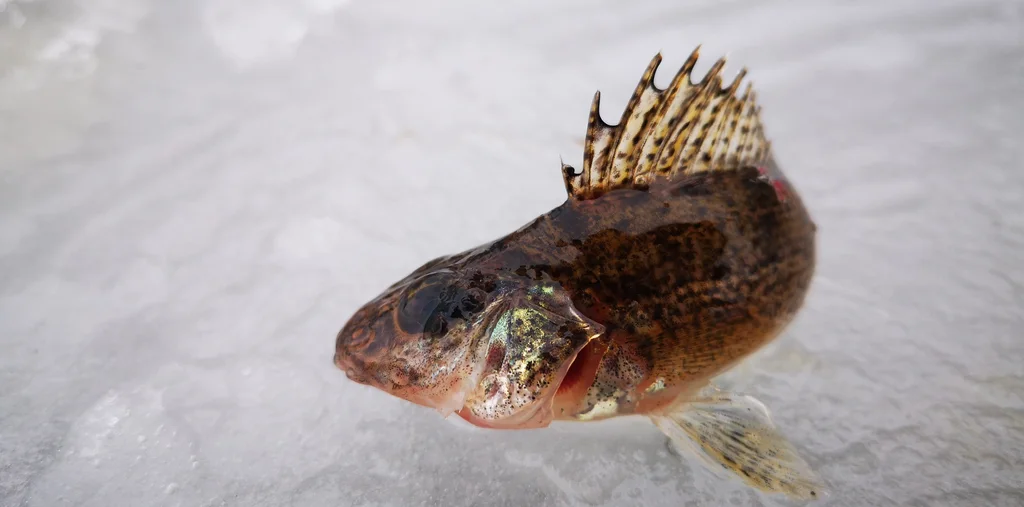
Identifying features
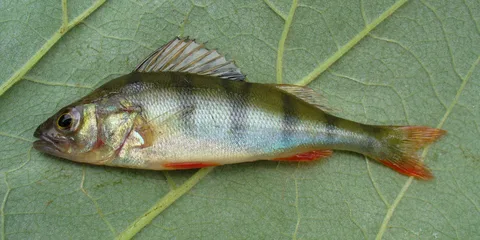
- Spiny and soft dorsal fins JOINED into one long fin — the split from European perch, whose two dorsals are separate
- Dull olive-green mottled body with irregular dark spots, no bold perch bars
- Large, glassy eyes and a downturned mouth on a blunt, slimy-feeling head
- Rows of small spines on the gill cover and a deeply slime-coated lateral line
- No Balon's ruffe confusion in most waters: the Danube's Balon's ruffe (G. baloni) is deeper-bodied with a shorter, higher first dorsal — check Danube fish carefully
Habits
- A small perch-family fish of deep, slow water that hunts by scent and vibration in near darkness
- Feeds heavily on insect larvae, small crustaceans and fish eggs — to the detriment of other species
- Invasive in North America's Great Lakes: first found in the St. Louis River in the 1980s and now established in Lake Superior — this is stated openly, it is not a native there
- Undersized sibling of perch and zander, forming dense bottom shoals in canals and deep rivers
- Most active at dusk and after dark, in water other panfish leave alone
Distribution
Where to find them
- Deep dredged canals and lowland rivers in England and the Netherlands
- Danube backwaters and deep lake basins in central Europe
- Deep shore drop-offs of Lake Superior in Wisconsin — invasive there, check local rules
Where they live
How to catch them
Light feeder bottom fishing in canals River
Rig: Light quivertip rod, small swimfeeder and size 16 hook with worm pieces in deep canal channels
Bait/lure: Worm pieces, maggots
Key tip: Fish at dusk and after dark — ruffe leave the deep and feed confidently then.
Drop-shot on deep drop-offs Boat
Rig: Drop-shot rig with a small worm worked slowly on the bottom along deep shore drop-offs and boat edges
Bait/lure: Small worms, bloodworm
Key tip: Release or keep per local rules — in the Great Lakes never move it alive, it is invasive there.
Best baits & lures
Baseline setup
- Rod: Light quivertip or drop-shot rod
- Line: 3-5 lb mono or light braid with fine hooklength
- Terminal: Small swimfeeders and drop-shot rigs, size 14-18 hooks
Recommended gear for this species
Rod · Best value
9' 5-weight fly rod outfit
≈ US$180-260
Covers chironomid lakes and small rivers with one setup.
Flies · Budget
Chironomid assortment (30 patterns)
≈ US$25-40
Chironomids are 60% of a lake rainbow's diet in spring.
Picks come from our rule library — never paid placements. Prices are guides; affiliate links may earn us a commission.
Typical size
Common 4-6 in (10-15 cm), about 1-3 oz (30-80 g); large fish to 10 in (25 cm) are rare
On the table
Fair in soups where traditional, but small and spiny; in the Great Lakes it is an invasive pest, not a food fish.
Similar species
Regulations vary by area and can change in-season — always check the official rules for your area before you fish. Regulations guide →
Plan a trip for Ruffe
Build today's plan