
Saltwater · Late spring through autumn
Salema
Sarpa salpa
The golden-striped vegetarian of the Mediterranean shallows, grazing seagrass and algae meadows in slow shoals around France, Italy and Spain. Honesty for the table: salema is eaten traditionally, but rare cases of hallucinogenic fish poisoning after eating it are documented — many anglers release it consistently for that reason (see the habits and edibility notes). On bread and weed it is a peaceful, sociable float-fishing fish.
Seasons · Peak
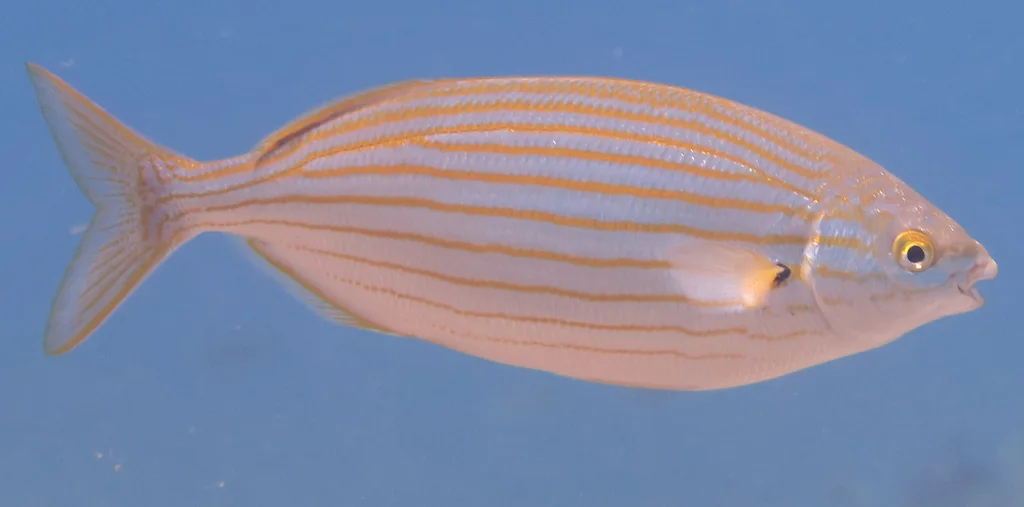
Identifying features
- Deep olive-silver body crossed by about 10-11 fine golden horizontal stripes
- Small mouth with tiny teeth adapted to cropping algae
- Silvery belly and faintly golden fins, tail forked
- Scales small; lateral line curves gently
- Juveniles plainer and greener, without strong stripes
Habits
- Grazes algae and seagrass in dense golden shoals — an almost pure vegetarian
- Moves slowly along weed edges, taking floating bread and weed baits
- Warning for the table: rare hallucinogenic fish poisoning (ichthyoallyeinotoxism) is documented after eating salema, linked to algae it grazes seasonally — many anglers release every fish
- Feeds by day; follows warm currents into bays in summer
- Spawns in spring and again in autumn in many areas
Distribution
Where to find them
- French Mediterranean weed-grown harbour walls
- Italian Adriatic warm seagrass shallows
- Spanish Mediterranean surf rocks and bay edges
Where they live
How to catch them
Float fishing over seagrass Shore
Rig: Light waggler rig with size 10-12 hooks, set just 1-2 m deep, trotted slowly over seagrass beds and rocky edges
Bait/lure: Gutweed or bread paste
Key tip: Keep the bait moving slowly — the shoal grazes on the move and will not rise to a static bait.
Bread-flake fishing on weed edges Rock fishing
Rig: Near-unweighted bread flake on a size 12 hook, cast among drifting crumbs and fished sinking with the shoal
Bait/lure: Bread flake and dough among sinking crumbs
Key tip: Keep the bait at eye level with the marching shoal; strike only on a slow, decisive dip of the float.
Best baits & lures
Baseline setup
- Rod: Long light float rod 13-16 ft
- Line: 6-8 lb mono with a 4 lb leader
- Terminal: Slender wagglers, size 10-14 hooks, minimal split shot
Recommended gear for this species
Rod · Best value
9' 5-weight fly rod outfit
≈ US$180-260
Covers chironomid lakes and small rivers with one setup.
Flies · Budget
Chironomid assortment (30 patterns)
≈ US$25-40
Chironomids are 60% of a lake rainbow's diet in spring.
Picks come from our rule library — never paid placements. Prices are guides; affiliate links may earn us a commission.
Typical size
Common 8-12 in (20-30 cm), about 0.5-1 lb (0.2-0.5 kg); large fish to 18 in (46 cm) and 3 lb (1.3 kg)
On the table
Eaten traditionally around the Mediterranean, BUT rare cases of hallucinogenic fish poisoning (ichthyoallyeinotoxism) after eating salema are documented — many anglers release it for this reason; never serve it unknowingly.
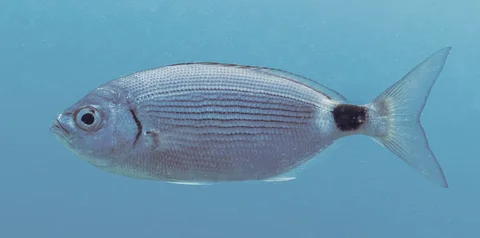
Similar species
Regulations vary by area and can change in-season — always check the official rules for your area before you fish. Regulations guide →
Plan a trip for Salema
Build today's plan