
Saltwater · Year-round in northern Gulf bays; best in spring and fall
Sand Seatrout
Cynoscion arenarius
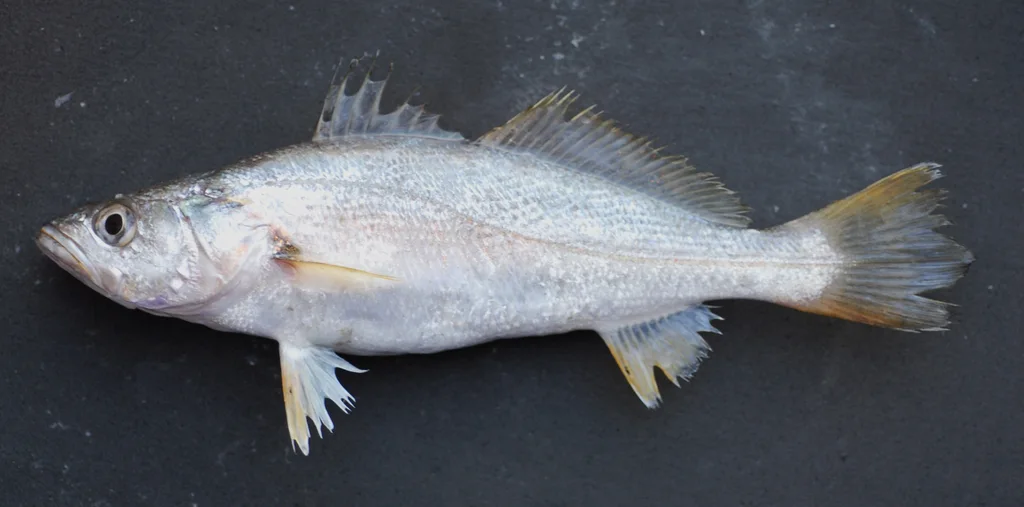
The northern Gulf's plain, unspotted seatrout. In low-salinity northern Gulf bays it largely replaces the spotted seatrout. Abundant, willing and good on light tackle, it is a staple bay fish — but its soft flesh must be eaten fresh.
Seasons · Peak
Identifying features
- No spots at all on body or fins — the key split from spotted seatrout
- Pale silvery-gray to faintly golden color
- Elongate soft-rayed body with a slightly upturned, protruding lower jaw
- Prominent canine teeth at the front of the upper jaw
- Soft flesh and easily torn mouth — fish feel light for their size
Habits
- Schools over sand and shell bottoms in bays and passes
- In the northern Gulf it replaces spotted seatrout in low-salinity bays
- Feeds mainly on shrimp and small fish, often at night around lights
- Spawns in bays and passes through spring and summer
- Meat softens quickly after death — ice immediately and eat fresh
Distribution
Where to find them
- Bay shell and sand flats off the Florida Panhandle
- Louisiana bay channels and passes
- Texas bay bridges and lighted piers at night
Where they live
How to catch them
Shrimp or soft plastics under popping corks Boat
Rig: Popping cork rig with shrimp or a soft plastic jig suspended 2-4 ft below, worked over bay shell and sand bottoms
Bait/lure: Shrimp, soft plastic jigs
Key tip: Pop the cork sharply and let it sit — sand trout rise to the sound and take the bait on the pause.
Bottom fishing with cut bait at night Shore
Rig: Simple bottom rig with small pieces of cut bait or dead shrimp, fished around bridges and lighted piers after dark
Bait/lure: Cut bait, dead shrimp
Key tip: Use a gentle lift on the strike — their mouths tear easily, so play fish softly on light drag.
Best baits & lures
Baseline setup
- Rod: Light to medium-light 7 ft spinning rod
- Line: 8-12 lb mono or light braid
- Terminal: Popping corks, 1/8-1/4 oz jig heads, small bottom rigs
Recommended gear for this species
Rod · Best value
9' 5-weight fly rod outfit
≈ US$180-260
Covers chironomid lakes and small rivers with one setup.
Flies · Budget
Chironomid assortment (30 patterns)
≈ US$25-40
Chironomids are 60% of a lake rainbow's diet in spring.
Picks come from our rule library — never paid placements. Prices are guides; affiliate links may earn us a commission.
Typical size
Common 0.5-1.5 lb (0.2-0.7 kg), 10-14 in; large fish to about 3 lb (1.4 kg)
On the table
Good when very fresh, but soft — eat the same day; it does not freeze or store well.
Similar species
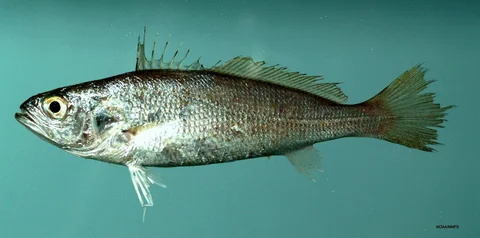 Silver SeatroutSilver seatrout is smaller and more deeply fork-tailed, living in deeper beaches and nearshore water; sand seatrout is the larger, paler bay fish of sand and shell bottoms
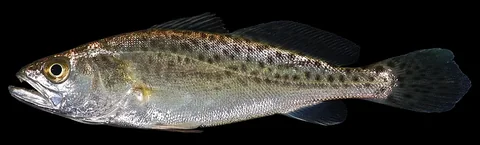 Spotted SeatroutSpotted seatrout is covered in black spots on its back and tail; sand seatrout has no spots at all
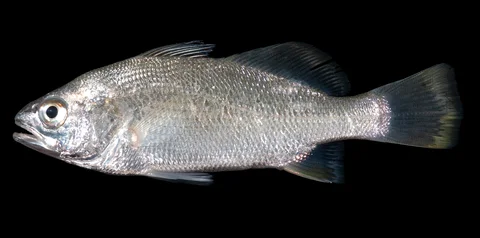 Silver PerchSilver perch is a much smaller, deeper-bodied croaker with a blunt head; sand seatrout is a longer, trout-shaped fish with prominent front canine teeth
Regulations vary by area and can change in-season — always check the official rules for your area before you fish. Regulations guide →
Plan a trip for Sand Seatrout
Build today's plan