
Saltwater · Late spring through autumn; fishes best at night
Sole
Solea solea
The night hunter of the flatfish — a tongue-shaped sand-dweller that buries by day and emerges after dark to feed, the classic quarry of summer night sessions on sand. Seezunge in German, tong in Dutch, lenguado in Spanish.
Seasons · Peak
Identifying features
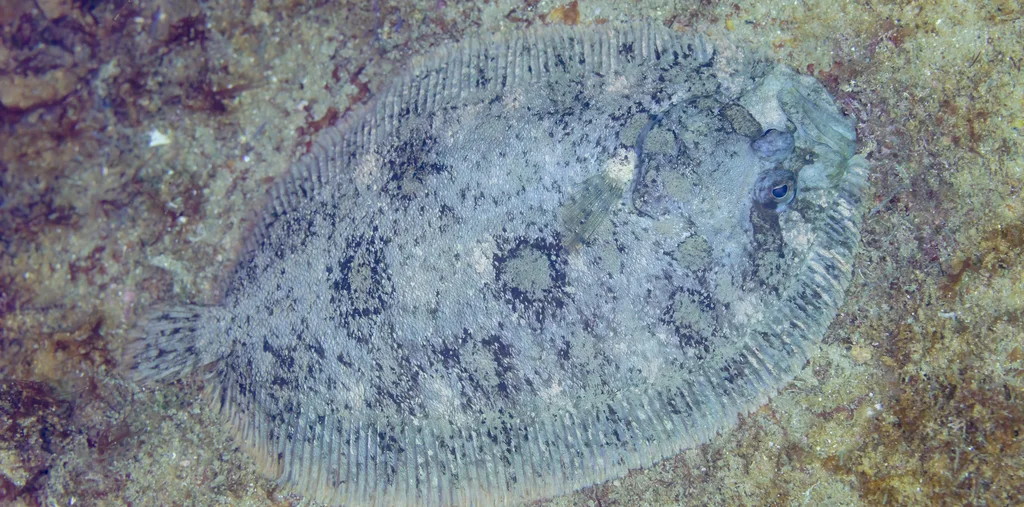
- Long, tongue-shaped oval body — right-eyed, with both eyes close together on the right side
- Small, twisted crescent-shaped mouth curving down on the underside edge
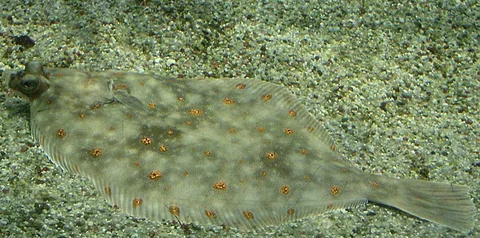
- Eyed side plain brown-grey, often with faint darker mottling but never orange spots
- Fringe of sensitive filaments around the mouth on the blind side for finding food
- Skin slightly slimy, scales very small; dorsal fin starts on the head itself
Habits
- A strict night feeder — buries in sand by day and emerges after dark to hunt
- Nuzzles worms, small shellfish and crustaceans with the sensitive blind-side mouth fringe
- Moves inshore onto beaches at night in late spring and summer
- Fishes best on warm, calm nights on a flooding tide
- Spawns in spring; adults gather on shallow sand to breed
Distribution
Where to find them
- South-west British beaches and piers after dark in summer
- Dutch and German North Sea beaches and estuary channels at night
- French Channel coast and western Mediterranean over fine sand
Where they live
How to catch them
Night surfcasting on sand Shore
Rig: Light-medium beachcaster with a long flowing two-hook rig baited with lugworm, cast short behind the surf after dark
Bait/lure: Lugworm and small ragworm
Key tip: Cast short — sole often feed in just a few metres of water, and the best hours start after full darkness.
Boat drifting on fine sand Boat
Rig: Light boat rod with a drifting flowing rig over fine sand at night or dusk
Bait/lure: Lugworm, sandeel and squid tips
Key tip: Drift slowly and keep the rig pinned to the bottom — sole pick baits off the sand rather than chase them.
Best baits & lures
Baseline setup
- Rod: Light-medium beachcaster; light boat rod over sand
- Line: 15-25 lb main line with long 15 lb snoods
- Terminal: Long flowing two-hook rigs, fine size 2-4 hooks
Recommended gear for this species
Rod · Best value
9' 5-weight fly rod outfit
≈ US$180-260
Covers chironomid lakes and small rivers with one setup.
Flies · Budget
Chironomid assortment (30 patterns)
≈ US$25-40
Chironomids are 60% of a lake rainbow's diet in spring.
Picks come from our rule library — never paid placements. Prices are guides; affiliate links may earn us a commission.
Typical size
Common 10-16 in (25-40 cm), about 0.75-2 lb (0.3-0.9 kg); large fish to 24 in (60 cm) and 6 lb (2.7 kg)
On the table
Excellent — fine, gelatinous white flesh with a prized delicate flavour; the classic Dover sole of menus.
Similar species
Regulations vary by area and can change in-season — always check the official rules for your area before you fish. Regulations guide →
Plan a trip for Sole
Build today's plan