
Saltwater · Spring and autumn; late winter spawning fish are thin — best after they recover
Plaice
Pleuronectes platessa
The staple flatfish of the North Sea and Baltic — a smooth, right-eyed flatfish everyone identifies by its bright orange spots. Scholle in German, plie in French.
Seasons · Peak
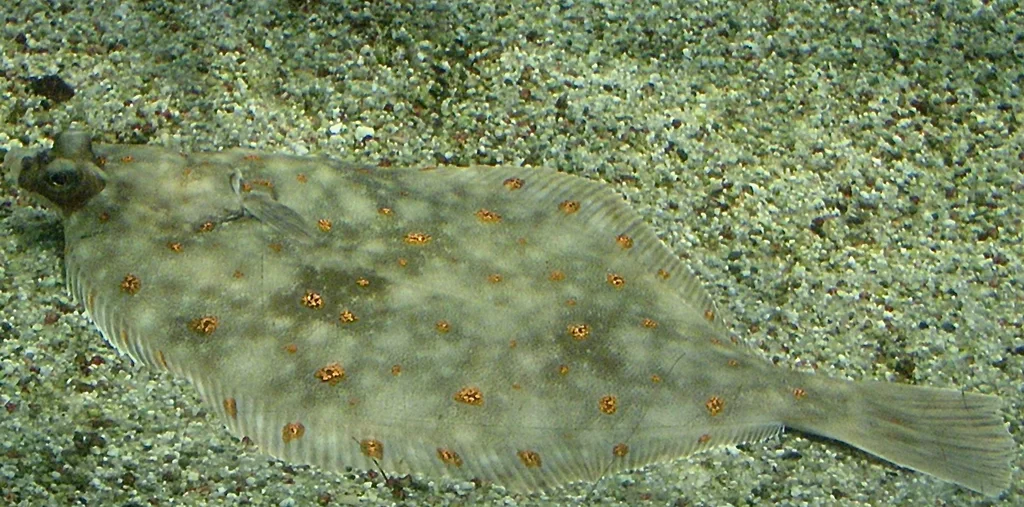
Identifying features
- Right-eyed flatfish: both eyes on the right side of the head
- Bright orange-red spots scattered over the brown eyed side — the unmistakable field mark
- Smooth skin with a row of bony knobs along the front of the head behind the eyes
- Long anal fin and a lateral line almost straight, curving only slightly over the pectoral fin
- Blind side is plain white; body outline oval and smooth-edged
Habits
- Lies half-buried on sand by day, shuffling with the tide to feed
- Feeds on worms, thin-shelled bivalves, brittle stars and small crustaceans
- Spawns in late winter; spawned fish are thin and poor eating until they recover
- Moves into shallower water in spring and autumn feeding periods
- Often travels in loose groups over favoured banks
Distribution
Where to find them
- North Sea sandbanks off the Netherlands, Germany and eastern England
- Surf beaches and piers of south-west Britain and Ireland
- Western Baltic sandy flats and estuary edges in spring
Where they live
How to catch them
Surfcasting over clean sand Shore
Rig: Medium beachcaster with a two-hook flapping rig baited with lugworm or ragworm, cast onto banks and gutters behind the surf
Bait/lure: Lugworm, ragworm, crab
Key tip: Fish the flooding tide over shallow banks — plaice move in with the water to feed.
Boat drifting over sandbanks Boat
Rig: Boat rod with a two-hook flowing rig drifted slowly over sandbanks and mussel-bed edges
Bait/lure: Lugworm, razorfish, clam
Key tip: Drift slowly and keep the bait trundling on the bottom; a spoon or beads above the hook raise extra bites.
Best baits & lures
Baseline setup
- Rod: Medium beachcaster from shore; medium boat rod afloat
- Line: 20-30 lb main line with 20 lb snoods
- Terminal: Two-hook flapping rigs, size 1-1/0 hooks, plain or grip leads
Recommended gear for this species
Rod · Best value
9' 5-weight fly rod outfit
≈ US$180-260
Covers chironomid lakes and small rivers with one setup.
Flies · Budget
Chironomid assortment (30 patterns)
≈ US$25-40
Chironomids are 60% of a lake rainbow's diet in spring.
Picks come from our rule library — never paid placements. Prices are guides; affiliate links may earn us a commission.
Typical size
Common 12-20 in (30-50 cm), about 1-3 lb (0.5-1.4 kg); large fish to 30 in (75 cm) and 10 lb (4.5 kg)
On the table
Good — soft, delicately flavoured white flesh; best from fish that have recovered condition after spawning.
Similar species
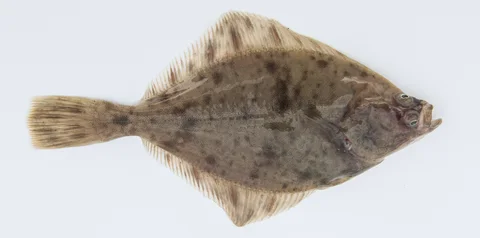 European FlounderEuropean flounder has rough, warty skin, duller colour and almost no bright orange spots; plaice is smooth-skinned with clear orange-red spots and head knobs
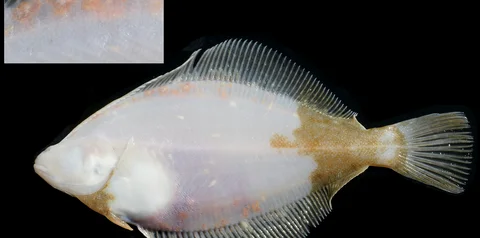 DabDab is much smaller, with rough sandpapery scales and a strongly curved lateral line over the pectoral fin; plaice is larger, smooth and orange-spotted
Regulations vary by area and can change in-season — always check the official rules for your area before you fish. Regulations guide →
Plan a trip for Plaice
Build today's plan