
Saltwater · Spring and autumn
Dab
Limanda limanda
The rough-skinned little flatfish of sandy North Sea and Baltic ground — modest, numerous and a mainstay catch on light gear with simple worm rigs. Its calling card is the lateral line curving in a semicircle over the pectoral fin, and its skin feels like fine sandpaper, quite unlike the smooth plaice.
Seasons · Peak
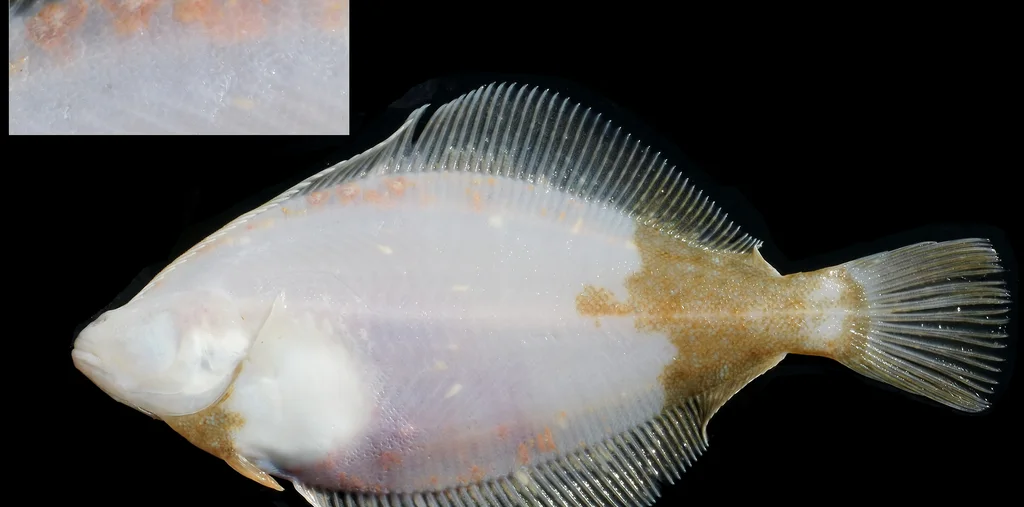
Identifying features
- Oval flatfish, eyes on the right (brown) side of the body
- Brown-olive upper side with faint orange-red speckles
- Rough, sandpapery skin — scales have spiny edges, unlike smooth flounder and plaice
- Lateral line curves in a clear semicircle over the pectoral fin — the key mark
- Small mouth and a nearly straight, slightly wavy tail edge
Habits
- Burrows tail-first into sand by day and feeds over the surface at night
- Eats marine worms, small shellfish, brittle stars and tiny crabs
- Most numerous on clean sand away from rock and weed
- Feeds best on moving tides with a bit of coloured water
- Small but bold once a bait trail builds over a sandbank
Distribution
Where to find them
- Beach gutters along the North Sea coast in spring
- Western Baltic sandbanks from charter boats
- Dutch and German Wadden coast sand grounds
Where they live
How to catch them
Light shore fishing over sand Shore
Rig: Three-hook flapper rig with size 4-2 hooks and a plain 3-4 oz lead, cast into beach gutters and beyond the surf
Bait/lure: Lugworm or ragworm on small hooks
Key tip: Fish a rising tide when dabs move over the sand; twitch the rig in slowly now and then so fish find the baits.
Drifting boat fishing over sandbanks Boat
Rig: Two-hook rig on a slow drift over clean sandbanks, baits trailing on the bottom
Bait/lure: Lugworm, mussel and small shrimp pieces
Key tip: Drifting covers ground; if one stretch produces dabs, drift it again — they lie in patches.
Best baits & lures
Baseline setup
- Rod: Light beachcaster or light boat rod
- Line: 10-15 lb mono or braid
- Terminal: Two- or three-hook flapper rigs, size 4-1 hooks, plain leads
Recommended gear for this species
Rod · Best value
9' 5-weight fly rod outfit
≈ US$180-260
Covers chironomid lakes and small rivers with one setup.
Flies · Budget
Chironomid assortment (30 patterns)
≈ US$25-40
Chironomids are 60% of a lake rainbow's diet in spring.
Picks come from our rule library — never paid placements. Prices are guides; affiliate links may earn us a commission.
Typical size
Common 8-12 in (20-30 cm), about 0.5-1 lb (0.2-0.5 kg); large fish to 16 in (40 cm)
On the table
Good — sweet, delicate white flesh; usually eaten whole fried or filleted, often in German fish rolls.
Similar species
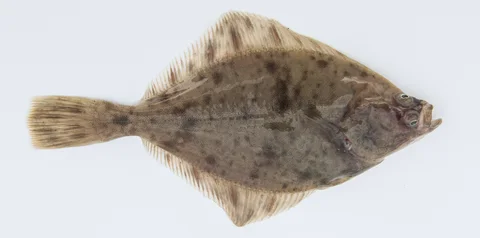 European FlounderEuropean flounder is smooth-skinned with bony knobs along the fin bases and runs into fresh water; dab is rough-skinned, fully marine and has the semicircular lateral line
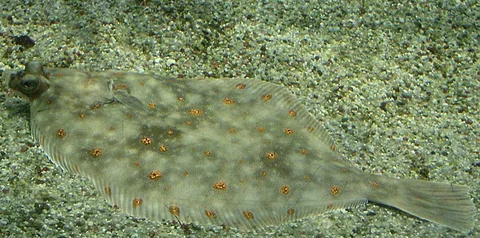 PlaicePlaice has bold orange spots, smooth skin and a bony ridge behind the eyes; dab is rough to the touch with only faint speckling
Regulations vary by area and can change in-season — always check the official rules for your area before you fish. Regulations guide →
Plan a trip for Dab
Build today's plan