
Saltwater · Late summer and fall best; the fall spot run August to November
Spot
Leiostomus xanthurus
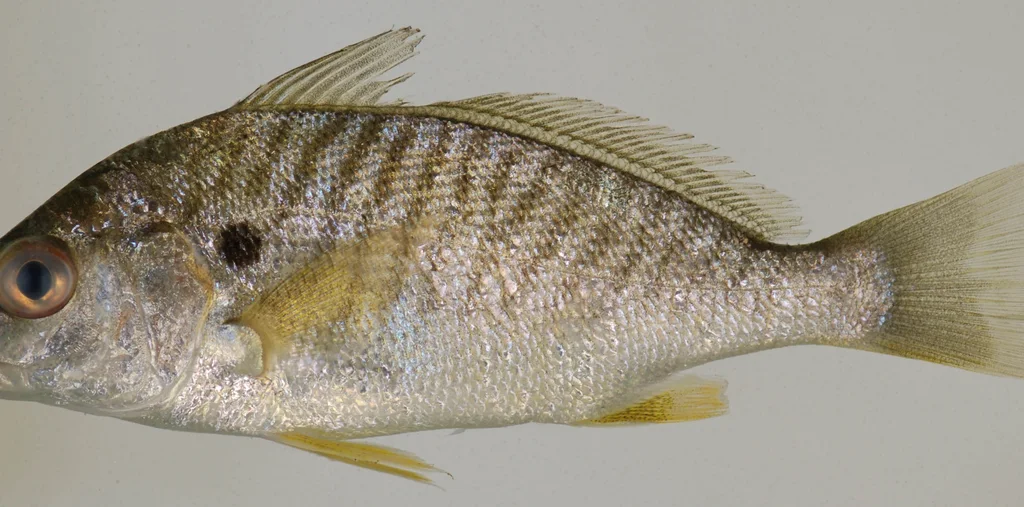
A small croaker and famous Chesapeake panfish, also a key forage fish for striped bass and other predators. The golden spot behind the gill cover is the mark that gives it its name. In fall, dense schools stage the celebrated 'spot run' before moving offshore.
Seasons · Peak
Identifying features
- Distinct golden-bronze spot just behind the gill cover — the naming mark
- 12-15 faint dark bars on a bluish-grey back
- Deeply forked tail and a blunt, downturned mouth for bottom feeding
- No barbel on the chin, unlike many other croakers
- Small silvery body, usually under 10 in (25 cm)
Habits
- Schools in bays and estuaries over sand, mud and oyster bottom
- Feeds on worms, shrimp, small crabs and detritus on the bottom
- Moves offshore and south in winter; returns in spring
- Croaks softly when handled, using its swim bladder
- Fall migration packs piers during the spot run
Distribution
Where to find them
- Chesapeake Bay piers and channel edges in fall
- Carolina tidal creeks and inlet mouths
- New Jersey bay piers on the late-summer run
Where they live
How to catch them
Pier fishing on the fall spot run Shore
Rig: Light rod, two-hook bottom rig with size 6-8 hooks and a small sinker beside pier pilings
Bait/lure: Bloodworm or shrimp bits
Key tip: Fish the fall run at dusk — when one spot bites, the whole school is usually below.
Boat fishing over bay channel edges Boat
Rig: Medium-light rod, two-hook bottom rig drifted or anchored along bay channel edges and oyster bottom
Bait/lure: Shrimp bits and bloodworm pieces
Key tip: Anchor on the channel edge and keep baits on the bottom; spot feed tight to structure.
Best baits & lures
Baseline setup
- Rod: Light 6-7 ft spinning rod
- Line: 8-12 lb mono or braid
- Terminal: Two-hook bottom rigs, size 6-8 hooks, 1-2 oz sinkers
Recommended gear for this species
Rod · Best value
9' 5-weight fly rod outfit
≈ US$180-260
Covers chironomid lakes and small rivers with one setup.
Flies · Budget
Chironomid assortment (30 patterns)
≈ US$25-40
Chironomids are 60% of a lake rainbow's diet in spring.
Picks come from our rule library — never paid placements. Prices are guides; affiliate links may earn us a commission.
Typical size
Common 6-9 in (15-23 cm), under 0.5 lb (0.2 kg); large fish to 14 in (36 cm)
On the table
Good for its size — sweet panfish, usually fried whole; small, so most anglers keep a batch.
Similar species
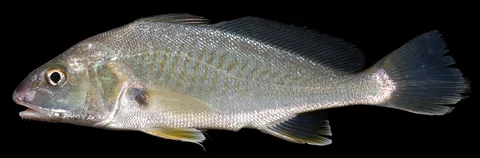
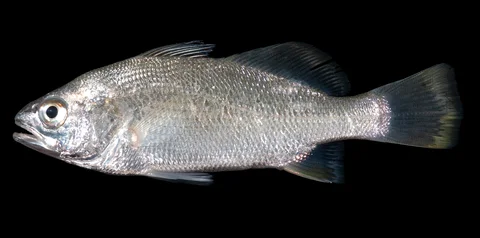
Regulations vary by area and can change in-season — always check the official rules for your area before you fish. Regulations guide →
Plan a trip for Spot
Build today's plan