
Saltwater · Spring and autumn; summer in deeper water
Thornback Ray
Raja clavata
Britain's number one shore ray — the 'roker' of English beaches — and a regular boat catch all around Ireland and the Channel. Its back and tail are armoured with thorns, but they are only sharp, not venomous. Numbers have recovered well under catch-and-release, and most anglers return them.
Seasons · Peak
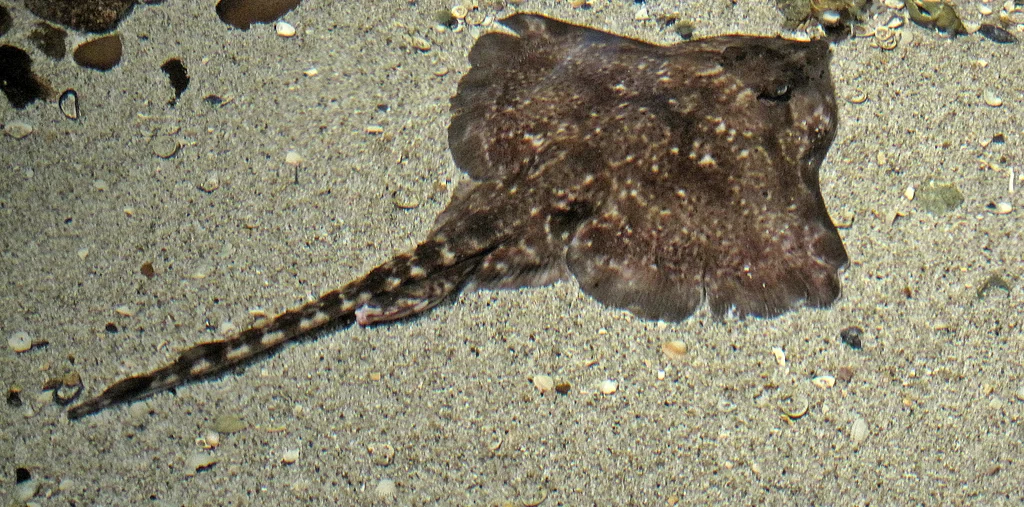
Identifying features
- Diamond-shaped disc with a pointed snout and a long, thick tail
- Rows of sharp curved thorns along the tail and down the back
- Rough, sandpapery skin with extra thorn-like buttons, especially on mature females
- Mottled brown, grey or olive marbling on top, plain white underneath
- No sting or venom barb — the thorns can scratch but are harmless beyond that
Habits
- Lies half-buried on sand and gravel by day, hunting more actively at night
- Feeds on crabs, shrimps, sandeels and small flatfish and whiting
- Moves into shallower beach water in spring and autumn, deeper in high summer
- Females lay horned egg cases — the 'mermaid's purses' found on beaches
- Best released carefully at the water's edge; support the body, never lift by the tail
Distribution
Where to find them
- Shingle and sand beaches of southern England and Ireland in spring
- Thames Estuary and Solent boat marks over mixed ground
- Dutch and German North Sea beaches in autumn
Where they live
How to catch them
Beach casting with a pulley or up-and-over rig Shore
Rig: Beachcaster with a pulley or up-and-over rig, size 2/0-4/0 hook and a 5-6 oz grip lead cast onto sand or mixed ground
Bait/lure: Fish strips, sandeel or crab
Key tip: Fish the last two hours of the flood into darkness in spring — rays patrol very shallow water at night.
Downtide ledgering over banks Boat
Rig: Uptider or 12-20 lb boat rod, running ledger with a 4/0 hook and enough lead to hold in the tide
Bait/lure: Bluey or mackerel strip, whole sandeel
Key tip: Let the ray move off with the bait before lifting in — thornbacks sit on a bait before taking it properly.
Best baits & lures
Baseline setup
- Rod: 13-14 ft beachcaster or 12-20 lb class boat rod
- Line: 15-18 lb mono main line with a 60 lb shock leader from the shore
- Terminal: Pulley rigs, size 2/0-4/0 strong hooks, grip leads
Recommended gear for this species
Rod · Best value
9' 5-weight fly rod outfit
≈ US$180-260
Covers chironomid lakes and small rivers with one setup.
Flies · Budget
Chironomid assortment (30 patterns)
≈ US$25-40
Chironomids are 60% of a lake rainbow's diet in spring.
Picks come from our rule library — never paid placements. Prices are guides; affiliate links may earn us a commission.
Typical size
Common 20-32 in (50-80 cm) long and 6-16 lb (2.7-7.3 kg); large females to 3.5 ft (105 cm) and 40 lb (18 kg)
On the table
Good — the wings are the classic 'skate' of fish shops, though most shore anglers release them.
Similar species
Regulations vary by area and can change in-season — always check the official rules for your area before you fish. Regulations guide →
Plan a trip for Thornback Ray
Build today's plan