
Saltwater · Year-round in Florida; summer best farther north, June to September in bays and surf
Atlantic Stingray
Hypanus sabina
The small, common stingray of Atlantic and Gulf bays, surf and estuaries from the Carolinas to Florida. It is famous for entering fresh water — the St. Johns River population in Florida lives fully in fresh water year-round. Most catches are released; handle it only with the tail-spine safety rules below.
Seasons · Peak
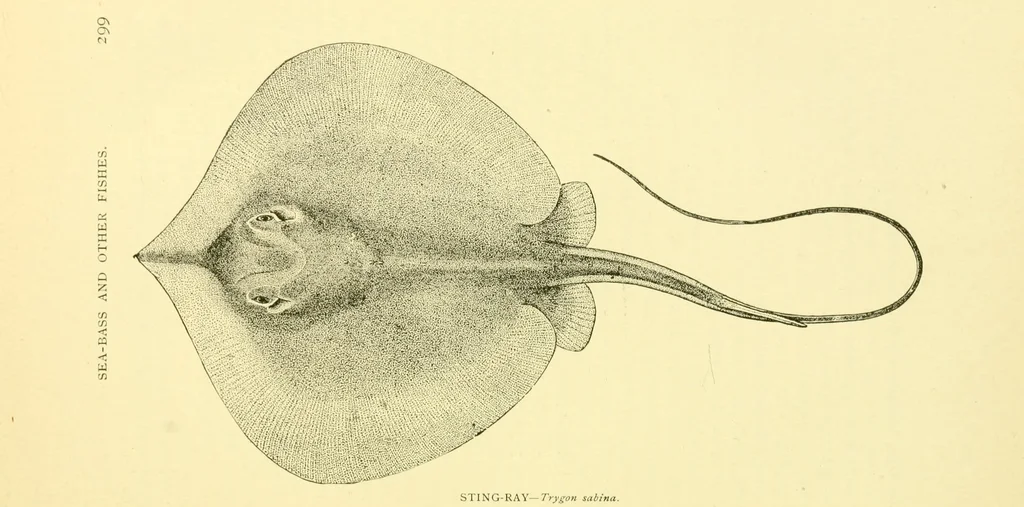
Identifying features
- Small rounded-diamond disc, brown to grey-brown above and white below
- Pointed, protruding snout with the eyes raised above the disc
- Long whip-like tail bearing one serrated venomous spine — never handle the tail
- Low fin folds run along the upper and lower sides of the tail
- Adults are usually only 12-24 in (30-61 cm) across, far smaller than a southern stingray
Habits
- Burrows into sand and mud in shallow bays and feeds on worms, shrimp, clams and small crabs
- Never step on a buried ray: wading anglers should shuffle their feet — the 'stingray shuffle' — to push rays away
- The tail spine is defensive and venomous; slide the fish away rather than stepping over or on it
- Moves into warm summer shallows and estuaries, and tolerates fresh water far up rivers
- Gives live birth to a few pups in summer
Distribution
Where to find them
- Georgia and Florida Atlantic bays and estuary mouths
- Florida surf troughs and sandy beaches in summer
- The fresh-water St. Johns River in Florida
Where they live
How to catch them
Cut bait or shrimp on bottom rigs Shore
Rig: Medium rod, standard bottom rig with a 2/0-4/0 circle hook, shrimp or cut bait fished on sand in bays and surf
Bait/lure: Shrimp, cut bait
Key tip: Most rays are incidental catches and are released — keep the ray in the water, keep clear of the tail, and cut the leader close if it cannot be dehooked safely.
Pier bottom fishing in summer shallows Shore
Rig: Medium rod, bottom rig with clam or shrimp fished from piers over sand in summer
Bait/lure: Clam, shrimp
Key tip: Shuffle your feet when wading nearby shallows, and never lift a ray by its tail.
Best baits & lures
Baseline setup
- Rod: Medium 7-9 ft rod
- Line: 15-20 lb mono
- Terminal: 2/0-4/0 circle hooks, bottom rigs, 1-3 oz sinkers
Recommended gear for this species
Rod · Best value
9' 5-weight fly rod outfit
≈ US$180-260
Covers chironomid lakes and small rivers with one setup.
Flies · Budget
Chironomid assortment (30 patterns)
≈ US$25-40
Chironomids are 60% of a lake rainbow's diet in spring.
Picks come from our rule library — never paid placements. Prices are guides; affiliate links may earn us a commission.
Typical size
Common 12-20 in (30-51 cm) across; large to about 24 in (61 cm) and 10 lb (4.5 kg)
On the table
Fair, but almost always released; take extreme care around the venomous tail spine.
Similar species
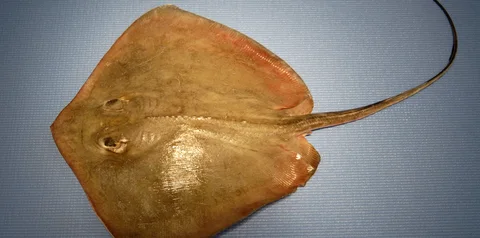 Southern StingraySouthern stingray is much larger and broader, commonly 3-5 ft across with a plain long whip tail; Atlantic stingray is small, usually under 2 ft across, with tail fin folds
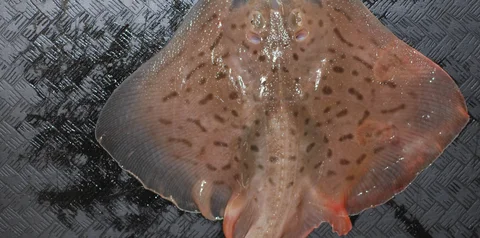 Clearnose SkateClearnose skate has no stinging spine, has tail thorns and a clear snout patch, and lays egg cases; Atlantic stingray has a venomous spine and gives live birth
Regulations vary by area and can change in-season — always check the official rules for your area before you fish. Regulations guide →
Plan a trip for Atlantic Stingray
Build today's plan