
Saltwater · Year-round in Florida and the Keys; summer best on the Gulf Coast, May to October
Southern Stingray
Hypanus americanus
The big, diamond-shaped stingray of Florida flats, beaches and Gulf bays, famous from Keys flats where bonefish anglers meet it daily. It is almost entirely a catch-and-release encounter: keep the ray in the water, stay clear of the venomous tail spine, cut the leader close or dehook with care, and never lift it by the tail or spiracles.
Seasons · Peak
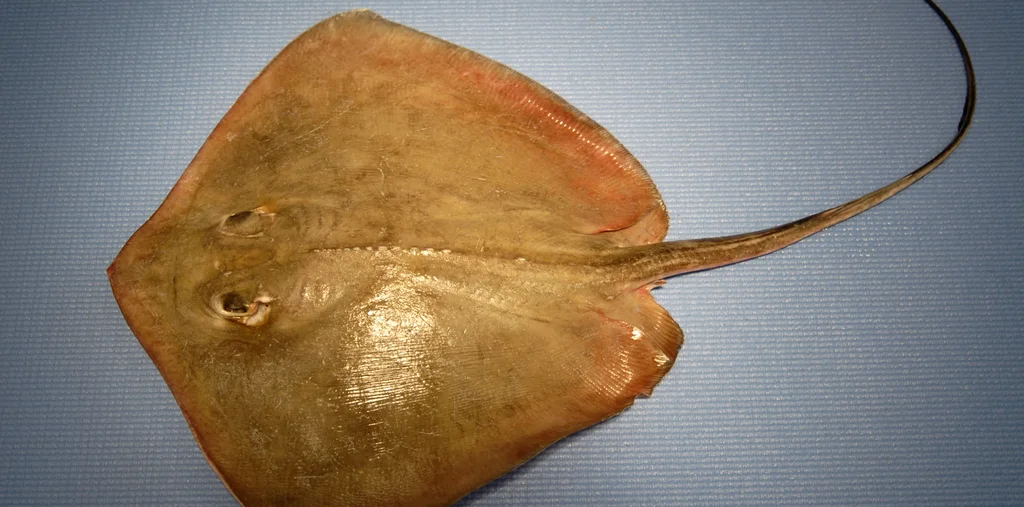
Identifying features
- Broad diamond-shaped disc, dark brown, grey or nearly black above and white below
- Long whip-like tail, often more than twice the disc width, with one serrated venomous spine
- No fin folds or ridges making a plain whip tail — a key contrast with smaller rays
- Pointed snout and eyes and spiracles raised on top of the head
- Adults commonly 3-4 ft (0.9-1.2 m) across, far larger than an Atlantic stingray
Habits
- Burrows into sand flats by day and hunts shrimp, crabs, clams and small fish, often digging pits
- The tail spine is venomous and defensive — never step on or over a ray, and shuffle your feet when wading
- For release, keep the ray in the water, cut the leader close or dehook with care, and never lift by the tail or spiracles
- Often follows stingray-feeding birds and bonefish on flats, and gathers in warm summer shallows
- Gives live birth to litters of pups in summer
Distribution
Where to find them
- Florida Keys sand flats and channels
- Florida Atlantic and Gulf beaches and inlet channels
- Texas and Louisiana bay channels and flats edges
Where they live
How to catch them
Large cut baits on flats edges and channels Shore
Rig: Medium-heavy rod, bottom rig with a 5/0-7/0 circle hook and a large cut bait or crab, fished on flats edges and channel drops
Bait/lure: Cut bait, crab
Key tip: Treat it as catch-and-release: fight it away from the tail, keep it in the water boatside, and cut the leader close rather than handling the spine.
Bridge and pier bottom fishing at night Shore
Rig: Heavy pier rod, bottom rig with shrimp or cut bait fished at night around bridge pilings and pier ends over sand
Bait/lure: Shrimp, cut bait
Key tip: Use a bridge net if a lift is unavoidable, support the disc, and release in the water whenever possible — never lift by the tail.
Best baits & lures
Baseline setup
- Rod: Medium-heavy to heavy 7-10 ft rod
- Line: 30-50 lb mono or braid
- Terminal: 5/0-7/0 circle hooks, bottom rigs, 3-6 oz sinkers
Recommended gear for this species
Rod · Best value
9' 5-weight fly rod outfit
≈ US$180-260
Covers chironomid lakes and small rivers with one setup.
Flies · Budget
Chironomid assortment (30 patterns)
≈ US$25-40
Chironomids are 60% of a lake rainbow's diet in spring.
Picks come from our rule library — never paid placements. Prices are guides; affiliate links may earn us a commission.
Typical size
Common 3-4 ft (0.9-1.2 m) across and 30-80 lb (14-36 kg); large to about 6.5 ft (2 m) and over 200 lb (91 kg)
On the table
Edible, but almost always released unharmed using the in-water release protocol above.
Similar species
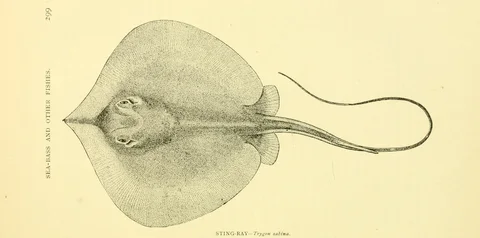 Atlantic StingrayAtlantic stingray is much smaller, usually under 2 ft across, with fin folds on its tail; southern stingray is commonly 3-4 ft across with a plain whip tail
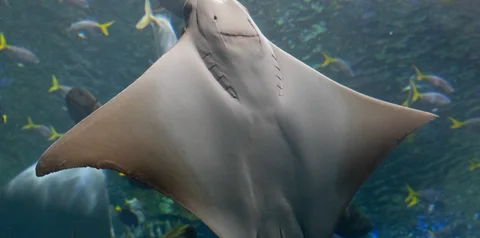 Cownose RayCownose ray has a blunt, lobed snout like a cow's nose, a much shorter tail, and swims in schools near the surface; southern stingray has a pointed snout and stays on the bottom
Regulations vary by area and can change in-season — always check the official rules for your area before you fish. Regulations guide →
Plan a trip for Southern Stingray
Build today's plan