
Saltwater · Spring to fall in Chesapeake Bay, May to September; migrations in spring and fall
Cownose Ray
Rhinoptera bonasus
A schooling ray that migrates in huge schools along the Atlantic and Gulf coasts, entering Chesapeake Bay in summer, and is named for its lobed snout, which looks like a cow's nose. Its reputation for destroying Chesapeake oyster beds is debated — studies suggest its impact was overstated and that shark declines were also involved. Most anglers release it, staying clear of its tail spine.
Seasons · Peak
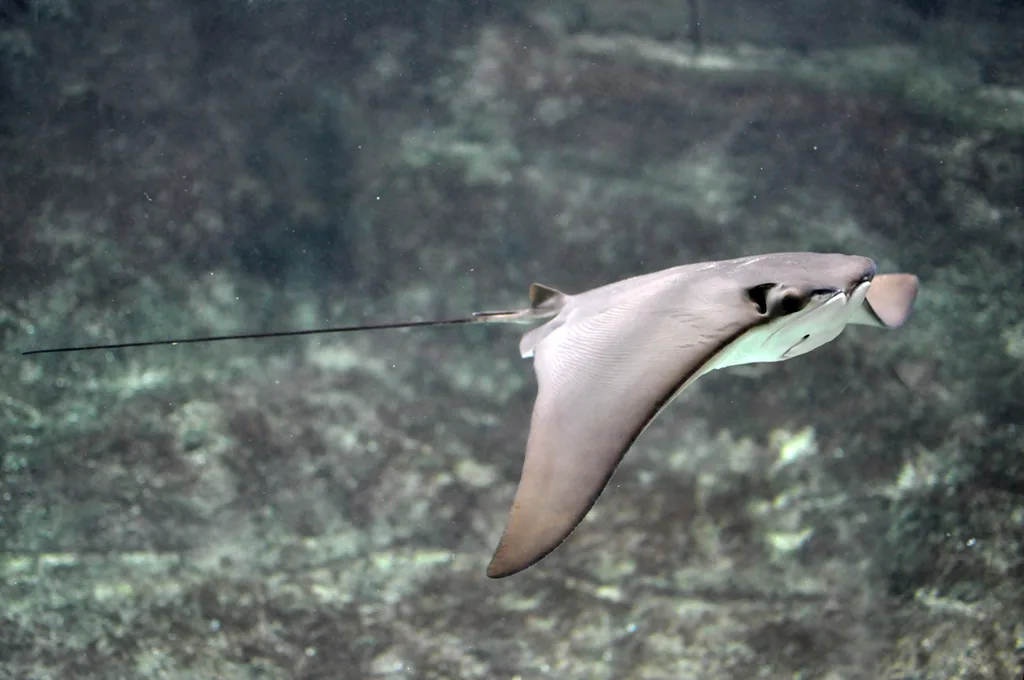
Identifying features
- Blunt, double-lobed snout like a cow's nose, set in front of the eyes
- Broad diamond disc, brown to olive above and white below, with a pointed snout profile from above
- Short whip tail with one or two small serrated spines at its base
- Strong flat tooth plates for crushing clams, oysters and other shellfish
- Usually 3-4 ft (0.9-1.2 m) across, smaller and shorter-tailed than a southern stingray
Habits
- Migrates in huge schools, sometimes hundreds strong, swimming near the surface with wingtips breaking the water
- Feeds in groups over shellfish beds, flapping and digging to expose clams and oysters
- Its Chesapeake oyster-eating reputation is debated — present carefully, as studies suggest the impact was overstated
- Enters Chesapeake Bay in late spring, leaves for warmer water in fall, and gives live birth to one pup
- The tail spine is small but venomous; handle at the disc edges and release in the water
Distribution
Where to find them
- Chesapeake Bay shallows and shellfish beds in summer
- Carolina surf and nearshore migration routes in spring and fall
- Florida Atlantic and Gulf bays when schools pass through
Where they live
How to catch them
Bottom rigs with clam or crab in bays Boat
Rig: Medium-heavy rod, bottom rig with a 4/0-6/0 circle hook and clam or crab, fished over shellfish beds when schools move into bays
Bait/lure: Clam, crab
Key tip: Most are released — keep the ray in the water, watch the small spine at the tail base, and support the disc.
Sight-casting to migrating surface schools Boat
Rig: Medium-heavy spinning rod, a small lead-head jig or bait cast ahead of a moving surface school from a boat
Bait/lure: Small jig, cut bait
Key tip: Cast ahead of the school, not into its centre, and expect a long, powerful first run.
Best baits & lures
Baseline setup
- Rod: Medium-heavy 7-9 ft rod
- Line: 25-40 lb mono or braid
- Terminal: 4/0-6/0 circle hooks, bottom rigs, 2-4 oz sinkers
Recommended gear for this species
Rod · Best value
9' 5-weight fly rod outfit
≈ US$180-260
Covers chironomid lakes and small rivers with one setup.
Flies · Budget
Chironomid assortment (30 patterns)
≈ US$25-40
Chironomids are 60% of a lake rainbow's diet in spring.
Picks come from our rule library — never paid placements. Prices are guides; affiliate links may earn us a commission.
Typical size
Common 3-4 ft (0.9-1.2 m) across and 20-40 lb (9-18 kg); large to about 7 ft (2.1 m)
On the table
Eaten in some regions, but most anglers release it; take care around the small venomous spine.
Similar species
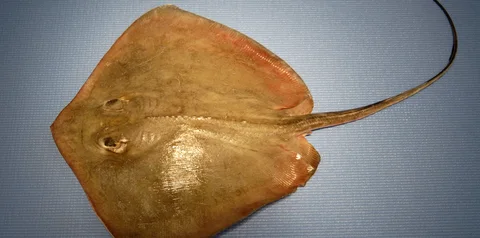 Southern StingraySouthern stingray has a pointed snout, a much longer whip tail, and stays alone on the bottom; cownose ray has a lobed cow-like snout, a short tail, and travels in large surface schools
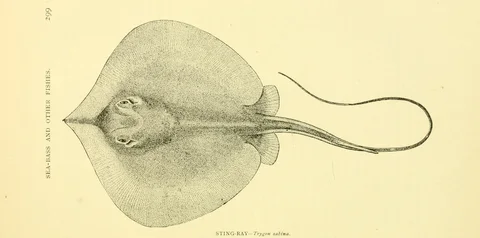 Atlantic StingrayAtlantic stingray is small, solitary and bottom-dwelling with tail fin folds; cownose ray is larger, schooling and surface-swimming, with a lobed snout
Regulations vary by area and can change in-season — always check the official rules for your area before you fish. Regulations guide →
Plan a trip for Cownose Ray
Build today's plan