
Saltwater · Year-round in lagoons; best on mid-range tides in the morning and late afternoon
Threadfin Bonefish
Albula nemoptera
The estuarine bonefish of the western Caribbean — Belize and Honduras lagoons to Costa Rica and Panama, told by the thread-like elongated last ray of the dorsal fin. A wary lagoon fish for fly and light-tackle anglers, catch-and-release in Belize.
Seasons · Peak
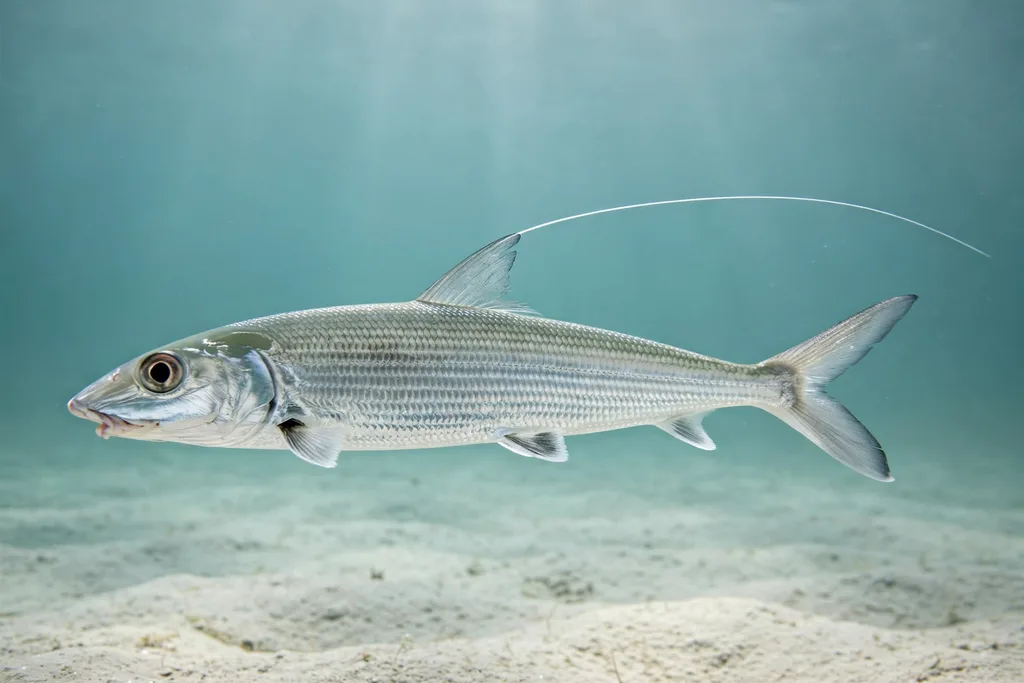
Identifying features
- Last ray of the dorsal fin is drawn out into a long thread-like filament — the key mark
- Silvery, streamlined bonefish body with a pointed conical snout
- Dorsal fin origin in front of the pelvic fins; mouth small and underslung
- Deeper-bodied and more estuarine than the classic bonefish
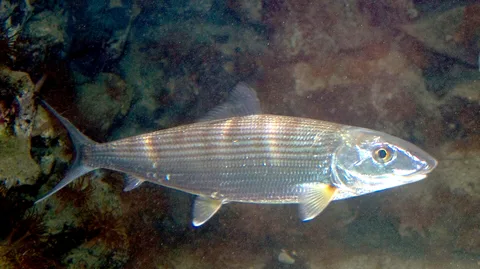
- Look-alike: bonefish (Albula vulpes) lacks the long thread-like last dorsal ray
Habits
- An estuarine bonefish — uses deeper, softer-bottom lagoon water more than the classic bonefish
- Feeds on bottom invertebrates, grubbing in mud and sand
- Moves with the tide between channels and lagoon flats
- Very wary in clear shallow water; often first seen mudding
Distribution
Where to find them
- Muddy lagoon edges and mangrove channels in Belize and Honduras
- River mouths and lagoon passes on a moving tide
- Deeper channels beside sunlit flats
Where they live
How to catch them
Fly fishing to mudding fish Shore
Rig: 8/9-weight fly rod, floating line, 9-10 ft leader to 10 lb
Bait/lure: Crab and shrimp flies #4-6, e.g. Crazy Charlie and Gotcha patterns
Key tip: Cast to the mud patches made by grubbing fish, drop the fly ahead and strip slowly.
Shrimp at mangrove edges Boat
Rig: Light spinning rod, unweighted shrimp on 10 lb leader
Bait/lure: Live shrimp on a #4 hook
Key tip: Anchor off lagoon edges and cast to channel junctions on the incoming tide.
Small jigs in lagoon channels Boat
Rig: 1/8-1/4 oz jig tipped with shrimp on 8-10 lb line
Bait/lure: Small jigs tipped with shrimp
Key tip: Work the jig slowly along the bottom of deeper lagoon channels where this species feeds.
Best baits & lures
Baseline setup
- Rod: 8/9-weight fly rod or 7 ft light spinning rod
- Line: 8-12 lb mono or braid, 10 lb fluorocarbon leader
- Terminal: Shrimp/crab flies #4-8, small jigs, #4 hooks
Recommended gear for this species
Rod · Best value
9' medium-heavy surf spinning rod
≈ US$110-170
Casts plugs and bait past the breakers and handles stripers, drum and bluefish in the wash.
Reel · Best value
5000 size sealed spinning reel
≈ US$120-180
Salt spray and dunkings kill cheap reels — a sealed body and 30 lb braid capacity are the surf standard.
Terminal · Budget
Topwater plugs, soft-plastic jigs and fish-finder rigs
≈ US$25-40
Plugs for blitzes, jigs for the trough, bait on a fish-finder rig when they won't chase — the inshore trio.
Picks are never paid placements. Prices are guides; price links are coming soon and none is an affiliate link yet.
Typical size
Common 20-35 cm; max about 51 cm TL — a small bonefish
On the table
Not eaten — bony and protected as a sport fish in Belize; release every fish quickly in the water.
Similar species
Regulations vary by area and can change in-season — always check the official rules for your area before you fish. Regulations guide →
Plan a trip for Threadfin Bonefish
Build today's plan⚠ Heads-up: Threadfin Bonefish doesn't occur around Vancouver, BC (or is very rare there), so it's not a sensible local target. Your plan stays in Vancouver, BC and is built around the fish that actually live there.