
Saltwater · Tiger puffer winter boat season; grass puffer year-round at piers
Tiger & Grass Puffers
Takifugu rubripes / Takifugu niphobles
SAFETY FIRST: this page is for identification and safe handling only — never eat a puffer you caught yourself. The big tiger puffer is a winter boat-fishing specialty in Japan and may only be prepared by licensed fugu specialists; the small grass puffer is the year-round number-one pier bait thief and bycatch. Both carry tetrodotoxin. Anglers hand any kept fish to licensed processors and release bycatch carefully with wet hands.
Seasons · Peak
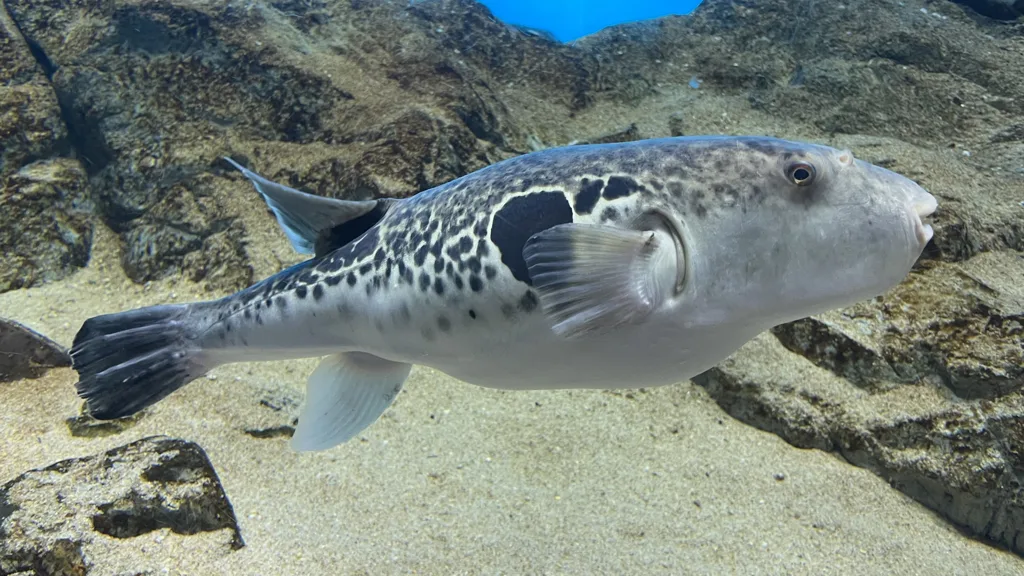
Identifying features
- This page covers two species: the large tiger puffer (Takifugu rubripes) and the small grass puffer (Takifugu niphobles)
- Both have tough skin, no true scales, and fused beak-like teeth for crushing shellfish
- Tiger puffer is big and heavy-bodied with dark markings on the back and sides and a pale belly
- Grass puffer is small and mottled brown-green above with a white belly — the classic pier bycatch
- All puffers can inflate into a ball when threatened — a warning sign, not a toy
Habits
- Grass puffer is the year-round number-one pier bait thief, biting through hooks and line with its beak
- Tiger puffer gathers on winter offshore grounds and is fished from boats as a seasonal specialty
- Both puffers inflate with water or air when alarmed
- They feed on shellfish, crustaceans and other hard prey crushed by fused beak teeth
- Relatives such as saba-fugu (Lagocephalus species) also appear as bycatch — treat every puffer as toxic and never eat any of them
Distribution
Regional coverage expanding
Where to find them
- Winter tiger puffer boat grounds off Shimonoseki and in the Seto Inland Sea
- Ariake Sea boat fishing in Kyushu for tiger puffer
- Harbour piers all along Honshu where grass puffer steal baits year-round
Where they live
How to catch them
Winter boat fishing for tiger puffer Boat
Rig: Heavy single-hook bottom rig from an anchored boat over sand and mud grounds, with licensed boats and crews
Bait/lure: Large whole shrimp or other tough baits per boat practice
Key tip: Any kept fish goes straight to a licensed fugu processor — never clean, cook or taste it yourself.
Grass puffer as pier bycatch: recognise and release safely Shore
Rig: Ordinary pier bottom or float rig that grass puffers bite; carry spare hooks because their beak bites through line and hooks
Bait/lure: Whatever the pier rig carries — shrimp, squid or worm
Key tip: Unhook with wet hands, never gripping near the mouth, and release it — and never eat a bycatch puffer, however small.
Best baits & lures
Baseline setup
- Rod: Stiff medium boat rod for tiger puffer; any light pier rod meets grass puffer as bycatch
- Line: 30-50 lb main line for boat tiger puffer; light pier tackle where grass puffer steal bait
- Terminal: Heavy single-hook boat rigs for tiger puffer; cheap hooks and wire-sparing rigs where grass puffer bite through
Recommended gear for this species
Rod · Best value
9' 5-weight fly rod outfit
≈ US$180-260
Covers chironomid lakes and small rivers with one setup.
Flies · Budget
Chironomid assortment (30 patterns)
≈ US$25-40
Chironomids are 60% of a lake rainbow's diet in spring.
Picks come from our rule library — never paid placements. Prices are guides; affiliate links may earn us a commission.
Typical size
Tiger puffer common 16-24 in (40-60 cm) and several kilograms; grass puffer only 4-6 in (10-15 cm), to about 8 in (20 cm)
On the table
DANGER — NEVER eat a wild-caught puffer. Both species carry tetrodotoxin, a potentially fatal poison with no antidote. In Japan puffer may only be prepared by licensed specialists; anglers must hand any fish they keep to a licensed processor, and must never prepare, cook or serve puffer themselves.
Similar species
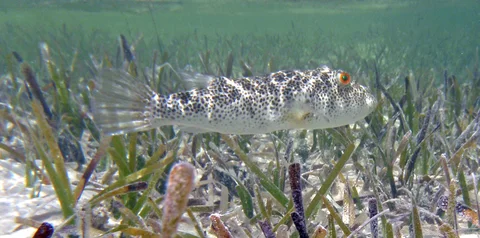 Checkered PufferThe checkered puffer is an American Atlantic species of mangroves and seagrass; Japan's tiger and grass puffers are Pacific Takifugu — and every puffer is toxic and never to be prepared at home
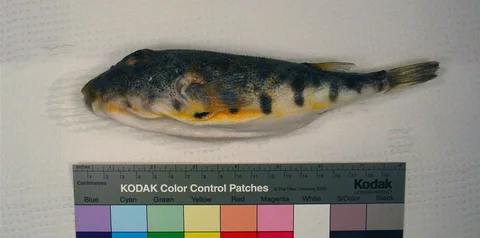 Northern PufferThe northern puffer is a small American Atlantic species locally treated as non-toxic; Japan's grass puffer is a toxic Takifugu — never infer safety from another species
Regulations vary by area and can change in-season — always check the official rules for your area before you fish. Regulations guide →
Plan a trip for Tiger & Grass Puffers
Build today's plan