
Freshwater · Spring spawning runs into rivers; autumn in the lagoons
Vimba
Vimba vimba
An anadromous brackish-water cyprinid of the Baltic lagoons and the Danube that runs into rivers to spawn in spring. Its status is mixed across borders: it is protected in Poland and controlled under Annex II of the EU Habitats Directive in Germany, but it remains a common catch around the Baltic and in Danube waters — check the local rules before fishing for it.
Seasons · Peak
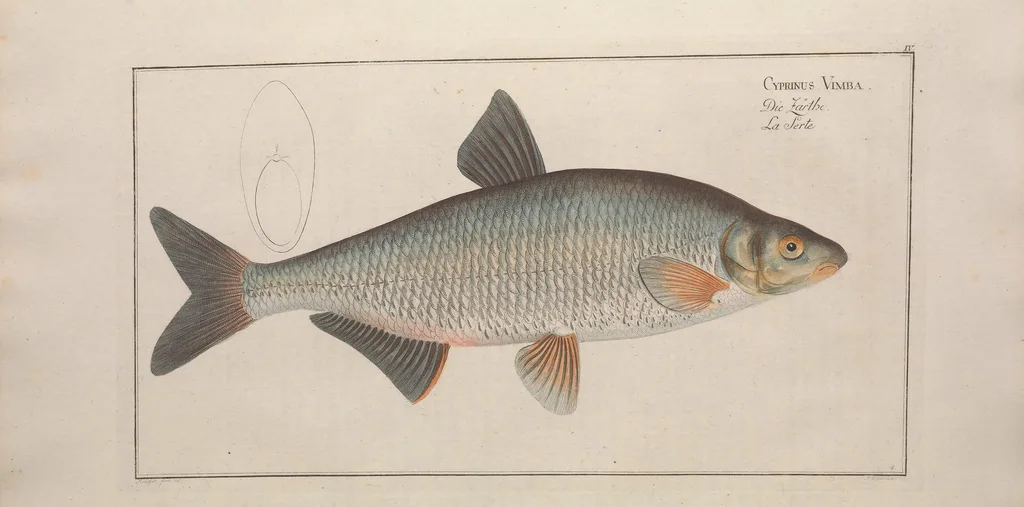
Identifying features
- Long, soft, fleshy trunk-like snout overhanging a small underslung mouth
- A naked keel on the back between the dorsal fin and the tail
- Silvery, rather deep body that turns dark — almost black — with orange fins in spawning dress
- Anal fin long-based with 17-22 branched rays, longer than the nase's
- No horny lip — the mouth is soft, unlike the hard-edged scraping lip of the nase
Habits
- Anadromous — adults move from brackish lagoons into rivers to spawn in spring
- Shoals over sand and silt and feeds on molluscs, crustaceans and insect larvae
- Protected in Poland and controlled under Habitats Directive rules in Germany, yet a common catch around the Baltic and the Danube
- Darkens strongly in the spawning season, males almost black with orange fins
- Gathers in deep holes in lagoons and estuaries through winter
Distribution
Where to find them
- The Friesian/Kaliningrad haffs and Baltic lagoons on the spring runs
- The lower Danube and its slow side arms
- Vistula and Oder mouths during the spring ascent
Where they live
How to catch them
Float fishing lagoon mouths Lake
Rig: 13 ft float rod fished hard on the bottom over sand at lagoon mouths and in slow channels
Bait/lure: Maggots, casters, small worms
Key tip: Concentrate on narrow mouth channels during the spring run and fish exactly on the deck.
Feeder fishing lower river reaches River
Rig: Medium feeder rod with a swimfeeder fished in deep lower-river channels and weir pools
Bait/lure: Maggots, worms, bread
Key tip: Germany and Poland apply closed seasons and protection — verify status and rules before keeping any fish.
Best baits & lures
Baseline setup
- Rod: 13 ft float rod or medium feeder rod
- Line: 4-6 lb mono with a fine hooklength
- Terminal: Stick floats and swimfeeders, size 14-18 hooks
Recommended gear for this species
Rod · Best value
9' 5-weight fly rod outfit
≈ US$180-260
Covers chironomid lakes and small rivers with one setup.
Flies · Budget
Chironomid assortment (30 patterns)
≈ US$25-40
Chironomids are 60% of a lake rainbow's diet in spring.
Picks come from our rule library — never paid placements. Prices are guides; affiliate links may earn us a commission.
Typical size
Common 8-12 in (20-30 cm), about 0.5-1 lb (0.2-0.5 kg); large fish to 20 in (50 cm) and about 3 lb (1.4 kg)
On the table
Fair — soft, bony cyprinid flesh; better smoked or pickled where keeping is legal.
Similar species
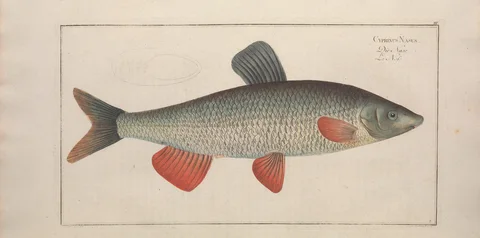 NaseNase has a hard, horny scraping lower lip and lives only in flowing fresh water; vimba has a soft trunk-like snout, a naked keel behind the dorsal fin and tolerates brackish Baltic water
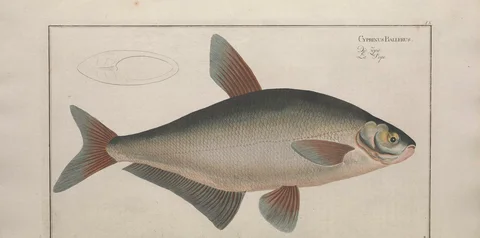 ZopeZope is deeper and flatter with a very long anal fin and a blunt snout with no trunk; vimba is more streamlined with a long soft snout and a keeled back
Regulations vary by area and can change in-season — always check the official rules for your area before you fish. Regulations guide →
Plan a trip for Vimba
Build today's plan